

10/31/24, 5:59 PM Cattle EPDS Flashcards | Quizlet
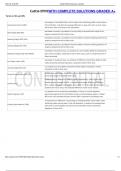
Cattle EPDSWITH COMPLETE SOLUTIONS GRADED A+
Terms in this set (55)
percentage of unassisted births, with a higher value indicating greater calving ease in
Calving Ease Direct (CED) first-calf heifers. It predicts the average difference in ease with which a sire's calves
will be born when he is bred to first-calf heifers.
expressed in pounds, is a predictor of a sire's ability to transmit birth weight to his
Birth Weight EPD (BW)
progeny compared to that of other sires.
expressed in pounds, is a predictor of a sire's ability to transmit weaning growth to his
Weaning Weight EPD (WW)
progeny compared to that of other sires.
expressed in pounds, is a predictor of a sire's ability to transmit yearling growth to his
Yearling Weight EPD (YW)
progeny compared to that of other sires.
expressed in pounds per day, is a predictor of a sire's genetic ability for postweaning
Residual Average Daily Gain (RADG) gain in future progeny compared to that of other sires, given a constant amount of
feed consumed.
expressed in pounds per day, is a predictor of difference transmitting ability for feed
Dry Matter Intake (DMI)
intake during the postweaning phase, compared to that of other sires.
is a predictor of a sire's ability to transmit yearling height, expressed in inches,
Yearling Height EPD (YH)
compared to that of other sires.
expressed in centimeters, is a predictor of the difference in transmitting ability for
Scrotal Circumference EPD (SC)
scrotal size compared to that of other sires.
is expressed as a difference in yearling cattle temperament, with a higher value
indicating more favorable docility. It predicts the average difference of progeny
Docility (Doc),
from a sire in comparison with another sire's calves. In herds where temperament
problems are not an issue, this expected difference would not be realized.
is a selection tool to increase the probability or chance of a sire's daughters
Heifer Pregnancy (HP) becoming pregnant as first-calf heifers during a normal breeding season. A higher
EPD is the more favorable direction and the EPD is reported in percentage units.
is expressed as a difference in percentage of unassisted births with a higher value
indicating greater calving ease in first-calf daughters. It predicts the average ease
Calving Ease Maternal (CEM)
with which a sire's daughters will calve as first-calf heifers when compared to
daughters of other sires.
https://quizlet.com/187607552/cattle-epds-flash-cards/ 1/4
Cattle EPDSWITH COMPLETE SOLUTIONS GRADED A+
Terms in this set (55)
percentage of unassisted births, with a higher value indicating greater calving ease in
Calving Ease Direct (CED) first-calf heifers. It predicts the average difference in ease with which a sire's calves
will be born when he is bred to first-calf heifers.
expressed in pounds, is a predictor of a sire's ability to transmit birth weight to his
Birth Weight EPD (BW)
progeny compared to that of other sires.
expressed in pounds, is a predictor of a sire's ability to transmit weaning growth to his
Weaning Weight EPD (WW)
progeny compared to that of other sires.
expressed in pounds, is a predictor of a sire's ability to transmit yearling growth to his
Yearling Weight EPD (YW)
progeny compared to that of other sires.
expressed in pounds per day, is a predictor of a sire's genetic ability for postweaning
Residual Average Daily Gain (RADG) gain in future progeny compared to that of other sires, given a constant amount of
feed consumed.
expressed in pounds per day, is a predictor of difference transmitting ability for feed
Dry Matter Intake (DMI)
intake during the postweaning phase, compared to that of other sires.
is a predictor of a sire's ability to transmit yearling height, expressed in inches,
Yearling Height EPD (YH)
compared to that of other sires.
expressed in centimeters, is a predictor of the difference in transmitting ability for
Scrotal Circumference EPD (SC)
scrotal size compared to that of other sires.
is expressed as a difference in yearling cattle temperament, with a higher value
indicating more favorable docility. It predicts the average difference of progeny
Docility (Doc),
from a sire in comparison with another sire's calves. In herds where temperament
problems are not an issue, this expected difference would not be realized.
is a selection tool to increase the probability or chance of a sire's daughters
Heifer Pregnancy (HP) becoming pregnant as first-calf heifers during a normal breeding season. A higher
EPD is the more favorable direction and the EPD is reported in percentage units.
is expressed as a difference in percentage of unassisted births with a higher value
indicating greater calving ease in first-calf daughters. It predicts the average ease
Calving Ease Maternal (CEM)
with which a sire's daughters will calve as first-calf heifers when compared to
daughters of other sires.
https://quizlet.com/187607552/cattle-epds-flash-cards/ 1/4


