©BRIGHTSTARS EXAM SOLUTIONS
10/23/2024 11:19 PM
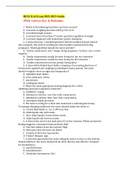
Praxis SLP Practice Exam A Questions And
Answers 100% Pass
1. A parent has brought a young child to an outpatient augmentative communication clinic for a
full assessment. After reading the client's intake forms, the SLP believes the child is a candidate
for AAC and is preparing tools for the assessment. Which approach to assessment should this
SLP use?
a. select standardized assessment measures and vary response mode to see how the child best
responds
b. select different subtests from multiple, standardized language assessment, to see to which kind
of pictures the child best responds
c. select a standardized AAC inventory and administer according to direction, to see how the
child's AAC skills compare to others in their age group
d. select multiple devices in order to determine the one to which the child best responds -
answer✔a. select standardized assessment measures and vary response mode to see how the
child best responds
2. Compared to voiced stops, word-initial voiceless stops in English are expected to have a:
a. shorter voice onset time (VOT)
b. longer VOT
c. more compact spectrum
d. morre diffuse spectrum - answer✔b. longer VOT
3. A patient who has not been on the SLPs caseload while at a long-term acute care setting
begins complaining of gastroesophageal reflux- like symptoms during and after every meal. The
physician has asked the SLP to perform an evaluation, which comes back negative. After using
instrumental assessment methods, it is discovered that the patient's low esophageal sphincter is
, ©BRIGHTSTARS EXAM SOLUTIONS
10/23/2024 11:19 PM
not functioning properly. Which of the following could potentially cause this patient's
symptoms?
a. pharyngeal weakness, including muscle atrophy
b. a change in medication, including addition of steroids
c. lingual weakness, including fibrillation
d. Zenker's diverticulum, including residue - answer✔b. a change in medication, including
addition of steroids
4. A speech scientist is analyzing data collected from a recently completed study. In order to
properly analyze the data, she utilizes nonparametric statistical procedures. Which of the
following scenarios BEST describes the scientist's data?
a. there is not a normal distribution of the data
b. there is a normal distribution of the data
c. there is a small median for the data
d. there is a small mode for the data - answer✔a. there is not a normal distribution of the data
5. In evaluating a preschool child who stutters, it is important to observe the child interacting
with the parent. The PRIMARY reason for this is:
a. the most valid sample of communication and speech may be observed in the child's typical
interactions with the parent
b. comfort with the parent is likely to reduce disfluency and make the child feel more
comfortable
c. there are a number of legal concerns that should be considered when separating the child from
the parent
d. the use of an informal speech sample reduces the need for any other standardized testing -
answer✔a. the most valid sample of communication and speech may be observed in the child's
typical interactions with the parent
6. A SLP working in a skilled nursing facility (SNF) has been assigned to design a treatment plan
for a long-term resident. The patient was diagnosed with Alzheimer's dementia 5 years earlier
, ©BRIGHTSTARS EXAM SOLUTIONS
10/23/2024 11:19 PM
and is considered to be in the mid-stage of the disorder. She has one daughter who is concerned
about her, but who lives far across the country. The patient has been increasingly agitated and
difficult for clinical staff to interact with. The intervention of GREATEST BENEFIT would be:
a. a course of melodic intonation therapy (MIT) to increase phrase lengths and improve fluency
of verbal output
b. using a simulated presence therapy technique, in which taped messages are played to the
individual with dementia in times of agitation
c. using caregiver-administered active cognitive stimulation techniques, in which the SLP assists
the family member is administering cognitive stimulating tasks such as playing card games and
completin - answer✔b. using a simulated presence therapy technique, in which taped messages
are played to the individual with dementia in times of agitation
7. A person with healing loss has complained that listening to conversational partners in noisy
restaurants is very difficult. However, they still enjoy going out to eat with family and friends,
regardless of this difficulty. Which level of the World Health Organization (WHO) ICF BEST
describes this person's healing problem?
a. activity limitation
b. impairment
c. participation restriction
behavioral limitation - answer✔a. activity limitation
8. A patient arrives at an acute rehabilitation hospital, following a hip replacement surgery. The
physician has asked the SLP to perform a full evaluation of the patient, with suspicions of
cognitive changes post surgery. After performing the evaluation, the SLP documented a
hoarse/rough vocal quality, which the patient reported was not there prior to the surgery. The
SLP determines that the patient has not received adequate hydration and is consuming too much
coffee during hospitalization. Which intervention should be utilized?
a. vocal hygiene information
b. medicalization laryngoplasty
c. consultation which the physician for appropriate prescription drugs
, ©BRIGHTSTARS EXAM SOLUTIONS
10/23/2024 11:19 PM
d. no treatment is necessary - answer✔a. vocal hygiene information
9. A child is brought into an outpatient speech and language clinic by her parents, with a chief
complaint of "trouble speaking". After administration of a comprehensive speech sound
evaluation, the SLP reveals the following speech sound errors: /rin/ for /ring/, /tat/ for /kat/, and
/frod/ for /frog/. This child demonstrates difficulty producing sounds with which place of
articulation?
a. alveolars
b. bilabials
c. velars
d. interdentals - answer✔c. velars
10. Which muscle contributes to hyolaryngeal depression?
a. stylohyoid
b. geniohyoid
c. mylohyoid
d. sternohyoid - answer✔d. sternohyoid
11. Following a car accident, a patient that is being treated by a SLP exhibits weakness in the
orbiculares iris and buccinator muscles. Which of the following problems would be the MOST
LIKELY presentation of this patient's dysphagia?
a. oral incontinence with anterior and lateral reside
b. pharyngeal delay with excessive residue
c. reduced opening of the upper esophageal sphincter
d. piecemeal deglutition with silent aspiration - answer✔a. oral incontinence with anterior and
lateral reside
12. Barbara is a young child with a severe cognitive deficit. Barbara's SLP is beginning to
formulate a treatment plan for intervention and would like to focus on the MOST functional
10/23/2024 11:19 PM
Praxis SLP Practice Exam A Questions And
Answers 100% Pass
1. A parent has brought a young child to an outpatient augmentative communication clinic for a
full assessment. After reading the client's intake forms, the SLP believes the child is a candidate
for AAC and is preparing tools for the assessment. Which approach to assessment should this
SLP use?
a. select standardized assessment measures and vary response mode to see how the child best
responds
b. select different subtests from multiple, standardized language assessment, to see to which kind
of pictures the child best responds
c. select a standardized AAC inventory and administer according to direction, to see how the
child's AAC skills compare to others in their age group
d. select multiple devices in order to determine the one to which the child best responds -
answer✔a. select standardized assessment measures and vary response mode to see how the
child best responds
2. Compared to voiced stops, word-initial voiceless stops in English are expected to have a:
a. shorter voice onset time (VOT)
b. longer VOT
c. more compact spectrum
d. morre diffuse spectrum - answer✔b. longer VOT
3. A patient who has not been on the SLPs caseload while at a long-term acute care setting
begins complaining of gastroesophageal reflux- like symptoms during and after every meal. The
physician has asked the SLP to perform an evaluation, which comes back negative. After using
instrumental assessment methods, it is discovered that the patient's low esophageal sphincter is
, ©BRIGHTSTARS EXAM SOLUTIONS
10/23/2024 11:19 PM
not functioning properly. Which of the following could potentially cause this patient's
symptoms?
a. pharyngeal weakness, including muscle atrophy
b. a change in medication, including addition of steroids
c. lingual weakness, including fibrillation
d. Zenker's diverticulum, including residue - answer✔b. a change in medication, including
addition of steroids
4. A speech scientist is analyzing data collected from a recently completed study. In order to
properly analyze the data, she utilizes nonparametric statistical procedures. Which of the
following scenarios BEST describes the scientist's data?
a. there is not a normal distribution of the data
b. there is a normal distribution of the data
c. there is a small median for the data
d. there is a small mode for the data - answer✔a. there is not a normal distribution of the data
5. In evaluating a preschool child who stutters, it is important to observe the child interacting
with the parent. The PRIMARY reason for this is:
a. the most valid sample of communication and speech may be observed in the child's typical
interactions with the parent
b. comfort with the parent is likely to reduce disfluency and make the child feel more
comfortable
c. there are a number of legal concerns that should be considered when separating the child from
the parent
d. the use of an informal speech sample reduces the need for any other standardized testing -
answer✔a. the most valid sample of communication and speech may be observed in the child's
typical interactions with the parent
6. A SLP working in a skilled nursing facility (SNF) has been assigned to design a treatment plan
for a long-term resident. The patient was diagnosed with Alzheimer's dementia 5 years earlier
, ©BRIGHTSTARS EXAM SOLUTIONS
10/23/2024 11:19 PM
and is considered to be in the mid-stage of the disorder. She has one daughter who is concerned
about her, but who lives far across the country. The patient has been increasingly agitated and
difficult for clinical staff to interact with. The intervention of GREATEST BENEFIT would be:
a. a course of melodic intonation therapy (MIT) to increase phrase lengths and improve fluency
of verbal output
b. using a simulated presence therapy technique, in which taped messages are played to the
individual with dementia in times of agitation
c. using caregiver-administered active cognitive stimulation techniques, in which the SLP assists
the family member is administering cognitive stimulating tasks such as playing card games and
completin - answer✔b. using a simulated presence therapy technique, in which taped messages
are played to the individual with dementia in times of agitation
7. A person with healing loss has complained that listening to conversational partners in noisy
restaurants is very difficult. However, they still enjoy going out to eat with family and friends,
regardless of this difficulty. Which level of the World Health Organization (WHO) ICF BEST
describes this person's healing problem?
a. activity limitation
b. impairment
c. participation restriction
behavioral limitation - answer✔a. activity limitation
8. A patient arrives at an acute rehabilitation hospital, following a hip replacement surgery. The
physician has asked the SLP to perform a full evaluation of the patient, with suspicions of
cognitive changes post surgery. After performing the evaluation, the SLP documented a
hoarse/rough vocal quality, which the patient reported was not there prior to the surgery. The
SLP determines that the patient has not received adequate hydration and is consuming too much
coffee during hospitalization. Which intervention should be utilized?
a. vocal hygiene information
b. medicalization laryngoplasty
c. consultation which the physician for appropriate prescription drugs
, ©BRIGHTSTARS EXAM SOLUTIONS
10/23/2024 11:19 PM
d. no treatment is necessary - answer✔a. vocal hygiene information
9. A child is brought into an outpatient speech and language clinic by her parents, with a chief
complaint of "trouble speaking". After administration of a comprehensive speech sound
evaluation, the SLP reveals the following speech sound errors: /rin/ for /ring/, /tat/ for /kat/, and
/frod/ for /frog/. This child demonstrates difficulty producing sounds with which place of
articulation?
a. alveolars
b. bilabials
c. velars
d. interdentals - answer✔c. velars
10. Which muscle contributes to hyolaryngeal depression?
a. stylohyoid
b. geniohyoid
c. mylohyoid
d. sternohyoid - answer✔d. sternohyoid
11. Following a car accident, a patient that is being treated by a SLP exhibits weakness in the
orbiculares iris and buccinator muscles. Which of the following problems would be the MOST
LIKELY presentation of this patient's dysphagia?
a. oral incontinence with anterior and lateral reside
b. pharyngeal delay with excessive residue
c. reduced opening of the upper esophageal sphincter
d. piecemeal deglutition with silent aspiration - answer✔a. oral incontinence with anterior and
lateral reside
12. Barbara is a young child with a severe cognitive deficit. Barbara's SLP is beginning to
formulate a treatment plan for intervention and would like to focus on the MOST functional