

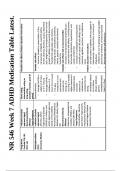
NR546 Week 7 ADHD Medication Table 2026/2027 Latest Update | Advanced Pharmacology Psychopharmacology | Chamberlain University | Verified Questions & Answers with Rationales | ADHD Medications Exam Review Guide A+
Master the NR546 Week 7 ADHD Medication Table with this comprehensive Advanced Pharmacology and Psychopharmacology study resource for Chamberlain University PMHNP students. Covers high-yield ADHD medications including Methylphenidate (Ritalin, Concerta, Daytrana), Dexmethylphenidate (Focalin), Amphetamine formulations (Adderall, Mydayis, Adzenys), Lisdexamfetamine (Vyvanse), Atomoxetine (Strattera), Guanfacine (Intuniv), Clonidine (Kapvay), and Bupropion (Wellbutrin). Includes neurotransmitters affected, mechanisms of action, target symptoms, FDA-approved indications, duration of action, peak effects, patient education points, adverse effects, contraindications, cardiac monitoring considerations, growth and weight monitoring, stimulant prescribing guidelines, and non-stimulant treatment options. Features verified questions and answers, detailed rationales, medication comparison tables, clinical application scenarios, and exam-focused explanations designed to strengthen psychopharmacology knowledge and prescribing confidence. Ideal for weekly assignments, quizzes, midterms, finals, PMHNP coursework, and board preparation. Updated for the 2026/2027 academic year with the latest verified solutions, comprehensive medication reviews, and evidence-based exam preparation strategies. ADHD medication table resources consistently emphasize stimulant and non-stimulant medications, neurotransmitter effects, duration of action, adverse effects, patient education, and monitoring requirements as core Week 7 concepts. Additional Week 7 review materials frequently highlight the importance of obtaining a thorough health history before initiating stimulant therapy, assessing for personal or family cardiac disease, monitoring blood pressure, height, and weight, evaluating for bipolar disorder, and understanding common stimulant adverse effects such as insomnia, appetite suppression, irritability, and weight loss.
Document information
- Uploaded on
- October 28, 2024
- Number of pages
- 12
- Written in
- 2026/2027
- Type
- Exam (elaborations)
- Contains
- Questions & answers



