

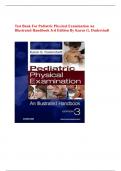
Test Bank For Pediatric Physical Examination An
Illustrated Handbook 3rd Edition By Karen G. Duderstadt
,Table Of Contents
Chapter 1: Approach To Care And Assessment Of Children And Adolescents ............................................. 3
Chapter 2. Physical Assessment Parameters .............................................................................................. 18
Chapter 3. Developmental Surveillance And Screening ............................................................................. 31
Chapter 4. Comprehensive Health Gathering ............................................................................................. 39
Chapter 5. Environmental Health History ................................................................................................... 47
Chapter 6 Newborn Assessment................................................................................................................. 54
Chapter 7. Skin ............................................................................................................................................ 70
Chapter 8. Heart And Vascular System ....................................................................................................... 80
Chapter 9. Chest And Respiratory System .................................................................................................. 96
Chapter 10. Head And Neck ...................................................................................................................... 117
Chapter 11. Lymphatic System ................................................................................................................. 124
Chapter 12. Eyes ....................................................................................................................................... 133
Chapter 13. Ears ........................................................................................................................................ 147
Chapter 14. Nose, Mouth, And Throat ..................................................................................................... 151
Chapter 15. Abdomen And Rectum .......................................................................................................... 154
Chapter 16. Male Genitalia ....................................................................................................................... 175
Chapter 17. Male And Female Breast MULTIPLE CHOICE ......................................................................... 178
Chapter 18. Female Genitalia ................................................................................................................... 190
Chapter 19. Musculoskeletal System ........................................................................................................ 195
Chapter 20. Neurological System.............................................................................................................. 214
,Chapter 1: Approach To Care And Assessment Of Children And
Adolescents
MULTIPLE CHOICE
1. A Nurse Is Reviewing Developmental Concepts For Infants And Children. Which Statement Best
Describes Development In Infants And Children?
A. Development, A Predictable And Orderly Process, Occurs At Varying Rates Within Normal Limits.
B. Development Is Primarily Related To The Growth In The Number And Size Of Cells.
C. Development Occurs In A Proximodistal Direction With Fine Muscle Development Occurring
First.
D. Development Is More Easily And Accurately Measured Than Growth.
ANSWER: A
Development, A Continuous Orderly Process, Provides The Basis For Increases In The Childs Function
And Complexity Of Behavior. The Increases In Rate Of Function And Complexity Can Vary Normally
Within Limits For Each Child. An Increase In The Number And Size Of Cells Is A Definition For Growth.
Development Proceeds In A Proximodistal Direction With Fine Muscle Organization Occurring As A
Result Of Large Muscle Organization. Development Is A More Complex Process That Is Affected By Many
Factors; Therefore, It Is Less Easily And Accurately Measured. Growth Is A Predictable Process With
Standard Measurement Methods.
2. Frequent Developmental Assessments Are Important For Which Reason?
A. Stable Developmental Periods During Infancy Provide An Opportunity To Identify Any Delays Or
Deficits.
B. Infants Need Stimulation Specific To The Stage Of Development.
C. Critical Periods Of Development Occur During Childhood.
D. Child Development Is Unpredictable And Needs Monitoring.
, Tuyvbiau.Ycoamnd-Antdhesemllasreklel Typolaucryeotuor
Bsutuydaynsdtusdeyllmyaotuerrisatlumdaytemriatlerial
ANSWER: C
Critical Periods Are Blocks Of Time During Which Children Are Ready To Master Specific Developmental
Tasks. Children Can Master These Tasks More Easily During Particular Periods Of Time In Their Growth
And Developmental Process. Infancy Is A Dynamic Time Of Development That Requires Frequent
Evaluations To Assess Appropriate Developmental Progress. Infants In A Nurturing Environment Will
Develop Appropriately And Will Not Necessarily Need Stimulation Specific To Their Developmental
Stage. Normal Growth And Development Are Orderly And Proceed In A Predictable Pattern On The Basis
Of Each Individuals Abilities And Potentials.
3. Which Factor Has The Greatest Influence On Child Growth And Development?
A. Culture
B. Environment
C. Genetics
D. Nutrition
ANSWER: C
Genetic Factors (Heredity) Determine Each Individuals Growth And Developmental Rate. Although
Factors Such As Environment, Culture, Nutrition, And Family Can Influence Genetic Traits, They Do Not
Eliminate The Effect Of The Genetic Endowment, Which Is Permanent. Culture Is A Significant Factor
That Influences How Children Grow Toward Adulthood. Culture Influences Both Growth And
Development But Does Not Eliminate Inborn Genetic Influences. Environment Has A Significant Role In
Determining Growth And Development Both Before And After Birth. The Environment Can Influence
Illustrated Handbook 3rd Edition By Karen G. Duderstadt
,Table Of Contents
Chapter 1: Approach To Care And Assessment Of Children And Adolescents ............................................. 3
Chapter 2. Physical Assessment Parameters .............................................................................................. 18
Chapter 3. Developmental Surveillance And Screening ............................................................................. 31
Chapter 4. Comprehensive Health Gathering ............................................................................................. 39
Chapter 5. Environmental Health History ................................................................................................... 47
Chapter 6 Newborn Assessment................................................................................................................. 54
Chapter 7. Skin ............................................................................................................................................ 70
Chapter 8. Heart And Vascular System ....................................................................................................... 80
Chapter 9. Chest And Respiratory System .................................................................................................. 96
Chapter 10. Head And Neck ...................................................................................................................... 117
Chapter 11. Lymphatic System ................................................................................................................. 124
Chapter 12. Eyes ....................................................................................................................................... 133
Chapter 13. Ears ........................................................................................................................................ 147
Chapter 14. Nose, Mouth, And Throat ..................................................................................................... 151
Chapter 15. Abdomen And Rectum .......................................................................................................... 154
Chapter 16. Male Genitalia ....................................................................................................................... 175
Chapter 17. Male And Female Breast MULTIPLE CHOICE ......................................................................... 178
Chapter 18. Female Genitalia ................................................................................................................... 190
Chapter 19. Musculoskeletal System ........................................................................................................ 195
Chapter 20. Neurological System.............................................................................................................. 214
,Chapter 1: Approach To Care And Assessment Of Children And
Adolescents
MULTIPLE CHOICE
1. A Nurse Is Reviewing Developmental Concepts For Infants And Children. Which Statement Best
Describes Development In Infants And Children?
A. Development, A Predictable And Orderly Process, Occurs At Varying Rates Within Normal Limits.
B. Development Is Primarily Related To The Growth In The Number And Size Of Cells.
C. Development Occurs In A Proximodistal Direction With Fine Muscle Development Occurring
First.
D. Development Is More Easily And Accurately Measured Than Growth.
ANSWER: A
Development, A Continuous Orderly Process, Provides The Basis For Increases In The Childs Function
And Complexity Of Behavior. The Increases In Rate Of Function And Complexity Can Vary Normally
Within Limits For Each Child. An Increase In The Number And Size Of Cells Is A Definition For Growth.
Development Proceeds In A Proximodistal Direction With Fine Muscle Organization Occurring As A
Result Of Large Muscle Organization. Development Is A More Complex Process That Is Affected By Many
Factors; Therefore, It Is Less Easily And Accurately Measured. Growth Is A Predictable Process With
Standard Measurement Methods.
2. Frequent Developmental Assessments Are Important For Which Reason?
A. Stable Developmental Periods During Infancy Provide An Opportunity To Identify Any Delays Or
Deficits.
B. Infants Need Stimulation Specific To The Stage Of Development.
C. Critical Periods Of Development Occur During Childhood.
D. Child Development Is Unpredictable And Needs Monitoring.
, Tuyvbiau.Ycoamnd-Antdhesemllasreklel Typolaucryeotuor
Bsutuydaynsdtusdeyllmyaotuerrisatlumdaytemriatlerial
ANSWER: C
Critical Periods Are Blocks Of Time During Which Children Are Ready To Master Specific Developmental
Tasks. Children Can Master These Tasks More Easily During Particular Periods Of Time In Their Growth
And Developmental Process. Infancy Is A Dynamic Time Of Development That Requires Frequent
Evaluations To Assess Appropriate Developmental Progress. Infants In A Nurturing Environment Will
Develop Appropriately And Will Not Necessarily Need Stimulation Specific To Their Developmental
Stage. Normal Growth And Development Are Orderly And Proceed In A Predictable Pattern On The Basis
Of Each Individuals Abilities And Potentials.
3. Which Factor Has The Greatest Influence On Child Growth And Development?
A. Culture
B. Environment
C. Genetics
D. Nutrition
ANSWER: C
Genetic Factors (Heredity) Determine Each Individuals Growth And Developmental Rate. Although
Factors Such As Environment, Culture, Nutrition, And Family Can Influence Genetic Traits, They Do Not
Eliminate The Effect Of The Genetic Endowment, Which Is Permanent. Culture Is A Significant Factor
That Influences How Children Grow Toward Adulthood. Culture Influences Both Growth And
Development But Does Not Eliminate Inborn Genetic Influences. Environment Has A Significant Role In
Determining Growth And Development Both Before And After Birth. The Environment Can Influence


