10/18/24, 4:13 PM
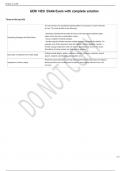
GERI HESI EXAM Exam with complete solution
Terms in this set (45)
The way the day of a cognitively impaired patient is structured is crucial in the plan
of care. The nurse should do the following:
• Develop a schedule that provides structure to the day because patients adapt
better when they have a predictable routine.
Scheduling Strategies for Elder Clients
• Focus on patient-centered activities.
• Develop singular activities because multiple activities overwhelm the patient. For
example, turn off the television while the patient is putting together a puzzle. •
Provide a group experience with one subject approached at a time. Too much
stimulation increases anxiety and may lead to agitation.
Findings include fatigue, apathy, confusion, lethargy, shivering, numbness, slurred
Early signs of Hypothermia in older adults
speech, impaired coordination, and possible coma
Peripheral vasoconstriction occurring with hypothermia may also lead to increases in
Hypothermia Urinary output kidney perfusion and a subsequent increase in urine output referred to as cold
diuresis.
1/13
, 10/18/24, 4:13 PM
History
• Personal or family history of renal disease
• Recent surgeries or illnesses (predisposing to renal dysfunction)
• Symptoms:
• Urine (e.g., frequency, color, amount, appearance)
• Nausea and vomiting
• Anorexia
• Weight loss
• Confusion
• Fatigue
• Pruritus
Assessment of older adult with Kidney • Edema
Disease • Medications (e.g., antibiotics, antineoplastics, and nonsteroidal antiinflammatory
drugs)
• Diet
• Current support systems
Physical Assessment
• Neurologic status: altered mental status and presence of asterixis
• Cardiopulmonary status: rales and pericardial rub
• Gastrointestinal status: nausea and vomiting, abdominal discomfort, and intolerance
to diet
• Musculoskeletal status
• Ophthalmoscopic examination and visual inspection
have multiple, recurrent, significant somatic symptoms with no evidence of a medical
explanation. They tend to have very high levels of worry about their illness,
appraising their bodily symptoms as unduly threatening and harmful. The
presumption exists that the physical symptoms are connected to psychological
factors or conflicts. These patients are not in control of their symptoms, which are
unconscious and involuntary. Patients express conflicts through bodily symptoms
(primarily pain) and complaints using the defense of somatization. They do not deal
Somatic Symptom Disorder
with their anxiety or feelings emotionally but displace the anxiety into bodily
symptoms. These patients repeatedly see general practitioners seeking medical
diagnosis and treatment even though they have been told that there is no known
physiologic or organic evidence to explain their symptoms or disability. Medical
interventions rarely alleviate the individual's concern. The overconcern of bodily
symptoms assumes a central role in the individual's life, impairing social and
occupational functioning
Erikson's eighth and final stage, integrity versus despair, begins with late adulthood,
when the person looks back over his or her lifetime and resolves any final identity
crisis. Accomplishments must be reconciled with failures and limitations for the
Integrity v. Despair
person to develop a sense of integrity. The finality of death must be accepted. A
person who fails to do so risks developing a sense of despair and regret over the
way his or her life has turned out.
2/13
GERI HESI EXAM Exam with complete solution
Terms in this set (45)
The way the day of a cognitively impaired patient is structured is crucial in the plan
of care. The nurse should do the following:
• Develop a schedule that provides structure to the day because patients adapt
better when they have a predictable routine.
Scheduling Strategies for Elder Clients
• Focus on patient-centered activities.
• Develop singular activities because multiple activities overwhelm the patient. For
example, turn off the television while the patient is putting together a puzzle. •
Provide a group experience with one subject approached at a time. Too much
stimulation increases anxiety and may lead to agitation.
Findings include fatigue, apathy, confusion, lethargy, shivering, numbness, slurred
Early signs of Hypothermia in older adults
speech, impaired coordination, and possible coma
Peripheral vasoconstriction occurring with hypothermia may also lead to increases in
Hypothermia Urinary output kidney perfusion and a subsequent increase in urine output referred to as cold
diuresis.
1/13
, 10/18/24, 4:13 PM
History
• Personal or family history of renal disease
• Recent surgeries or illnesses (predisposing to renal dysfunction)
• Symptoms:
• Urine (e.g., frequency, color, amount, appearance)
• Nausea and vomiting
• Anorexia
• Weight loss
• Confusion
• Fatigue
• Pruritus
Assessment of older adult with Kidney • Edema
Disease • Medications (e.g., antibiotics, antineoplastics, and nonsteroidal antiinflammatory
drugs)
• Diet
• Current support systems
Physical Assessment
• Neurologic status: altered mental status and presence of asterixis
• Cardiopulmonary status: rales and pericardial rub
• Gastrointestinal status: nausea and vomiting, abdominal discomfort, and intolerance
to diet
• Musculoskeletal status
• Ophthalmoscopic examination and visual inspection
have multiple, recurrent, significant somatic symptoms with no evidence of a medical
explanation. They tend to have very high levels of worry about their illness,
appraising their bodily symptoms as unduly threatening and harmful. The
presumption exists that the physical symptoms are connected to psychological
factors or conflicts. These patients are not in control of their symptoms, which are
unconscious and involuntary. Patients express conflicts through bodily symptoms
(primarily pain) and complaints using the defense of somatization. They do not deal
Somatic Symptom Disorder
with their anxiety or feelings emotionally but displace the anxiety into bodily
symptoms. These patients repeatedly see general practitioners seeking medical
diagnosis and treatment even though they have been told that there is no known
physiologic or organic evidence to explain their symptoms or disability. Medical
interventions rarely alleviate the individual's concern. The overconcern of bodily
symptoms assumes a central role in the individual's life, impairing social and
occupational functioning
Erikson's eighth and final stage, integrity versus despair, begins with late adulthood,
when the person looks back over his or her lifetime and resolves any final identity
crisis. Accomplishments must be reconciled with failures and limitations for the
Integrity v. Despair
person to develop a sense of integrity. The finality of death must be accepted. A
person who fails to do so risks developing a sense of despair and regret over the
way his or her life has turned out.
2/13