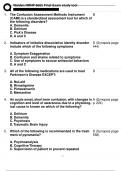
Walden NRNP 6665 Final Exam study tool
1. The Confusion Assessment Methods Instrument B
(CAMI) is a standardized assessment tool for which of
the following disorders?
A. Dementia
B. Delirium
C. Pick's Disease
D. A and C
2. Indicators of imitative dissociative identity disorder D (Synopsis page
include which of the following symptoms 444)
A. Symptom Exaggeration
B. Confusion and shame related to symptoms
C. Use of symptoms to excuse antisocial behaviors
D. A and C
3. All of the following medications are used to treat D
Parkinson's Disease EXCEPT:
A. NuLaid
B. Rivastigmine
C. Pimavanserin
D. Memantine
4. An acute onset, short term confusion, with changes in A (Synopsis page
cognition and level of awareness due to a physiolog- p. 224)
ical cause is known as which of the following?
A. Delirium
B. Dementia
C. Psychosis
D. Traumatic Brain Injury
5. Which of the following is recommended in the treat- D (Synopsis page
ment of pyromania? 558)
A. Psychoanalysis
B. Cognitive Therapy
C. Supervision of patient to prevent repeated
, Walden NRNP 6665 Final Exam study tool
episodes of fire setting
D. All the above
6. A neurodevelopmental disorder characterized by im- C (Rutter's page
pairment confined to a specific area of academic 702)
achievement (i.e. reading, writing, arthemic, spelling)
without deficits in intellectual and adaptive behav-
iors.
A. Intellectual Disability
B. Communication Disorder
C. Specific Learning Disorder
D. Autism Spectrum Disorder
7. According to the DSM-5 delirium is specified as acute A (Synopsis page
or persistent. Which of the following time frames are 226)
consistent with acute delirium specifications?
A. A few hours or days
B. Three weeks or less
C. One month or less
D. Less than 3 months
8. MRI findings in patients with intermittent explosive B (Synopsis page
disorder may reveal changes in which area of the 555)
brain that is associated with a loss of impulse control
A. Cerebellum
B. Prefrontal Cortex
C. Temporal Lobe
D. Parietal Lobe
9. Patient's with kleptomania have a high lifetime comor- A
bidity of which of the following?
A. Mood disorders
B. Schizophrenia
C. Dissociative Disorders
D. All the Above
, Walden NRNP 6665 Final Exam study tool
10. The PMHNP is meeting with a person who reports a A
fascination with fire, along with recurrent deliberate
and purposeful setting of fires. The PMHNP realizes
that these behaviors are consistent with:
A. Pyromania
B. OCD
C. Intermittent explosive disorder
D. Pyrophobia
11. The symptoms of giving approximate answers is B (common in
known as which of the following? Ganser syndrome)
A. Alogia
B. Paralogia
C. Analogia
C. Symlogia
12. Predisposing factors for delirium include which of the All of them
following (SATA)
A. Dementia
B. History of falls
C. Age 65 and older
D. Sensory impairment
13. A temporary marked alteration in the state of con- B
sciousness or by the customary sense of personal
identity without the replacement by an alternate sense
of identity is known as:
A. Ganser Syndrome
B. Dissociative Trance Disorder
C. Dissociative Identity Disorder
D. Factitious Dissociative Identity Disorder
14. A major neurocognitive disorder with severe impair- B
ment in memory, judgment, orientation, and cognition
is known as:
1. The Confusion Assessment Methods Instrument B
(CAMI) is a standardized assessment tool for which of
the following disorders?
A. Dementia
B. Delirium
C. Pick's Disease
D. A and C
2. Indicators of imitative dissociative identity disorder D (Synopsis page
include which of the following symptoms 444)
A. Symptom Exaggeration
B. Confusion and shame related to symptoms
C. Use of symptoms to excuse antisocial behaviors
D. A and C
3. All of the following medications are used to treat D
Parkinson's Disease EXCEPT:
A. NuLaid
B. Rivastigmine
C. Pimavanserin
D. Memantine
4. An acute onset, short term confusion, with changes in A (Synopsis page
cognition and level of awareness due to a physiolog- p. 224)
ical cause is known as which of the following?
A. Delirium
B. Dementia
C. Psychosis
D. Traumatic Brain Injury
5. Which of the following is recommended in the treat- D (Synopsis page
ment of pyromania? 558)
A. Psychoanalysis
B. Cognitive Therapy
C. Supervision of patient to prevent repeated
, Walden NRNP 6665 Final Exam study tool
episodes of fire setting
D. All the above
6. A neurodevelopmental disorder characterized by im- C (Rutter's page
pairment confined to a specific area of academic 702)
achievement (i.e. reading, writing, arthemic, spelling)
without deficits in intellectual and adaptive behav-
iors.
A. Intellectual Disability
B. Communication Disorder
C. Specific Learning Disorder
D. Autism Spectrum Disorder
7. According to the DSM-5 delirium is specified as acute A (Synopsis page
or persistent. Which of the following time frames are 226)
consistent with acute delirium specifications?
A. A few hours or days
B. Three weeks or less
C. One month or less
D. Less than 3 months
8. MRI findings in patients with intermittent explosive B (Synopsis page
disorder may reveal changes in which area of the 555)
brain that is associated with a loss of impulse control
A. Cerebellum
B. Prefrontal Cortex
C. Temporal Lobe
D. Parietal Lobe
9. Patient's with kleptomania have a high lifetime comor- A
bidity of which of the following?
A. Mood disorders
B. Schizophrenia
C. Dissociative Disorders
D. All the Above
, Walden NRNP 6665 Final Exam study tool
10. The PMHNP is meeting with a person who reports a A
fascination with fire, along with recurrent deliberate
and purposeful setting of fires. The PMHNP realizes
that these behaviors are consistent with:
A. Pyromania
B. OCD
C. Intermittent explosive disorder
D. Pyrophobia
11. The symptoms of giving approximate answers is B (common in
known as which of the following? Ganser syndrome)
A. Alogia
B. Paralogia
C. Analogia
C. Symlogia
12. Predisposing factors for delirium include which of the All of them
following (SATA)
A. Dementia
B. History of falls
C. Age 65 and older
D. Sensory impairment
13. A temporary marked alteration in the state of con- B
sciousness or by the customary sense of personal
identity without the replacement by an alternate sense
of identity is known as:
A. Ganser Syndrome
B. Dissociative Trance Disorder
C. Dissociative Identity Disorder
D. Factitious Dissociative Identity Disorder
14. A major neurocognitive disorder with severe impair- B
ment in memory, judgment, orientation, and cognition
is known as: