Chapter 35: The Infant and Family
MULTIPLE CHOICE
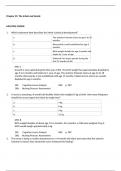
1. Which statement best describes the infant’s physical development?
a. The anterior fontanel closes by age 6 to 10
months.
b. Binocularity is well established by age 8
months.
c. Birth weight doubles by age 6 months and
.
triples by 1 year of age
d. Maternal iron stores persist during the
first 12 months of life.
ANS: C
Growth is very rapid during the first year of life. The birth weight has approximately doubled by
age 5 to 6 months and triples by 1 year of age. The anterior fontanel closes at age 12 to 18
months. Binocularity is not established until age 15 months. Maternal iron stores are usually
depleted by age 6 months.
DIF: Cognitive Level: Analysis REF: p. 987
OBJ: Nursing Process: Assessment
2. A nurse is assessing a 6-month-old healthy infant who weighed 3 kg at birth. How many kilograms
should the nurse expect the infant to weigh now?
a. 4 kg
b. 6 kg
c. 9 kg
d. 12 kg
ANS: B
Birth weight doubles at about age 5 to 6 months. At 6 months, a child who weighed 3 kg at
birth would weigh approximately 6 kg.
DIF: Cognitive Level: Analysis REF: p. 987
OBJ: Nursing Process: Assessment
3. The nurse is doing a routine assessment on a 14-month-old infant and notes that the anterior
fontanel is closed. How should the nurse interpret this finding?
, a. It is a normal finding.
b. It is a questionable finding—the infant
should be rechecked in 1 month.
c. It is an abnormal finding—it indicates the
need for immediate referral to practitioner.
d. It is an abnormal finding—it indicates
the need for developmental
assessment.
ANS: A
Because the anterior fontanel normally closes between ages 12 and 18 months, this is a normal
finding, and no further intervention is required.
DIF: Cognitive Level: Analysis REF: p. 988
OBJ: Nursing Process: Assessment
4. By what age does the posterior fontanel usually close?
a. 6 to 8 weeks
b. 10 to 12 weeks
c. 4 to 6 months
d. 8 to 10 months
ANS: A
The bones surrounding the posterior fontanel fuse and close by age 6 to 8 weeks. Ten weeks or
longer is too late.
DIF: Cognitive Level: Knowledge REF: p. 988
OBJ: Nursing Process: Assessment
5. The parents of a 9-month-old infant tell the nurse that they have noticed foods such as peas and
corn are not completely digested and can be seen in their infant’s stool. Which is accurate as a
basis for her explanation?
a. The child should not be given fibrous
foods until the digestive tract matures at
age 4 years.
b. The child should not be given any solid
foods until this digestive problem is
resolved.
c. This is abnormal and requires further
, investigation.
d. This is normal because of the
immaturity of digestive processes at
this age.
ANS: D
The immaturity of the digestive tract is evident in the appearance of the stools. Solid foods are
passed incompletely broken down in the feces. An excess quantity of fibre predisposes the
child to large, bulky stools. This is a normal part of the maturational process, and no further
investigation is necessary.
DIF: Cognitive Level: Application REF: p. 993
OBJ: Nursing Process: Implementation
6. A 3-month-old infant, born at 38 weeks of gestation, will hold a rattle if it is put in her hands,
but she will not voluntarily grasp it. How should the nurse interpret this behaviour?
a. This is normal development.
b. This is a significant developmental lag.
c. This is slightly delayed development
caused by prematurity.
d. This is suggestive of a neurological
disorder such as cerebral palsy.
ANS: A
This action indicates normal development. Reflexive grasping occurs during the first 2 to
3 months and then gradually becomes voluntary. No evidence of neurological dysfunction is
present.
DIF: Cognitive Level: Application REF: p. 994
OBJ: Nursing Process: Assessment
7. In terms of fine motor development, which action should a 7-month-old infant be able to
perform?
MULTIPLE CHOICE
1. Which statement best describes the infant’s physical development?
a. The anterior fontanel closes by age 6 to 10
months.
b. Binocularity is well established by age 8
months.
c. Birth weight doubles by age 6 months and
.
triples by 1 year of age
d. Maternal iron stores persist during the
first 12 months of life.
ANS: C
Growth is very rapid during the first year of life. The birth weight has approximately doubled by
age 5 to 6 months and triples by 1 year of age. The anterior fontanel closes at age 12 to 18
months. Binocularity is not established until age 15 months. Maternal iron stores are usually
depleted by age 6 months.
DIF: Cognitive Level: Analysis REF: p. 987
OBJ: Nursing Process: Assessment
2. A nurse is assessing a 6-month-old healthy infant who weighed 3 kg at birth. How many kilograms
should the nurse expect the infant to weigh now?
a. 4 kg
b. 6 kg
c. 9 kg
d. 12 kg
ANS: B
Birth weight doubles at about age 5 to 6 months. At 6 months, a child who weighed 3 kg at
birth would weigh approximately 6 kg.
DIF: Cognitive Level: Analysis REF: p. 987
OBJ: Nursing Process: Assessment
3. The nurse is doing a routine assessment on a 14-month-old infant and notes that the anterior
fontanel is closed. How should the nurse interpret this finding?
, a. It is a normal finding.
b. It is a questionable finding—the infant
should be rechecked in 1 month.
c. It is an abnormal finding—it indicates the
need for immediate referral to practitioner.
d. It is an abnormal finding—it indicates
the need for developmental
assessment.
ANS: A
Because the anterior fontanel normally closes between ages 12 and 18 months, this is a normal
finding, and no further intervention is required.
DIF: Cognitive Level: Analysis REF: p. 988
OBJ: Nursing Process: Assessment
4. By what age does the posterior fontanel usually close?
a. 6 to 8 weeks
b. 10 to 12 weeks
c. 4 to 6 months
d. 8 to 10 months
ANS: A
The bones surrounding the posterior fontanel fuse and close by age 6 to 8 weeks. Ten weeks or
longer is too late.
DIF: Cognitive Level: Knowledge REF: p. 988
OBJ: Nursing Process: Assessment
5. The parents of a 9-month-old infant tell the nurse that they have noticed foods such as peas and
corn are not completely digested and can be seen in their infant’s stool. Which is accurate as a
basis for her explanation?
a. The child should not be given fibrous
foods until the digestive tract matures at
age 4 years.
b. The child should not be given any solid
foods until this digestive problem is
resolved.
c. This is abnormal and requires further
, investigation.
d. This is normal because of the
immaturity of digestive processes at
this age.
ANS: D
The immaturity of the digestive tract is evident in the appearance of the stools. Solid foods are
passed incompletely broken down in the feces. An excess quantity of fibre predisposes the
child to large, bulky stools. This is a normal part of the maturational process, and no further
investigation is necessary.
DIF: Cognitive Level: Application REF: p. 993
OBJ: Nursing Process: Implementation
6. A 3-month-old infant, born at 38 weeks of gestation, will hold a rattle if it is put in her hands,
but she will not voluntarily grasp it. How should the nurse interpret this behaviour?
a. This is normal development.
b. This is a significant developmental lag.
c. This is slightly delayed development
caused by prematurity.
d. This is suggestive of a neurological
disorder such as cerebral palsy.
ANS: A
This action indicates normal development. Reflexive grasping occurs during the first 2 to
3 months and then gradually becomes voluntary. No evidence of neurological dysfunction is
present.
DIF: Cognitive Level: Application REF: p. 994
OBJ: Nursing Process: Assessment
7. In terms of fine motor development, which action should a 7-month-old infant be able to
perform?