

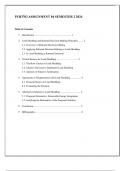
PUB3702 ASSIGNMENT 04 SEMESTER 2 2024
Table of Contents
1. Introduction ............................................................ 1
2. Load Shedding and Rational Decision-Making Principles ........ 2
2.1. Overview of Rational Decision-Making
2.2. Applying Rational Decision-Making to Load Shedding
2.3. Is Load Shedding a Rational Decision?
3. Critical Reason for Load Shedding ................................... 3
3.1. The Root Causes of Load Shedding
3.2. Eskom’s Decision to Implement Load Shedding
3.3. Analysis of Eskom’s Justification
4. Agreement or Disagreement with Load Shedding ................. 4
4.1. Personal Stance on Load Shedding
4.2. Evaluating the Decision
5. Alternative Solution to Load Shedding ................................. 5
5.1. Proposed Alternative: Renewable Energy Integration
5.2. Justifying the Rationality of the Proposed Solution
6. Conclusion ............................................................................. 5
7. Bibliography………………………………………………… 6
, 1. Introduction
Load shedding, a process where electricity supply is temporarily interrupted, has become a
common feature of South Africa's energy crisis. The term refers to Eskom's practice of rotating
power cuts to prevent the national grid from collapsing due to a mismatch between supply and
demand. The key question that arises from this practice is whether it aligns with the principles of
rational decision-making. Rational decision-making is a systematic process used by public
managers to make informed, logical decisions that maximize benefits while minimizing harm
(Hanekom & Thornhill, 1993:58). This essay explores load shedding as a decision-making
process, evaluates Eskom's reasoning for implementing it, and presents an alternative solution
that could serve as a more rational decision.
2. Load Shedding and Rational Decision-Making Principles
2.1. Overview of Rational Decision-Making
Rational decision-making involves selecting the most suitable option from a set of alternatives
based on objective data and logical analysis (Anderson, 1979:7). This method ensures that
decisions are not driven by emotion or personal preference but are instead grounded in facts and
reason. Public managers, such as those at Eskom, are expected to follow these principles when
addressing complex problems that affect public welfare, such as the nation's electricity supply.
2.2. Applying Rational Decision-Making to Load Shedding
Eskom's decision to implement load shedding was driven by a critical need to prevent a national
grid collapse, which would have far more severe consequences than temporary power cuts
(Steyn, 2019:22). From a rational decision-making perspective, the company sought to protect
the grid from overloading by rationing power across different regions. This strategy can be
considered rational in the short term, as it prevents an immediate crisis. However, long-term
rational decision-making requires that the root causes of the problem, such as underinvestment in
infrastructure and poor maintenance, be addressed (Baker, 2020:76).
2.3. Is Load Shedding a Rational Decision?
While load shedding serves as a temporary solution to a critical problem, it raises questions
about whether it is truly a rational decision in the long run. Rational decision-making demands
Table of Contents
1. Introduction ............................................................ 1
2. Load Shedding and Rational Decision-Making Principles ........ 2
2.1. Overview of Rational Decision-Making
2.2. Applying Rational Decision-Making to Load Shedding
2.3. Is Load Shedding a Rational Decision?
3. Critical Reason for Load Shedding ................................... 3
3.1. The Root Causes of Load Shedding
3.2. Eskom’s Decision to Implement Load Shedding
3.3. Analysis of Eskom’s Justification
4. Agreement or Disagreement with Load Shedding ................. 4
4.1. Personal Stance on Load Shedding
4.2. Evaluating the Decision
5. Alternative Solution to Load Shedding ................................. 5
5.1. Proposed Alternative: Renewable Energy Integration
5.2. Justifying the Rationality of the Proposed Solution
6. Conclusion ............................................................................. 5
7. Bibliography………………………………………………… 6
, 1. Introduction
Load shedding, a process where electricity supply is temporarily interrupted, has become a
common feature of South Africa's energy crisis. The term refers to Eskom's practice of rotating
power cuts to prevent the national grid from collapsing due to a mismatch between supply and
demand. The key question that arises from this practice is whether it aligns with the principles of
rational decision-making. Rational decision-making is a systematic process used by public
managers to make informed, logical decisions that maximize benefits while minimizing harm
(Hanekom & Thornhill, 1993:58). This essay explores load shedding as a decision-making
process, evaluates Eskom's reasoning for implementing it, and presents an alternative solution
that could serve as a more rational decision.
2. Load Shedding and Rational Decision-Making Principles
2.1. Overview of Rational Decision-Making
Rational decision-making involves selecting the most suitable option from a set of alternatives
based on objective data and logical analysis (Anderson, 1979:7). This method ensures that
decisions are not driven by emotion or personal preference but are instead grounded in facts and
reason. Public managers, such as those at Eskom, are expected to follow these principles when
addressing complex problems that affect public welfare, such as the nation's electricity supply.
2.2. Applying Rational Decision-Making to Load Shedding
Eskom's decision to implement load shedding was driven by a critical need to prevent a national
grid collapse, which would have far more severe consequences than temporary power cuts
(Steyn, 2019:22). From a rational decision-making perspective, the company sought to protect
the grid from overloading by rationing power across different regions. This strategy can be
considered rational in the short term, as it prevents an immediate crisis. However, long-term
rational decision-making requires that the root causes of the problem, such as underinvestment in
infrastructure and poor maintenance, be addressed (Baker, 2020:76).
2.3. Is Load Shedding a Rational Decision?
While load shedding serves as a temporary solution to a critical problem, it raises questions
about whether it is truly a rational decision in the long run. Rational decision-making demands


