

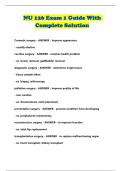
NU 126 Exam 1 Guide With
Complete Solution
Cosmetic surgery - ANSWER - improve appearance
- usually elective
curative surgery - ANSWER - resolves health problem
- ex. tumor removal, gallbladder removal
diagnostic surgery - ANSWER - determine origin/cause
- tissue sample taken
- ex. biopsy, arthroscopy
palliative surgery - ANSWER - improve quality of life
- non curative
- ex. thoracentesis, stent placement
preventative surgery - ANSWER - prevent condition from developing
- ex. prophylactic mastectomy
reconstructive surgery - ANSWER - to improve function
- ex. total hip replacement
transplantation surgery - ANSWER - to replace malfunctioning organ
- ex. heart transplant, kidney transplant
,inpatient - ANSWER - admitted to hospital
outpatient - ANSWER - ambulatory surgical centers (ASC's)
- returns home after surgery same day
- advantages: cost effective, service oriented, high degree of patient
satisfaction
AORN (association of peri operative registered nurses) - ANSWER - specialty
organization
- provides guidelines for ethical and safe care for patients undergoing
operative and other invasive procedures
elective surgery - ANSWER - planned correction
- non acute
- ex. cataract removal, hernia repair, joint replacement
urgent surgery - ANSWER - prompt intervention needed
- life threatening if delayed more than 24-48 hours
- ex. bladder obstruction, intestinal obstruction, fracture, acute cholecystitis
emergent surgery - ANSWER - immediate intervention needed
- ex. gunshot wound, severe bleeding, abdominal aortic aneurysm,
appendectomy
simple surgery - ANSWER - most overtly area affected
- ex. simple mastectomy, partial mastectomy
minimally invasive surgery - ANSWER - endoscopic
, - correct problems
- remove organs
- take tissue for biopsy
- reroute blood vessels and drainage systems
ex. hysterectomy, coronary artery bypass, cholecystectomy
radical surgery - ANSWER - extensive surgery beyond the area obviously
involved
- directed at finding a root cause
- ex. radical prostatectomy, radical hysterectomy
national patient safety goals - ANSWER - focus on communication with and
between the surgical team members so that correct actions are taken to
achieve desired outcomes
> having correct procedure done on correct patient at correct place on body
> marking correct site of surgery
> pausing before surgery to make sure mistakes are not being made
SBAR - ANSWER - for effective communication for hand off purposes
- used by two or more health care team members or two or more health care
agencies
- situation, background, assessment, recommendations
surgical care improvement plan (SCIP) - ANSWER - set of core compliance
measures to reduce surgical complications
Complete Solution
Cosmetic surgery - ANSWER - improve appearance
- usually elective
curative surgery - ANSWER - resolves health problem
- ex. tumor removal, gallbladder removal
diagnostic surgery - ANSWER - determine origin/cause
- tissue sample taken
- ex. biopsy, arthroscopy
palliative surgery - ANSWER - improve quality of life
- non curative
- ex. thoracentesis, stent placement
preventative surgery - ANSWER - prevent condition from developing
- ex. prophylactic mastectomy
reconstructive surgery - ANSWER - to improve function
- ex. total hip replacement
transplantation surgery - ANSWER - to replace malfunctioning organ
- ex. heart transplant, kidney transplant
,inpatient - ANSWER - admitted to hospital
outpatient - ANSWER - ambulatory surgical centers (ASC's)
- returns home after surgery same day
- advantages: cost effective, service oriented, high degree of patient
satisfaction
AORN (association of peri operative registered nurses) - ANSWER - specialty
organization
- provides guidelines for ethical and safe care for patients undergoing
operative and other invasive procedures
elective surgery - ANSWER - planned correction
- non acute
- ex. cataract removal, hernia repair, joint replacement
urgent surgery - ANSWER - prompt intervention needed
- life threatening if delayed more than 24-48 hours
- ex. bladder obstruction, intestinal obstruction, fracture, acute cholecystitis
emergent surgery - ANSWER - immediate intervention needed
- ex. gunshot wound, severe bleeding, abdominal aortic aneurysm,
appendectomy
simple surgery - ANSWER - most overtly area affected
- ex. simple mastectomy, partial mastectomy
minimally invasive surgery - ANSWER - endoscopic
, - correct problems
- remove organs
- take tissue for biopsy
- reroute blood vessels and drainage systems
ex. hysterectomy, coronary artery bypass, cholecystectomy
radical surgery - ANSWER - extensive surgery beyond the area obviously
involved
- directed at finding a root cause
- ex. radical prostatectomy, radical hysterectomy
national patient safety goals - ANSWER - focus on communication with and
between the surgical team members so that correct actions are taken to
achieve desired outcomes
> having correct procedure done on correct patient at correct place on body
> marking correct site of surgery
> pausing before surgery to make sure mistakes are not being made
SBAR - ANSWER - for effective communication for hand off purposes
- used by two or more health care team members or two or more health care
agencies
- situation, background, assessment, recommendations
surgical care improvement plan (SCIP) - ANSWER - set of core compliance
measures to reduce surgical complications


