
Hoofdstuk 6: Kadering beoordeling en evaluatie
1. Inleiding
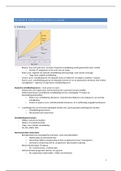
- Blauwe curve met gele zone: normale of typische ontwikkeling wordt gekenmerkt door variatie
o Variatie aangegeven in de vorm van een range
- Rode curve: volgorde van typische ontwikkeling wordt gevolgd, maar eerder vertraagd
o Trage maar stabiele ontwikkeling
- Groene curve: ontwikkeling tot een bepaald niveau en blijft hier vervolgens vastzitten = plateau
- Paarse curve: ontwikkeling gaat op een bepaald moment of na een plateaufase achteruit, kind verliest
vaardigheden = regressie of regressieve ontwikkelingsvorm
Atypische ontwikkelingscurves = rood, groen en paars
- Afstand met norm (gele zone) wordt steeds groter naarmate toename leeftijd
- Onderscheid tussen verschillende ontwikkelingsvormen noodzakelijk impact op
behandelingsdoelstelling
o Rode curve: ontwikkeling stimuleren, zodat kind kan bijbenen met ondergrens van normale
ontwikkeling
o Groene en paarse curve: zelfredzaamheid stimuleren zo zelfstandig mogelijk functioneren
3 pathologische curves kunnen gekoppeld worden aan 2 grote groepen pathologische situaties
o Ontwikkelingsstoornissen
o Neuromotorische stoornissen
Ontwikkelingsstoornissen
- Mildere motorische beelden
- Tijdens of na kleuterperiode
- Trage, maar stabiele ontwikkeling
- Vb. ASS, ADHD, DCD
Neuromusculaire stoornissen
- Betrokkenheid van neurologische structuren, maar ook spierziekten
o Malformaties in embryonale fase
o Hersenletsel tijdens zwangerschap of kort na geboorte (eerste 2 levensjaren)
o Genetische aandoening met bv. progressieve spierzwakte tot gevolg
- Klinisch beeld stabiel plateau
o Vb. cerebral parese, cerebral palsy
- Motorisch beeld progressief slechter regressie
o Vb. progressieve spierzwakte = ziekte van Duchenne
1
, 2
1. Inleiding
- Blauwe curve met gele zone: normale of typische ontwikkeling wordt gekenmerkt door variatie
o Variatie aangegeven in de vorm van een range
- Rode curve: volgorde van typische ontwikkeling wordt gevolgd, maar eerder vertraagd
o Trage maar stabiele ontwikkeling
- Groene curve: ontwikkeling tot een bepaald niveau en blijft hier vervolgens vastzitten = plateau
- Paarse curve: ontwikkeling gaat op een bepaald moment of na een plateaufase achteruit, kind verliest
vaardigheden = regressie of regressieve ontwikkelingsvorm
Atypische ontwikkelingscurves = rood, groen en paars
- Afstand met norm (gele zone) wordt steeds groter naarmate toename leeftijd
- Onderscheid tussen verschillende ontwikkelingsvormen noodzakelijk impact op
behandelingsdoelstelling
o Rode curve: ontwikkeling stimuleren, zodat kind kan bijbenen met ondergrens van normale
ontwikkeling
o Groene en paarse curve: zelfredzaamheid stimuleren zo zelfstandig mogelijk functioneren
3 pathologische curves kunnen gekoppeld worden aan 2 grote groepen pathologische situaties
o Ontwikkelingsstoornissen
o Neuromotorische stoornissen
Ontwikkelingsstoornissen
- Mildere motorische beelden
- Tijdens of na kleuterperiode
- Trage, maar stabiele ontwikkeling
- Vb. ASS, ADHD, DCD
Neuromusculaire stoornissen
- Betrokkenheid van neurologische structuren, maar ook spierziekten
o Malformaties in embryonale fase
o Hersenletsel tijdens zwangerschap of kort na geboorte (eerste 2 levensjaren)
o Genetische aandoening met bv. progressieve spierzwakte tot gevolg
- Klinisch beeld stabiel plateau
o Vb. cerebral parese, cerebral palsy
- Motorisch beeld progressief slechter regressie
o Vb. progressieve spierzwakte = ziekte van Duchenne
1
, 2


