Test Bank for Abnormal Psychology 8th Edition by Ba
6 6 6 6 6 6 6 66
rlow with questions and correct Answers
6 6 6 6 6
,Test Bank for Abnormal Psychology 8th Edition by Ba
6 6 6 6 6 6 6 66
rlow with questions and correct Answers
6 6 6 6 6
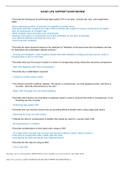
1. According6to6the6authors6of6your6textbook,6the6definition6of6a6psychological6disorder6is6associated6with
a. stress.
b. Impaired6functioning.
c. Culturally6expected6responses.
d. Psychotic6symptoms.
ANSWER: b
DIFFICULTY:6 6 Easy
REFERENCES:6Understanding6Psychopathology
LEARNING6OBJECTIVES:6ABNO.DURA.16.6APA1.1a6-
6Identify6basic6biological,6psychological,6and6social6components6of6behavioral6explanations6(e.g.,6infere
nces,6observations,6operational6definitions,6interpretation)
OTHER: TYPE:6Factual
2. A6psychological6dysfunction6refers6to
a. A6breakdown6in6cognitive6functioning.
b. A6breakdown6in6emotional6functioning.
c. A6breakdown6in6behavioral6functioning.
d. Any6of6these.
ANSWER: d
DIFFICULTY: Moderate
REFERENCES: Understanding6Psychopathology
LEARNING6OBJECTIVES:6ABNO.DURA.16.6APA1.1a-
Identifybasicbiological,6psychological,6and6social6components6of6behavioral6explanations6(e.g.,6i
nferences,6observations,6operational6definitions,6interpretation)
OTHER: TYPE:6Factual
NOTES: NEW
3. Regarding6the6definition6of6abnormality,6it6is6correct6to6state6that
a. It6is6difficult6to6define6“normal”6and6“abnormal.”
b. abnormalitydependssolelyon6 subjectivedistress.
c. thedefinition6isuniversalacrosscultures.
d. thecriteriadifferdependingon6whether6theindividualhasapsychologicaldisorderorapsychological
6dysfunction.
ANSWER: a
DIFFICULTY: Easy
REFERENCES: UnderstandingPsychopathology
LEARNING6OBJECTIVES:ABNO.DURA.16.APA1.1a-
Identifybasicbiological,psychological,andsocialcomponents6ofbehavioralexplanations(e.g.,6infer
ences,observations,operational6definitions,6interpretation)
OTHER: TYPE:Conceptual
,4. Thecriterionthataparticularbehaviorbeatypical6 ornotculturallyexpectedisinsufficientto6 defineabnormality6 because
a. behavior6thatoccurs6infrequentlyisconsidered6abnormalin6everyculture.
, b. theatypicalbehaviormustalsocauseharmor6impairment6to6beconsideredabnormal.
c. behaviorsvary6verylittlefromone6individualto6anotherwithineachculture.
d. manypeoplebehave6in6ways6thatdeviatefromtheaverage,6butthisdoesn’tmean6thattheyhaveadisorder.
6 6 6 6 6 6 6 66
rlow with questions and correct Answers
6 6 6 6 6
,Test Bank for Abnormal Psychology 8th Edition by Ba
6 6 6 6 6 6 6 66
rlow with questions and correct Answers
6 6 6 6 6
1. According6to6the6authors6of6your6textbook,6the6definition6of6a6psychological6disorder6is6associated6with
a. stress.
b. Impaired6functioning.
c. Culturally6expected6responses.
d. Psychotic6symptoms.
ANSWER: b
DIFFICULTY:6 6 Easy
REFERENCES:6Understanding6Psychopathology
LEARNING6OBJECTIVES:6ABNO.DURA.16.6APA1.1a6-
6Identify6basic6biological,6psychological,6and6social6components6of6behavioral6explanations6(e.g.,6infere
nces,6observations,6operational6definitions,6interpretation)
OTHER: TYPE:6Factual
2. A6psychological6dysfunction6refers6to
a. A6breakdown6in6cognitive6functioning.
b. A6breakdown6in6emotional6functioning.
c. A6breakdown6in6behavioral6functioning.
d. Any6of6these.
ANSWER: d
DIFFICULTY: Moderate
REFERENCES: Understanding6Psychopathology
LEARNING6OBJECTIVES:6ABNO.DURA.16.6APA1.1a-
Identifybasicbiological,6psychological,6and6social6components6of6behavioral6explanations6(e.g.,6i
nferences,6observations,6operational6definitions,6interpretation)
OTHER: TYPE:6Factual
NOTES: NEW
3. Regarding6the6definition6of6abnormality,6it6is6correct6to6state6that
a. It6is6difficult6to6define6“normal”6and6“abnormal.”
b. abnormalitydependssolelyon6 subjectivedistress.
c. thedefinition6isuniversalacrosscultures.
d. thecriteriadifferdependingon6whether6theindividualhasapsychologicaldisorderorapsychological
6dysfunction.
ANSWER: a
DIFFICULTY: Easy
REFERENCES: UnderstandingPsychopathology
LEARNING6OBJECTIVES:ABNO.DURA.16.APA1.1a-
Identifybasicbiological,psychological,andsocialcomponents6ofbehavioralexplanations(e.g.,6infer
ences,observations,operational6definitions,6interpretation)
OTHER: TYPE:Conceptual
,4. Thecriterionthataparticularbehaviorbeatypical6 ornotculturallyexpectedisinsufficientto6 defineabnormality6 because
a. behavior6thatoccurs6infrequentlyisconsidered6abnormalin6everyculture.
, b. theatypicalbehaviormustalsocauseharmor6impairment6to6beconsideredabnormal.
c. behaviorsvary6verylittlefromone6individualto6anotherwithineachculture.
d. manypeoplebehave6in6ways6thatdeviatefromtheaverage,6butthisdoesn’tmean6thattheyhaveadisorder.