

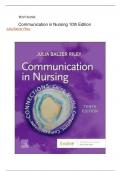
TEST BANK
Communication in Nursing 10th Edition
Julia Balzer Riley
, Table of Contents
Chapter 1: Responsible, Assertive, Caring Communication in Nursing Chapt
u u u u u u u u
er 2: The Client-
u u u
Nurse Relationship: A Helping Relationship Chapter 3: Solving Problems T
u u u u u u u u u
ogether
Chapter 4: Understanding Each Other: Communication and Culture
u u u u u u u u
Chapter 5: Demonstrating Warmth u u u
Chapter 6: Showing Respect Cha u u u u
pter 7: Being Genuine Chapter 8:
u u u u u u
Being Empathetic Chapter 9: Usin
u u u u
g Self-
u
Disclosure Chapter 10: Being spe u u u u
cific Chapter 11: Asking Questio
u u u u
ns Chapter 12: Expressing Opinio
u u u u
ns Chapter 13: Using Humor
u u u u
Chapter 14: Embracing the Spiritual Journey of Health Caring, Meaning Making Chapter
u u u u u u u u u u u u
15: Requesting Support
u u
Chapter 16: Overcoming Evaluation Anxiety C
u u u u u
hapter 17: Working with Feedback Chapter
u u u u u u
18: Using Relaxation technique
u u u
Chapter 19: Incorporating Imagery in Professional Practice and Self-
u u u u u u u u
Care Chapter 20 Incorporating Positive Self-Talk
u u u u u
Chapter 21: Learning to Work Together in Groups
u u u u u u u
Chapter 22: The Changing World of Electronic Communication
u u u u u u u u
Chapter 23: Learning Confrontation skills
u u u u
Chapter 24: Refusing Unreasonable Requests
u u u u
Chapter 25: Communicating Assertively and Responsibly with Distressed Clients and Colleagues C
u u u u u u u u u u u
hapter 26: Communicating Assertively and Responsibly with Aggressive Clients and Colleagues Ch
u u u u u u u u u u u
apter 27: Communicating Assertively and Responsibly with Unpopular Clients
u u u u u u u u
Chapter 29: Communicating at the End-of-
u u u u u
Life Chapter 30: Continuing the Commitment
u u u u u
,Balzer Riley: Communication in Nursing, 10th Edition
u u u u u
u
Chapter 1: Responsible, Assertive, Caring Communication in Nursing
u u u u u u u
Test Bank Multipl u u
e Choice
u
1. Which statement describes the affective aspect of learning effective c
u u u u u u u u u
ommunication strategies? u
a. ―The nurse should use clear, direct statements using objective words.‖
u u u u u u u u u
b. ―The nurse uses body language that is congruent with the verbal message.‖
u u u u u u u u u u u
c. ―The nurse believes that positive communication strategies build confidence.‖
u u u u u u u u
d. ―The nurse practices assertive and responsible communication strategies.‖
u u u u u u u
ANS:C
Learning involves three domains: the cognitive aspects (understanding and meaning), affect
u u u u u u u u u u
ive aspects (feelings, values, and attitudes), and psychomotor aspects (physical capability).
u u u u u u u u u u
Learning basic communication skills involves the cognitive domain; building confidence th
u u u u u u u u u u
rough a belief in the value and impact of positive communication is the affective domain; an
u u u u u u u u u u u u u u u
d putting skills into action is the psychomotor domain.DIF: Comprehension REF: p. 13 TOP
u u u u u u u u u u u u u
: Integrated Process: Communication and Documentation MSC: Psychosocial Integrity
u u u u u u u u
2. The nurse manager asks the staff nurse to work an extra shift. Which response by th
u u u u u u u u u u u u u u u
e staff nurse is assertive and based on rational beliefs?
u u u u u u u u u
a. ―I don’t want you upset, so I will work extra.‖
u u u u u u u u u
b. ―Why do I always have to cover extra shifts?‖
u u u u u u u u
c. ―I am not able to work an extra shift.‖
u u u u u u u u
d. ―If you can’t find anyone else, I will do it.‖
u u u u u u u u u
ANS:C
The staff nurse may turn down even a reasonable request; an assertive response avoids irrati
u u u u u u u u u u u u u u
onal beliefs. Irrational beliefs occur as a result of being anxious about assertiveness or focusi
u u u u u u u u u u u u u u
ng on possible negative outcomes.DIF: Analysis REF: p. 8 TOP: Integrated Process: Comm
u u u u u u u u u u u u
unication and Documentation MSC: Safe and Effective Care Environment: Management of
u u u u u u u u u u u
Care
, 3. A nurse manager offers a staff nurse a choice between working 8- or 12-
u u u u u u u u u u u u u
hour shifts. Which statement, if made by the staff nurse, is nonassertive and may result in
u u u u u u u u u u u u u u u
a frustrated response from the nurse manager?
u u u u u u u
a. ―I want to decide the shifts for all of the other staff nurses.‖
u u u u u u u u u u u u
b. ―Do whatever you want. It doesn’t really matter to me.‖
u u u u u u u u u
c. ―Thank you for offering me a choice. I prefer 12-hour shifts.‖
u u u u u u u u u u
d. ―You will never be able to give me what I really want to work.‖
u u u u u u u u u u u u u
ANS:B
A statement that allows others to make decisions for a person is an example of a nonassertive
u u u u u u u u u u u u u u u u
ustyle of communication; the response of others to a nonassertive statement may include disr
u u u u u u u u u u u u u
espect, guilt, anger, or frustration. Statements that make choices for others or that are accusat
u u u u u u u u u u u u u u
ions are examples of aggressive styles of communication; the response of others to an aggres
u u u u u u u u u u u u u u
sive statement may include hurt, defensiveness, or humiliation. A statement that allows mak
u u u u u u u u u u u u
ing one’s own decisions is an example of assertive style of communication; the response of o
u u u u u u u u u u u u u u u
thers to an assertive statement may include mutual respect.DIF: Analysis REF: p. 7 TOP: Int
u u u u u u u u u u u u u u
egrated Process: Communication and Documentation MSC: Safe and Effective Care Enviro
u u u u u u u u u u
nment: Management of Care u u u
4. The nurse is providing care to a patient who was admitted with heart failure. The pati
u u u u u u u u u u u u u u u
ent has not been following the prescribed diet or taking the prescribed medications. Whi
u u u u u u u u u u u u u
ch type of communication approach is most important for the nurse to use with this patie
u u u u u u u u u u u u u u u
nt to facilitate a change in self-care behavior?
u u u u u u u
a. Authoritative, honest, and outright communication u u u u
b. Assertive, responsible, and caring communication u u u u
c. Aggressive, sympathetic, and realistic communication u u u u
d. Positive, expert, and focused communication u u u u
ANS:B
Communication must be technically responsible, assertive, and caring to facilitate a change
u u u u u u u u u u u u
in behavior.DIF: Knowledge/Comprehension REF: p. 13 TOP: Integrated Process: Commu
u u u u u u u u u
nication and Documentation MSC: Psychosocial Integrity
u u u u u
5. Which are examples of a nurse who is communicating responsibly? (Select all th
u u u u u u u u u u u u
at apply) u
a. The nurse uses profanity to respond to a client who is intoxicated and verbally abu
u u u u u u u u u u u u u u
sive.
b. The nurse helps a client talk to family members about discontinuing c
u u u u u u u u u u u
hemotherapy.
Communication in Nursing 10th Edition
Julia Balzer Riley
, Table of Contents
Chapter 1: Responsible, Assertive, Caring Communication in Nursing Chapt
u u u u u u u u
er 2: The Client-
u u u
Nurse Relationship: A Helping Relationship Chapter 3: Solving Problems T
u u u u u u u u u
ogether
Chapter 4: Understanding Each Other: Communication and Culture
u u u u u u u u
Chapter 5: Demonstrating Warmth u u u
Chapter 6: Showing Respect Cha u u u u
pter 7: Being Genuine Chapter 8:
u u u u u u
Being Empathetic Chapter 9: Usin
u u u u
g Self-
u
Disclosure Chapter 10: Being spe u u u u
cific Chapter 11: Asking Questio
u u u u
ns Chapter 12: Expressing Opinio
u u u u
ns Chapter 13: Using Humor
u u u u
Chapter 14: Embracing the Spiritual Journey of Health Caring, Meaning Making Chapter
u u u u u u u u u u u u
15: Requesting Support
u u
Chapter 16: Overcoming Evaluation Anxiety C
u u u u u
hapter 17: Working with Feedback Chapter
u u u u u u
18: Using Relaxation technique
u u u
Chapter 19: Incorporating Imagery in Professional Practice and Self-
u u u u u u u u
Care Chapter 20 Incorporating Positive Self-Talk
u u u u u
Chapter 21: Learning to Work Together in Groups
u u u u u u u
Chapter 22: The Changing World of Electronic Communication
u u u u u u u u
Chapter 23: Learning Confrontation skills
u u u u
Chapter 24: Refusing Unreasonable Requests
u u u u
Chapter 25: Communicating Assertively and Responsibly with Distressed Clients and Colleagues C
u u u u u u u u u u u
hapter 26: Communicating Assertively and Responsibly with Aggressive Clients and Colleagues Ch
u u u u u u u u u u u
apter 27: Communicating Assertively and Responsibly with Unpopular Clients
u u u u u u u u
Chapter 29: Communicating at the End-of-
u u u u u
Life Chapter 30: Continuing the Commitment
u u u u u
,Balzer Riley: Communication in Nursing, 10th Edition
u u u u u
u
Chapter 1: Responsible, Assertive, Caring Communication in Nursing
u u u u u u u
Test Bank Multipl u u
e Choice
u
1. Which statement describes the affective aspect of learning effective c
u u u u u u u u u
ommunication strategies? u
a. ―The nurse should use clear, direct statements using objective words.‖
u u u u u u u u u
b. ―The nurse uses body language that is congruent with the verbal message.‖
u u u u u u u u u u u
c. ―The nurse believes that positive communication strategies build confidence.‖
u u u u u u u u
d. ―The nurse practices assertive and responsible communication strategies.‖
u u u u u u u
ANS:C
Learning involves three domains: the cognitive aspects (understanding and meaning), affect
u u u u u u u u u u
ive aspects (feelings, values, and attitudes), and psychomotor aspects (physical capability).
u u u u u u u u u u
Learning basic communication skills involves the cognitive domain; building confidence th
u u u u u u u u u u
rough a belief in the value and impact of positive communication is the affective domain; an
u u u u u u u u u u u u u u u
d putting skills into action is the psychomotor domain.DIF: Comprehension REF: p. 13 TOP
u u u u u u u u u u u u u
: Integrated Process: Communication and Documentation MSC: Psychosocial Integrity
u u u u u u u u
2. The nurse manager asks the staff nurse to work an extra shift. Which response by th
u u u u u u u u u u u u u u u
e staff nurse is assertive and based on rational beliefs?
u u u u u u u u u
a. ―I don’t want you upset, so I will work extra.‖
u u u u u u u u u
b. ―Why do I always have to cover extra shifts?‖
u u u u u u u u
c. ―I am not able to work an extra shift.‖
u u u u u u u u
d. ―If you can’t find anyone else, I will do it.‖
u u u u u u u u u
ANS:C
The staff nurse may turn down even a reasonable request; an assertive response avoids irrati
u u u u u u u u u u u u u u
onal beliefs. Irrational beliefs occur as a result of being anxious about assertiveness or focusi
u u u u u u u u u u u u u u
ng on possible negative outcomes.DIF: Analysis REF: p. 8 TOP: Integrated Process: Comm
u u u u u u u u u u u u
unication and Documentation MSC: Safe and Effective Care Environment: Management of
u u u u u u u u u u u
Care
, 3. A nurse manager offers a staff nurse a choice between working 8- or 12-
u u u u u u u u u u u u u
hour shifts. Which statement, if made by the staff nurse, is nonassertive and may result in
u u u u u u u u u u u u u u u
a frustrated response from the nurse manager?
u u u u u u u
a. ―I want to decide the shifts for all of the other staff nurses.‖
u u u u u u u u u u u u
b. ―Do whatever you want. It doesn’t really matter to me.‖
u u u u u u u u u
c. ―Thank you for offering me a choice. I prefer 12-hour shifts.‖
u u u u u u u u u u
d. ―You will never be able to give me what I really want to work.‖
u u u u u u u u u u u u u
ANS:B
A statement that allows others to make decisions for a person is an example of a nonassertive
u u u u u u u u u u u u u u u u
ustyle of communication; the response of others to a nonassertive statement may include disr
u u u u u u u u u u u u u
espect, guilt, anger, or frustration. Statements that make choices for others or that are accusat
u u u u u u u u u u u u u u
ions are examples of aggressive styles of communication; the response of others to an aggres
u u u u u u u u u u u u u u
sive statement may include hurt, defensiveness, or humiliation. A statement that allows mak
u u u u u u u u u u u u
ing one’s own decisions is an example of assertive style of communication; the response of o
u u u u u u u u u u u u u u u
thers to an assertive statement may include mutual respect.DIF: Analysis REF: p. 7 TOP: Int
u u u u u u u u u u u u u u
egrated Process: Communication and Documentation MSC: Safe and Effective Care Enviro
u u u u u u u u u u
nment: Management of Care u u u
4. The nurse is providing care to a patient who was admitted with heart failure. The pati
u u u u u u u u u u u u u u u
ent has not been following the prescribed diet or taking the prescribed medications. Whi
u u u u u u u u u u u u u
ch type of communication approach is most important for the nurse to use with this patie
u u u u u u u u u u u u u u u
nt to facilitate a change in self-care behavior?
u u u u u u u
a. Authoritative, honest, and outright communication u u u u
b. Assertive, responsible, and caring communication u u u u
c. Aggressive, sympathetic, and realistic communication u u u u
d. Positive, expert, and focused communication u u u u
ANS:B
Communication must be technically responsible, assertive, and caring to facilitate a change
u u u u u u u u u u u u
in behavior.DIF: Knowledge/Comprehension REF: p. 13 TOP: Integrated Process: Commu
u u u u u u u u u
nication and Documentation MSC: Psychosocial Integrity
u u u u u
5. Which are examples of a nurse who is communicating responsibly? (Select all th
u u u u u u u u u u u u
at apply) u
a. The nurse uses profanity to respond to a client who is intoxicated and verbally abu
u u u u u u u u u u u u u u
sive.
b. The nurse helps a client talk to family members about discontinuing c
u u u u u u u u u u u
hemotherapy.


