

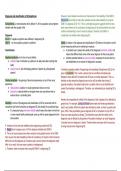
Diagnosis and classification of Schizophrenia However, recent studies have shown an improvement in the reliability of the DSM-V.
Osorio et al found that the inter-rater reliability and test-retest reliability of using the
Schizophrenia- a mental disorder which affects 1% of the population and symptoms DSM-V to diagnose SZ is +0.9. This is a strength because it suggests that there has
interfere with their quality of life. been improvements in the consistency of diagnosing SZ as all psychiatrists now have
a better understanding in how it should be utilised. Therefore, the DSM-V is
Diagnosis: considered to be reliable when diagnosing SZ.
ICD-I0: 2+ negative symptoms are sufficient in diagnosing SZ.
DSM-V: 1 or more positive symptom is sufficient Validity in relation to the diagnosis and classification of SZ refers to the extent to which
we are measuring what we are intending to measure.
Classification: ● A standard way to assess the validity of the diagnosis is criterion validity- this
means that different tests arrive at the same diagnosis for the same patient.
Negative symptoms are the loss of usual abilities ● Another potential method is concurrent validity compares the current test to a
● Avolition: loss of motivation (e.g failure to do daily tasks like brushing their pre-established one to ensure the diagnosis is accurate.
teeth)
● speech poverty: lack of/changing patterns of speech (e.g disorganised A limitation regarding validity of diagnosing and classifying Schizophrenia (SZ) is the
speech) issue of comorbidity. This is when a person has two conditions simultaneously.
Research shows that 50% of patients with SZ have co-morbid depression. This is a
Positive symptoms = the gaining of abnormal experiences on top of their usual limitation as this means the diagnosis may not be valid as rather than having 2
experience. separate conditions, the patient might have a condition that is not yet identified and
● Hallucinations: auditory or visual experiences that are not real named; thus leading to misdiagnosis. Therefore, our understanding in classifying SZ is
● Delusions: irrational beliefs or thoughts where one may believe that an limited.
external force is controlling them.
Another issue regarding the validity of the diagnosis is that it appears to be affected by
Reliability in terms of the diagnosis and classification of SZ is concerned with the gender bias. For example, Loring and Powell asked male and female psychiatrists to
consistency with which clinicians can diagnose SZ and classify into a particular type. read 2 case studies. When the patient was described as male, or when no gender was
● It is measured using inter-rater reliability which means the extent in which two given, 56% of the psychiatrists gave a diagnosis of SZ in comparison to only 20% of
or more mental health professionals come up with the same diagnosis for the those who were described as female. This therefore means that the validity of the
same patient. diagnosis may be affected by the gender of the patient, leading to an under diagnosis
in females and over diagnosis in males. Therefore there are issues with the accuracy
P- evidence of low inter-rater reliability when diagnosing a patient with SZ. of using manuals when diagnosing SZ.
E: Reigler found a kappa score of 0.46 in diagnosis reliability with DSM 5.
E: This is an issue because even when using the most updated version of the DSM,
there is poor inter-rater reliability and lack of consistency. Its impact is that it becomes
difficult to trust the diagnosis as if someone got a second opinion the diagnosis might
differ. As a result, this may mean a patient is misdiagnosed.
L: Therefore, there are issues when using the DSM-V in diagnosing SZ.
, Biological explanation of schizophrenia Another strength of the biological explanation is that there is supporting evidence. For
example, Tienari’s adoption study of 100 SZ patients showed that despite having
One biological explanation for schizophrenia is the genetic explanation which states adoptive parents with no history of SZ, children still developed SZ because their
that SZ is inherited through candidate genes (e.g COMT). This is supported by biological parents had SZ or had a history of it. This is a strength because the study
Gottesman’s study which concluded that as genetic similarity increases, the risk of shows that there is a genetic basis for SZ and that it is more significant than the
developing SZ also increases; for example monozygotic twins have a 48% environmental factors. Therefore, this increases the credibility of the biological
concordance rate whilst for parents it is only 6%. However, SZ is also polygenic which explanation of SZ.
means that there are multiple different candidate genes which are involved. SZ is also
aetiologically heterogeneous as there are different combinations of genes and factors However, another limitation is the correlation-causation problem. For example, there is
which can increase the genetic vulnerability of developing SZ; Ripke’s study a correlation between low activity levels in the prefrontal cortex and negative
discovered that there are 108 genetic variations. symptoms of SZ, which doesn't necessarily mean that dopamine levels cause
symptoms of SZ as there may be a third factor which influences both the negative
Another biological explanation is the dopamine hypothesis, which is an example of a symptoms and the low levels of dopamine. This is a limitation as it is not taking into
neural correlate, in which different activity levels of the neurotransmitter dopamine (in account other factors and we cannot successfully pinpoint the cause for the unusual
charge of pleasure) affects the symptoms which are shown in patients with SZ. activities in the brain and schizophrenia. Therefore, the biological explanation of SZ
Hyperdopaminergia (high activity levels of dopamine) in the subcortex (Broca’s area can be considered to be innacurate
which is responsible for speech production) could explain symptoms such as auditory
hallucinations, which are additional experiences, and speech poverty (lack or/changes
in patterns of speech). Hypodopaminergia (low activity levels of dopamine) in the
prefrontal cortex, which is responsible for decision making, which could explain
negative symptoms of avolition, the loss of motivation.
One strength of the biological explanation is that it has real life application. For
example, as a result of the dopamine hypothesis, drug therapy has been introduced
such as typical and atypical antipsychotics (e.g clozapine) which work to increase
dopamine levels in the synaptic cleft as we know that low levels of dopamine activity
can lead to symptoms of SZ. These drugs have been proven to be 30-50% effective in
tackling symptoms of SZ patients. This is a strength because it allows patients
suffering from SZ to tackle the symptoms and help improve their quality of life.
Therefore, this enhances the practicality of the biological explanation of SZ.
One limitation is that the biological explanation is reductionist. For example, Ripke et
al’s study code shows that although dopamine is one of the important factors in SZ, so
are other neurotransmitters as current research has shifted to the role of the
neurotransmitter glutamate. This is a weakness as the biological explanation reduces
schizophrenia symptoms only to dopamine and does not take into account other
significant neurotransmitters and environmental factors which also play an important
role. Therefore, this reduces the validity of the biological explanation of schizophrenia.
Osorio et al found that the inter-rater reliability and test-retest reliability of using the
Schizophrenia- a mental disorder which affects 1% of the population and symptoms DSM-V to diagnose SZ is +0.9. This is a strength because it suggests that there has
interfere with their quality of life. been improvements in the consistency of diagnosing SZ as all psychiatrists now have
a better understanding in how it should be utilised. Therefore, the DSM-V is
Diagnosis: considered to be reliable when diagnosing SZ.
ICD-I0: 2+ negative symptoms are sufficient in diagnosing SZ.
DSM-V: 1 or more positive symptom is sufficient Validity in relation to the diagnosis and classification of SZ refers to the extent to which
we are measuring what we are intending to measure.
Classification: ● A standard way to assess the validity of the diagnosis is criterion validity- this
means that different tests arrive at the same diagnosis for the same patient.
Negative symptoms are the loss of usual abilities ● Another potential method is concurrent validity compares the current test to a
● Avolition: loss of motivation (e.g failure to do daily tasks like brushing their pre-established one to ensure the diagnosis is accurate.
teeth)
● speech poverty: lack of/changing patterns of speech (e.g disorganised A limitation regarding validity of diagnosing and classifying Schizophrenia (SZ) is the
speech) issue of comorbidity. This is when a person has two conditions simultaneously.
Research shows that 50% of patients with SZ have co-morbid depression. This is a
Positive symptoms = the gaining of abnormal experiences on top of their usual limitation as this means the diagnosis may not be valid as rather than having 2
experience. separate conditions, the patient might have a condition that is not yet identified and
● Hallucinations: auditory or visual experiences that are not real named; thus leading to misdiagnosis. Therefore, our understanding in classifying SZ is
● Delusions: irrational beliefs or thoughts where one may believe that an limited.
external force is controlling them.
Another issue regarding the validity of the diagnosis is that it appears to be affected by
Reliability in terms of the diagnosis and classification of SZ is concerned with the gender bias. For example, Loring and Powell asked male and female psychiatrists to
consistency with which clinicians can diagnose SZ and classify into a particular type. read 2 case studies. When the patient was described as male, or when no gender was
● It is measured using inter-rater reliability which means the extent in which two given, 56% of the psychiatrists gave a diagnosis of SZ in comparison to only 20% of
or more mental health professionals come up with the same diagnosis for the those who were described as female. This therefore means that the validity of the
same patient. diagnosis may be affected by the gender of the patient, leading to an under diagnosis
in females and over diagnosis in males. Therefore there are issues with the accuracy
P- evidence of low inter-rater reliability when diagnosing a patient with SZ. of using manuals when diagnosing SZ.
E: Reigler found a kappa score of 0.46 in diagnosis reliability with DSM 5.
E: This is an issue because even when using the most updated version of the DSM,
there is poor inter-rater reliability and lack of consistency. Its impact is that it becomes
difficult to trust the diagnosis as if someone got a second opinion the diagnosis might
differ. As a result, this may mean a patient is misdiagnosed.
L: Therefore, there are issues when using the DSM-V in diagnosing SZ.
, Biological explanation of schizophrenia Another strength of the biological explanation is that there is supporting evidence. For
example, Tienari’s adoption study of 100 SZ patients showed that despite having
One biological explanation for schizophrenia is the genetic explanation which states adoptive parents with no history of SZ, children still developed SZ because their
that SZ is inherited through candidate genes (e.g COMT). This is supported by biological parents had SZ or had a history of it. This is a strength because the study
Gottesman’s study which concluded that as genetic similarity increases, the risk of shows that there is a genetic basis for SZ and that it is more significant than the
developing SZ also increases; for example monozygotic twins have a 48% environmental factors. Therefore, this increases the credibility of the biological
concordance rate whilst for parents it is only 6%. However, SZ is also polygenic which explanation of SZ.
means that there are multiple different candidate genes which are involved. SZ is also
aetiologically heterogeneous as there are different combinations of genes and factors However, another limitation is the correlation-causation problem. For example, there is
which can increase the genetic vulnerability of developing SZ; Ripke’s study a correlation between low activity levels in the prefrontal cortex and negative
discovered that there are 108 genetic variations. symptoms of SZ, which doesn't necessarily mean that dopamine levels cause
symptoms of SZ as there may be a third factor which influences both the negative
Another biological explanation is the dopamine hypothesis, which is an example of a symptoms and the low levels of dopamine. This is a limitation as it is not taking into
neural correlate, in which different activity levels of the neurotransmitter dopamine (in account other factors and we cannot successfully pinpoint the cause for the unusual
charge of pleasure) affects the symptoms which are shown in patients with SZ. activities in the brain and schizophrenia. Therefore, the biological explanation of SZ
Hyperdopaminergia (high activity levels of dopamine) in the subcortex (Broca’s area can be considered to be innacurate
which is responsible for speech production) could explain symptoms such as auditory
hallucinations, which are additional experiences, and speech poverty (lack or/changes
in patterns of speech). Hypodopaminergia (low activity levels of dopamine) in the
prefrontal cortex, which is responsible for decision making, which could explain
negative symptoms of avolition, the loss of motivation.
One strength of the biological explanation is that it has real life application. For
example, as a result of the dopamine hypothesis, drug therapy has been introduced
such as typical and atypical antipsychotics (e.g clozapine) which work to increase
dopamine levels in the synaptic cleft as we know that low levels of dopamine activity
can lead to symptoms of SZ. These drugs have been proven to be 30-50% effective in
tackling symptoms of SZ patients. This is a strength because it allows patients
suffering from SZ to tackle the symptoms and help improve their quality of life.
Therefore, this enhances the practicality of the biological explanation of SZ.
One limitation is that the biological explanation is reductionist. For example, Ripke et
al’s study code shows that although dopamine is one of the important factors in SZ, so
are other neurotransmitters as current research has shifted to the role of the
neurotransmitter glutamate. This is a weakness as the biological explanation reduces
schizophrenia symptoms only to dopamine and does not take into account other
significant neurotransmitters and environmental factors which also play an important
role. Therefore, this reduces the validity of the biological explanation of schizophrenia.


