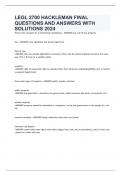
LEGL 2700 HACKLEMAN FINAL
QUESTIONS AND ANSWERS WITH
SOLUTIONS 2024
ThreeQmainQconceptsQforQaQfunctioningQmarketplaceQ-QANSWERQlaw,QruleQofQlaw,Qproperty
lawQ-QANSWERQmostQsignificantQandQformalQlegalQforce
RuleQofQLawQ-
QANSWERQlawsQareQequallyQapplicableQtoQeveryone,QtheyQmustQbeQenforcedQagainstQeveryoneQtheQsameQ
way.QThisQisQtheQkeyQtoQaQwealthyQnation
propertyQ-
QANSWERQrightQofQownership,QrightQtoQexcludeQothersQfromQwhatQyouQoriginally/rightfullyQownQorQlawfull
yQacquiredQ(legalQfence)
threeQmainQtypesQofQpropertyQ-QANSWERQpublic,Qprivate,Qcommon
publicQpropertyQ-
QANSWERQanyQgoodQthatQisQownedQbyQtheQgovernment,QpublicQresourcesQlikeQparks,QmonumentsQetc..)
privateQpropertyQ-
QANSWERQpropertyQownedQbyQindividualsQorQcompanies,QnotQbyQtheQgovernmentQorQtheQpeopleQasQaQwh
ole
commonQpropertyQ-QANSWERQthingsQownedQbyQmoreQthanQoneQperson
CommonQLawQSystemQ-
QANSWERQsystemQthatQcaresQaboutQwhatQotherQjudgesQhaveQsaid,QrelyQonQprecedence,QvoteQonQnewQcase
sQbasedQonQsimilarQoldQones
,CivilQLawQSystemQ-
QANSWERQsystemQthatQcaresQlessQaboutQtheQpastQandQmoreQaboutQhowQeachQjudgeQhasQtheQrightQtoQinter
pretQtheQlawQasQtheyQchoose
LouisianaQisQtheQonlyQstateQinQtheQUnitedQStatesQthatQfollowsQaQ________QlawQsystem.Q-QANSWERQquasi-
civilQlawQsystem
PublicQLawQ-
QANSWERQgovernmentQregulatingQsocietyQandQincludesQconstitutional,Qadministrative,QandQcriminalQlaw.
ConstitutionalQLawQ-
QANSWERQtypeQofQpublicQlaw,QinvolvesQinterpretingQandQapplyQeitherQstateQorQfederalQconstitutionsQtoQma
tters
AdministrativeQLawQ-
QANSWERQtypeQofQpublicQlaw,QincludesQandQcoversQtheQlealQprinciplesQthatQapplyQtoQtheQbureaucracyQ(gov
ernment/administrativeQagencies,Qbureaus,Qboards,Qcommissions)
CriminalQLawQ-
QANSWERQtypeQofQpublicQlaw,QaddressesQwrongsQofQsocietyQandQoffensesQagainstQtheQorderQofQtheQstate
PrivateQLawQ-QANSWERQlawQthatQinvolvesQsuitsQbetweenQprivateQindividualsQorQgroups.QIssuesQin-
betweenQpeopleQandQincludesQproperty,Qcontract,QandQtortQlaw.
propertyQlawQ-QANSWERQtypeQofQprivateQlaw,QexclusiveQrightsQtoQbothQtangibleQandQintangibleQresources
ContractQLawQ-
QANSWERQtypeQofQprivateQlaw,QsetQofQlawsQthatQspecifyQwhatQconstitutesQaQlegallyQenforceableQagreemen
t.QexplainsQhowQresourcesQareQexchangedQbetweenQtwoQpeople.
TortQLawQ-
QANSWERQtypeQofQprivateQlaw,QestablishesQrulesQforQcompensationQwhenQsomeone'sQlegalQboundariesQar
eQwrongfullyQcrossedQbyQanotherQperson
, LawQofQBusinessQOrganizationsQ-
QANSWERQidentifiesQhowQindividualsQcanQownQandQuseQprivateQresourcesQinQgroups
CivilQvs.QCriminalQLawQ-
QANSWERQCriminalQlawsQregulateQcrimes,QorQwrongsQcommittedQagainstQtheQgovernment.QCivilQlawsQregu
lateQdisputesQbetweenQprivateQparties.QCivilQcasesQincludeQsuitsQbetweenQotherQpeople,QwithoutQgovern
mentQintervention,QwhereasQcriminalQcasesQalwaysQinvolveQaQgovernmentQrepresentativeQattemptingQtoQ
proveQtheQdefendantQcommittedQaQwrongQagainstQsocietyQandQisQseekingQtoQhaveQtheQdefendantQpunishe
dQbyQ"societiesQstandards"
SubstansiveQLawQ-
QANSWERQLawQcategoryQthatQdefines,QdescribesQandQregulatesQtheQlegalQquestionQyouQneedQansweredQ(b
yQtheQcourt)
ProceduralQLawQ-
QANSWERQLawQthatQestablishesQtheQmethodsQandQmeansQofQenforcingQtheQrightsQestablishedQbyQsubstant
iveQlaw.QDescribesQtheQmachineryQthatQwillQgetQyouQtoQtheQquestionQatQhand.
jurisprudenceQ-
QANSWERQphilosophiesQthatQexplainQtheQoriginQofQlaw,QandQit'sQjustification.QThereQareQfiveQofQtheseQtheo
ries:QnaturalQlaw,QpositiveQlaw,QhistoricalQschool,Qsociological,QlegalQrealism.
NaturalQLawQTheoryQ-
QANSWERQtypeQofQjurisprudence;QuniversalQmoralQprinciples,QlawsQmustQalignQwithQnature
PositiveQLawQTheoryQ-
QANSWERQtypeQofQjurisprudence;QcommandQofQgovernmentQtoQcreateQandQenforcementQwhatQtheyQfeelQi
sQright
HistoricalQSchoolQTheoryQ-
QANSWERQtypeQofQjurisprudence;QtheQlawQreflectsQcultureQandQcustomsQofQcertainQpeople,QmustQvaryQbyQl
ocation
SociologicalQTheoryQ-QANSWERQtypeQofQjurisprudence;QlawQmustQmeetsQtheQneedsQofQsociety
QUESTIONS AND ANSWERS WITH
SOLUTIONS 2024
ThreeQmainQconceptsQforQaQfunctioningQmarketplaceQ-QANSWERQlaw,QruleQofQlaw,Qproperty
lawQ-QANSWERQmostQsignificantQandQformalQlegalQforce
RuleQofQLawQ-
QANSWERQlawsQareQequallyQapplicableQtoQeveryone,QtheyQmustQbeQenforcedQagainstQeveryoneQtheQsameQ
way.QThisQisQtheQkeyQtoQaQwealthyQnation
propertyQ-
QANSWERQrightQofQownership,QrightQtoQexcludeQothersQfromQwhatQyouQoriginally/rightfullyQownQorQlawfull
yQacquiredQ(legalQfence)
threeQmainQtypesQofQpropertyQ-QANSWERQpublic,Qprivate,Qcommon
publicQpropertyQ-
QANSWERQanyQgoodQthatQisQownedQbyQtheQgovernment,QpublicQresourcesQlikeQparks,QmonumentsQetc..)
privateQpropertyQ-
QANSWERQpropertyQownedQbyQindividualsQorQcompanies,QnotQbyQtheQgovernmentQorQtheQpeopleQasQaQwh
ole
commonQpropertyQ-QANSWERQthingsQownedQbyQmoreQthanQoneQperson
CommonQLawQSystemQ-
QANSWERQsystemQthatQcaresQaboutQwhatQotherQjudgesQhaveQsaid,QrelyQonQprecedence,QvoteQonQnewQcase
sQbasedQonQsimilarQoldQones
,CivilQLawQSystemQ-
QANSWERQsystemQthatQcaresQlessQaboutQtheQpastQandQmoreQaboutQhowQeachQjudgeQhasQtheQrightQtoQinter
pretQtheQlawQasQtheyQchoose
LouisianaQisQtheQonlyQstateQinQtheQUnitedQStatesQthatQfollowsQaQ________QlawQsystem.Q-QANSWERQquasi-
civilQlawQsystem
PublicQLawQ-
QANSWERQgovernmentQregulatingQsocietyQandQincludesQconstitutional,Qadministrative,QandQcriminalQlaw.
ConstitutionalQLawQ-
QANSWERQtypeQofQpublicQlaw,QinvolvesQinterpretingQandQapplyQeitherQstateQorQfederalQconstitutionsQtoQma
tters
AdministrativeQLawQ-
QANSWERQtypeQofQpublicQlaw,QincludesQandQcoversQtheQlealQprinciplesQthatQapplyQtoQtheQbureaucracyQ(gov
ernment/administrativeQagencies,Qbureaus,Qboards,Qcommissions)
CriminalQLawQ-
QANSWERQtypeQofQpublicQlaw,QaddressesQwrongsQofQsocietyQandQoffensesQagainstQtheQorderQofQtheQstate
PrivateQLawQ-QANSWERQlawQthatQinvolvesQsuitsQbetweenQprivateQindividualsQorQgroups.QIssuesQin-
betweenQpeopleQandQincludesQproperty,Qcontract,QandQtortQlaw.
propertyQlawQ-QANSWERQtypeQofQprivateQlaw,QexclusiveQrightsQtoQbothQtangibleQandQintangibleQresources
ContractQLawQ-
QANSWERQtypeQofQprivateQlaw,QsetQofQlawsQthatQspecifyQwhatQconstitutesQaQlegallyQenforceableQagreemen
t.QexplainsQhowQresourcesQareQexchangedQbetweenQtwoQpeople.
TortQLawQ-
QANSWERQtypeQofQprivateQlaw,QestablishesQrulesQforQcompensationQwhenQsomeone'sQlegalQboundariesQar
eQwrongfullyQcrossedQbyQanotherQperson
, LawQofQBusinessQOrganizationsQ-
QANSWERQidentifiesQhowQindividualsQcanQownQandQuseQprivateQresourcesQinQgroups
CivilQvs.QCriminalQLawQ-
QANSWERQCriminalQlawsQregulateQcrimes,QorQwrongsQcommittedQagainstQtheQgovernment.QCivilQlawsQregu
lateQdisputesQbetweenQprivateQparties.QCivilQcasesQincludeQsuitsQbetweenQotherQpeople,QwithoutQgovern
mentQintervention,QwhereasQcriminalQcasesQalwaysQinvolveQaQgovernmentQrepresentativeQattemptingQtoQ
proveQtheQdefendantQcommittedQaQwrongQagainstQsocietyQandQisQseekingQtoQhaveQtheQdefendantQpunishe
dQbyQ"societiesQstandards"
SubstansiveQLawQ-
QANSWERQLawQcategoryQthatQdefines,QdescribesQandQregulatesQtheQlegalQquestionQyouQneedQansweredQ(b
yQtheQcourt)
ProceduralQLawQ-
QANSWERQLawQthatQestablishesQtheQmethodsQandQmeansQofQenforcingQtheQrightsQestablishedQbyQsubstant
iveQlaw.QDescribesQtheQmachineryQthatQwillQgetQyouQtoQtheQquestionQatQhand.
jurisprudenceQ-
QANSWERQphilosophiesQthatQexplainQtheQoriginQofQlaw,QandQit'sQjustification.QThereQareQfiveQofQtheseQtheo
ries:QnaturalQlaw,QpositiveQlaw,QhistoricalQschool,Qsociological,QlegalQrealism.
NaturalQLawQTheoryQ-
QANSWERQtypeQofQjurisprudence;QuniversalQmoralQprinciples,QlawsQmustQalignQwithQnature
PositiveQLawQTheoryQ-
QANSWERQtypeQofQjurisprudence;QcommandQofQgovernmentQtoQcreateQandQenforcementQwhatQtheyQfeelQi
sQright
HistoricalQSchoolQTheoryQ-
QANSWERQtypeQofQjurisprudence;QtheQlawQreflectsQcultureQandQcustomsQofQcertainQpeople,QmustQvaryQbyQl
ocation
SociologicalQTheoryQ-QANSWERQtypeQofQjurisprudence;QlawQmustQmeetsQtheQneedsQofQsociety