
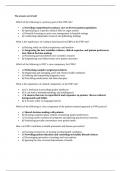
The answers are in bold
Which of the following is a primary goal of the FNP role?
a) Providing comprehensive primary care to diverse patient populations
b) Specializing in a specific medical field or organ system
c) Primarily focusing on acute care management in hospital settings
d) Conducting independent research and publishing findings
What is the significance of evidence-based practice (EBP) in the FNP role?
a) Relying solely on clinical experience and intuition
b) Integrating the best available evidence, clinical expertise, and patient preferences
into clinical decision-making
c) Prioritizing personal beliefs over scientific research
d) Emphasizing cost-effectiveness over patient outcomes
Which of the following is NOT a core competency for FNPs?
a) Performing complex surgical procedures
b) Diagnosing and managing acute and chronic health conditions
c) Ordering and interpreting diagnostic tests
d) Prescribing medications and other therapies
What is the importance of cultural competency in the FNP role?
a) It is irrelevant to providing quality healthcare
b) It can lead to misunderstandings and misdiagnosis
c) It ensures that care is respectful of and responsive to patients' diverse cultural
backgrounds and beliefs
d) It focuses solely on language barriers
Which of the following is a key component of the patient-centered approach in FNP practice?
a) Shared decision-making with patients
b) Dictating treatment plans without considering patient preferences
c) Focusing solely on physical symptoms and ignoring psychosocial concerns
d) Prioritizing provider convenience over patient needs
How can FNPs contribute to health promotion and disease prevention?
a) Focusing exclusively on treating existing health conditions
b) Providing patient education and counseling on healthy lifestyle choices
c) Discouraging preventive screenings and vaccinations
d) Ignoring the role of social determinants of health
, Which of the following is a common health promotion strategy employed by FNPs?
a) Conducting health risk assessments
b) Offering lifestyle counseling on nutrition and exercise
c) Providing immunizations and preventive screenings
d) All of the above
What is the significance of interprofessional collaboration in FNP practice?
a) It is not essential for providing comprehensive care
b) It hinders effective communication and coordination
c) It facilitates communication and teamwork among healthcare professionals to
improve patient outcomes
d) It focuses solely on the role of physicians in healthcare delivery
Which of the following professionals might an FNP collaborate with in a primary care setting?
a) Registered nurses
b) Pharmacists
c) Social workers
d) All of the above
What is the role of the FNP in managing chronic diseases?
a) Providing acute care management only
b) Developing and implementing comprehensive care plans
c) Focusing solely on medication management
d) Ignoring the impact of lifestyle factors on disease progression
Which of the following is a common chronic disease managed by FNPs?
a) Diabetes
b) Hypertension
c) Heart failure
d) All of the above
What is the importance of patient education in chronic disease management?
a) It is not a priority for FNPs
b) It empowers patients to self-manage their conditions and make informed
decisions
c) It relies solely on providing written materials to patients
d) It focuses on lecturing patients about their unhealthy behaviors
How can FNPs utilize technology in chronic disease management?
, a) Remote patient monitoring
b) Telehealth consultations
c) Patient portals for secure communication and information sharing
d) All of the above
What is the role of health coaching in FNP practice?
a) It is not relevant to the FNP role
b) It focuses solely on providing dietary advice
c) It provides support, guidance, and accountability to help patients achieve their
health goals
d) It replaces the role of healthcare providers
How can health coaches support patients in making lifestyle changes?
a) Setting realistic goals and creating action plans
b) Providing ongoing support and motivation
c) Helping patients overcome barriers and challenges
d) All of the above
What is the importance of cultural competency in the FNP role?
a) It is not necessary for effective patient care
b) It can lead to misunderstandings and ineffective treatment
c) It ensures that care is tailored to patients' diverse cultural beliefs and practices
d) It focuses solely on addressing language barriers
How can FNPs demonstrate cultural competency?
a) Seeking to understand patients' cultural backgrounds and values
b) Adapting interventions to be culturally relevant and appropriate
c) Avoiding stereotypes and assumptions
d) All of the above
Which of the following is a common acute health condition managed by FNPs?
a) Upper respiratory infections
b) Urinary tract infections
c) Minor injuries
d) All of the above
What is the importance of differential diagnosis in FNP practice?
a) It is not relevant to diagnosing acute conditions
b) It focuses solely on the most common diagnosis
Which of the following is a primary goal of the FNP role?
a) Providing comprehensive primary care to diverse patient populations
b) Specializing in a specific medical field or organ system
c) Primarily focusing on acute care management in hospital settings
d) Conducting independent research and publishing findings
What is the significance of evidence-based practice (EBP) in the FNP role?
a) Relying solely on clinical experience and intuition
b) Integrating the best available evidence, clinical expertise, and patient preferences
into clinical decision-making
c) Prioritizing personal beliefs over scientific research
d) Emphasizing cost-effectiveness over patient outcomes
Which of the following is NOT a core competency for FNPs?
a) Performing complex surgical procedures
b) Diagnosing and managing acute and chronic health conditions
c) Ordering and interpreting diagnostic tests
d) Prescribing medications and other therapies
What is the importance of cultural competency in the FNP role?
a) It is irrelevant to providing quality healthcare
b) It can lead to misunderstandings and misdiagnosis
c) It ensures that care is respectful of and responsive to patients' diverse cultural
backgrounds and beliefs
d) It focuses solely on language barriers
Which of the following is a key component of the patient-centered approach in FNP practice?
a) Shared decision-making with patients
b) Dictating treatment plans without considering patient preferences
c) Focusing solely on physical symptoms and ignoring psychosocial concerns
d) Prioritizing provider convenience over patient needs
How can FNPs contribute to health promotion and disease prevention?
a) Focusing exclusively on treating existing health conditions
b) Providing patient education and counseling on healthy lifestyle choices
c) Discouraging preventive screenings and vaccinations
d) Ignoring the role of social determinants of health
, Which of the following is a common health promotion strategy employed by FNPs?
a) Conducting health risk assessments
b) Offering lifestyle counseling on nutrition and exercise
c) Providing immunizations and preventive screenings
d) All of the above
What is the significance of interprofessional collaboration in FNP practice?
a) It is not essential for providing comprehensive care
b) It hinders effective communication and coordination
c) It facilitates communication and teamwork among healthcare professionals to
improve patient outcomes
d) It focuses solely on the role of physicians in healthcare delivery
Which of the following professionals might an FNP collaborate with in a primary care setting?
a) Registered nurses
b) Pharmacists
c) Social workers
d) All of the above
What is the role of the FNP in managing chronic diseases?
a) Providing acute care management only
b) Developing and implementing comprehensive care plans
c) Focusing solely on medication management
d) Ignoring the impact of lifestyle factors on disease progression
Which of the following is a common chronic disease managed by FNPs?
a) Diabetes
b) Hypertension
c) Heart failure
d) All of the above
What is the importance of patient education in chronic disease management?
a) It is not a priority for FNPs
b) It empowers patients to self-manage their conditions and make informed
decisions
c) It relies solely on providing written materials to patients
d) It focuses on lecturing patients about their unhealthy behaviors
How can FNPs utilize technology in chronic disease management?
, a) Remote patient monitoring
b) Telehealth consultations
c) Patient portals for secure communication and information sharing
d) All of the above
What is the role of health coaching in FNP practice?
a) It is not relevant to the FNP role
b) It focuses solely on providing dietary advice
c) It provides support, guidance, and accountability to help patients achieve their
health goals
d) It replaces the role of healthcare providers
How can health coaches support patients in making lifestyle changes?
a) Setting realistic goals and creating action plans
b) Providing ongoing support and motivation
c) Helping patients overcome barriers and challenges
d) All of the above
What is the importance of cultural competency in the FNP role?
a) It is not necessary for effective patient care
b) It can lead to misunderstandings and ineffective treatment
c) It ensures that care is tailored to patients' diverse cultural beliefs and practices
d) It focuses solely on addressing language barriers
How can FNPs demonstrate cultural competency?
a) Seeking to understand patients' cultural backgrounds and values
b) Adapting interventions to be culturally relevant and appropriate
c) Avoiding stereotypes and assumptions
d) All of the above
Which of the following is a common acute health condition managed by FNPs?
a) Upper respiratory infections
b) Urinary tract infections
c) Minor injuries
d) All of the above
What is the importance of differential diagnosis in FNP practice?
a) It is not relevant to diagnosing acute conditions
b) It focuses solely on the most common diagnosis


