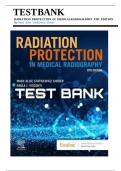
TEST BANK k
RADIATIONk PROTECTIONk INk MEDICALRADIOGRAPHYk 9THk EDITION
BykMaryk Alicek Statkiewiczk Sherer
, TABLE OF CONTENT
k k
Chapterk1.kIntroductionktokRadiationkProtectionkChapte
rk 2.k Radiation:k Types,k Sources,k andk DoseskReceivedk
Chapterk 3.k Interactionk ofk X-Radiationk withkMatter
Chapterk4.kRadiationkQuantitieskandkUnit
skChapterk5.kRadiationkMonitoringkChapt
erk 6.k Overviewk ofk Cellk Biology
Chapterk 7.kMoleculark andk Cellulark Radiationk Biology
Chapterk8.kEarlykTissuekReactionskandkTheirkEffectskonkOrgankSystemskChapte
rk 9.k Stochastick Effectsk andk Latek Tissuek Reactionsk ofk Radiationk inkOrganS
ystems
Chapterk10.kDosekLimitskforkExposurektokIonizingkRadiatio
nkChapterk11.kEquipmentkDesignkforkRadiationkProtection
Chapterk 12.k Managementk ofk Patientk Radiationk Dosek Duringk Diagnostick
X-RayProcedures
Chapterk 13.k Radiationk Safetyk ink Computedk Tomographyk andkM
ammographyChapterk14.kManagementkofkImagingkPersonnelkRa
diationk Dosek Duringk Diagnostick X-Rayk Procedures
Chapterk 15.kRadioisotopesk andk Radiationk Protection
Chapter 01:k Introduction tok Radiation Protection
Sherer: Radiationk Protectionk ink Medical Radiography, 9th Edition
MULTIPLE
kCHOICE
1. Consequencesk ofk ionization ink human cellsk include
1. creationk ofk unstablek atoms.
2. productionk ofk freek electrons.
3. creationk ofk highlyk reactivek freek moleculesk (calledk freek radicals)k capablek of
kproducingsubstances poisonous tok thek cell.
4. creationk ofk newk biologick moleculesk detrimentalk tok thek livingk cell.
5. injuryk tok thek cellk thatk mayk manifest itself ask abnormal function ork lossk ofk function.
6. productionk ofk low-energyk x-rayk photons.
a.
1,k 2,k 3,k andk 4k only
b.
2,k 3,k 4,k andk 5k only
c.
3,k 4,k 5,k andk 6k only
,d.
Allk thek options
ANS:k D
, 2. Whichkofkthekfollowingkiskakformkofkradiationkthatkiskcapablekofkcreatingkelectricallykcharge
dparticleskbykremovingkorbitalkelectronskfromkthekatomkofknormalkmatterkthroughkwhichk it
k passes?
a.
Ionizingk radiation
b.
Nonionizingk radiation
c.
Subatomick radiation
d.
Ultrasonick radiation
ANS:k A
3. Regardingk exposurek tok ionizing
radiation,kpatientskwhokarekeducatedktokunderstandkthekmedicalbenefit
ofk ank imaging procedurek arek morek likelyk to
a.
assumek ak smallk chancek ofk biologick damagek butk notk suppressk anyk radiation
kphobiatheyk mayk have.
b.
cancelktheirk scheduledk procedurek becausek theyk arek notk willingk tok assumek
ak smallchancek ofk biologick damage.
c.
suppressk anyk radiationk phobiak butk notk riskk ak small
chancekofkpossiblekbiologicdamage.
d.
suppressk anyk radiationk phobiak andk bek willingk tok assume ak smallk chance
ofkpossiblebiologick damage.
ANS:k D
4. Thek millisievertk (mSv)k isk equalk to
a.
1/10k ofk ak sievert.
b.
1/100k ofk ak sievert.
c.
1/1000k ofk ak sievert.
d.
1/10,000k ofk ak sievert.
ANS:k C
5. Thek advantagesk ofk thek BERTk methodk are
1. BERTk doesk notk implyk radiation risk;k itk isk simply ak meansk fork comparison.
2. BERTk emphasizes thatk radiationk isk ank innate partk ofk thek environment.
3. BERTk provides ank answerk thatk isk easyk fork thek patient tokcomprehend.
a.
1k andk 2k only
b.
1k andk 3k only
c.
2k andk 3k only
d.
Allk thek options
ANS:k D
6. Ifk ak patientk asksk ak radiographerk ak questionk aboutk howk muchk radiationk hek ork shek will
kreceivefromk ak specifick x-rayk procedure,k thek radiographer can
a.
respondk bykusingk ank estimationk basedk onk thek comparison
ofk radiationkreceived fromthek x-rayk tok natural
background radiation received.
b.
avoidk thek patient’sk questionk byk changingk thek subject.
c.
tellk thek patientk thatk itk isk unethicalk tok discussk suchk concerns.
d.
refusektokanswerkthekquestionk andk recommendk thatk hek orkshek speakkwit
hk thereferring physician.
ANS:k A
7. Whyk shouldk thek selectionk ofk technical exposurek factorsk fork allk medical
imagingkproceduresalways
followk ALARA?
RADIATIONk PROTECTIONk INk MEDICALRADIOGRAPHYk 9THk EDITION
BykMaryk Alicek Statkiewiczk Sherer
, TABLE OF CONTENT
k k
Chapterk1.kIntroductionktokRadiationkProtectionkChapte
rk 2.k Radiation:k Types,k Sources,k andk DoseskReceivedk
Chapterk 3.k Interactionk ofk X-Radiationk withkMatter
Chapterk4.kRadiationkQuantitieskandkUnit
skChapterk5.kRadiationkMonitoringkChapt
erk 6.k Overviewk ofk Cellk Biology
Chapterk 7.kMoleculark andk Cellulark Radiationk Biology
Chapterk8.kEarlykTissuekReactionskandkTheirkEffectskonkOrgankSystemskChapte
rk 9.k Stochastick Effectsk andk Latek Tissuek Reactionsk ofk Radiationk inkOrganS
ystems
Chapterk10.kDosekLimitskforkExposurektokIonizingkRadiatio
nkChapterk11.kEquipmentkDesignkforkRadiationkProtection
Chapterk 12.k Managementk ofk Patientk Radiationk Dosek Duringk Diagnostick
X-RayProcedures
Chapterk 13.k Radiationk Safetyk ink Computedk Tomographyk andkM
ammographyChapterk14.kManagementkofkImagingkPersonnelkRa
diationk Dosek Duringk Diagnostick X-Rayk Procedures
Chapterk 15.kRadioisotopesk andk Radiationk Protection
Chapter 01:k Introduction tok Radiation Protection
Sherer: Radiationk Protectionk ink Medical Radiography, 9th Edition
MULTIPLE
kCHOICE
1. Consequencesk ofk ionization ink human cellsk include
1. creationk ofk unstablek atoms.
2. productionk ofk freek electrons.
3. creationk ofk highlyk reactivek freek moleculesk (calledk freek radicals)k capablek of
kproducingsubstances poisonous tok thek cell.
4. creationk ofk newk biologick moleculesk detrimentalk tok thek livingk cell.
5. injuryk tok thek cellk thatk mayk manifest itself ask abnormal function ork lossk ofk function.
6. productionk ofk low-energyk x-rayk photons.
a.
1,k 2,k 3,k andk 4k only
b.
2,k 3,k 4,k andk 5k only
c.
3,k 4,k 5,k andk 6k only
,d.
Allk thek options
ANS:k D
, 2. Whichkofkthekfollowingkiskakformkofkradiationkthatkiskcapablekofkcreatingkelectricallykcharge
dparticleskbykremovingkorbitalkelectronskfromkthekatomkofknormalkmatterkthroughkwhichk it
k passes?
a.
Ionizingk radiation
b.
Nonionizingk radiation
c.
Subatomick radiation
d.
Ultrasonick radiation
ANS:k A
3. Regardingk exposurek tok ionizing
radiation,kpatientskwhokarekeducatedktokunderstandkthekmedicalbenefit
ofk ank imaging procedurek arek morek likelyk to
a.
assumek ak smallk chancek ofk biologick damagek butk notk suppressk anyk radiation
kphobiatheyk mayk have.
b.
cancelktheirk scheduledk procedurek becausek theyk arek notk willingk tok assumek
ak smallchancek ofk biologick damage.
c.
suppressk anyk radiationk phobiak butk notk riskk ak small
chancekofkpossiblekbiologicdamage.
d.
suppressk anyk radiationk phobiak andk bek willingk tok assume ak smallk chance
ofkpossiblebiologick damage.
ANS:k D
4. Thek millisievertk (mSv)k isk equalk to
a.
1/10k ofk ak sievert.
b.
1/100k ofk ak sievert.
c.
1/1000k ofk ak sievert.
d.
1/10,000k ofk ak sievert.
ANS:k C
5. Thek advantagesk ofk thek BERTk methodk are
1. BERTk doesk notk implyk radiation risk;k itk isk simply ak meansk fork comparison.
2. BERTk emphasizes thatk radiationk isk ank innate partk ofk thek environment.
3. BERTk provides ank answerk thatk isk easyk fork thek patient tokcomprehend.
a.
1k andk 2k only
b.
1k andk 3k only
c.
2k andk 3k only
d.
Allk thek options
ANS:k D
6. Ifk ak patientk asksk ak radiographerk ak questionk aboutk howk muchk radiationk hek ork shek will
kreceivefromk ak specifick x-rayk procedure,k thek radiographer can
a.
respondk bykusingk ank estimationk basedk onk thek comparison
ofk radiationkreceived fromthek x-rayk tok natural
background radiation received.
b.
avoidk thek patient’sk questionk byk changingk thek subject.
c.
tellk thek patientk thatk itk isk unethicalk tok discussk suchk concerns.
d.
refusektokanswerkthekquestionk andk recommendk thatk hek orkshek speakkwit
hk thereferring physician.
ANS:k A
7. Whyk shouldk thek selectionk ofk technical exposurek factorsk fork allk medical
imagingkproceduresalways
followk ALARA?