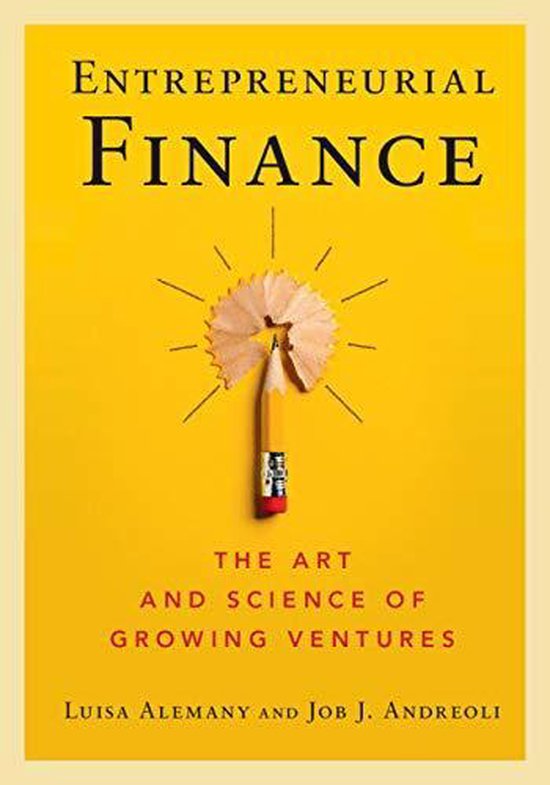
SOLUTION MANUAL For Entrepreneurial Finance, 7th
Edition by J. Chris Leach, Ronald W. Melicher
1. The rapid-growth stage directly follows the startup stage - ANSWER: false
2. An initial public offering provides a venture with a source of bridge financing. -
ANSWER: false
One principle of entrepreneurial finance is "risk and expected reward go hand in
hand." - ANSWER: true
4. Entrepreneurial opportunities can occur only when there are societal changes in
the world. - ANSWER: false
5. The entrepreneurial process involves: developing opportunities, gathering
resources, and managing and building operations, all with the goal of creating value.
- ANSWER: true
6. Technological change may be the most important source of entrepreneurial
opportunities. - ANSWER: true
7. "Crises and "'bubbles'" and "emerging economies and global change" are
considered to be sources of entrepreneurial opportunities. - ANSWER: true
8. An entrepreneur is an individual who thinks, reasons, and acts to convert ideas
into commercial opportunities and to create value. - ANSWER: true
9. The sharing economy is a(n): - ANSWER: a. developing societal megatrend
10. Which of the following statements is correct? - ANSWER: b. the early-maturity
stage is the final stage of a new venture's life cycle
11. Founder and venture investor shares that are sold to the public after the initial
public offering to the public is called a: - ANSWER: b. secondary stock offering
12. The goal of the entrepreneurial process is to: - ANSWER: d. create value
13. The last three stages of a successful venture's life cycle occur in the following
order: - ANSWER: c. survival, rapid-growth, early-maturity
14. The type of financing that occurs during the development stage of a venture's life
cycle is typically referred to as: - ANSWER: a. seed financing
, 15. Which stage in the venture life cycle is characterized by creating and building
value, obtaining additional financing, and examining opportunities? - ANSWER: c.
rapid-growth stage
16. Which of the following is not a source of entrepreneurial opportunities referred
to in this textbook? - ANSWER: b. political changes
17. Obtaining bank loans, issuing bonds, and issuing stock is characteristic of which
type of financing during a venture's life cycle - ANSWER: d. seasoned financing
18. Mezzanine financing is associated with which of the following life cycle stages? -
ANSWER: d. rapid-growth stage
19. The first component of a sound business model is the need to generate
revenues. - ANSWER: true
20. A sound business model should provide a plan to generate revenues, make
profits, and produce free cash flows. - ANSWER: true
21. A sound business model is a plan to generate investor interest, make profits, and
grow asset investments. - ANSWER: false
22. A SWOT analysis is an examination of the strengths, weaknesses, opportunities,
and threats to determine the business opportunity viability of an idea. - ANSWER:
true
23. Best practices of high-growth, high-performance firms applied in the marketing
practices area include "developing new products or services that are considered to
be the best." - ANSWER: true
24. A SWOT analysis focuses on strengths (S), worries (W), opportunities (O), and
threats (T). - ANSWER: false
25. Free cash flow to equity is the cash flow from producing and selling a product or
providing a service. - ANSWER: false
26. Asset intensity and asset turnover are calculated as revenues divided by total
assets. - ANSWER: false
27. Best practices of high-growth, high-performance firms applied in the financial
practices area include "preparing detailed monthly financial plans for the next year
and annual financial plans for the next five years." - ANSWER: true
28. A venture opportunity screening guide, called the VOS Indicator™, is used to
screen venture opportunities for potential attractiveness. - ANSWER: true
Edition by J. Chris Leach, Ronald W. Melicher
1. The rapid-growth stage directly follows the startup stage - ANSWER: false
2. An initial public offering provides a venture with a source of bridge financing. -
ANSWER: false
One principle of entrepreneurial finance is "risk and expected reward go hand in
hand." - ANSWER: true
4. Entrepreneurial opportunities can occur only when there are societal changes in
the world. - ANSWER: false
5. The entrepreneurial process involves: developing opportunities, gathering
resources, and managing and building operations, all with the goal of creating value.
- ANSWER: true
6. Technological change may be the most important source of entrepreneurial
opportunities. - ANSWER: true
7. "Crises and "'bubbles'" and "emerging economies and global change" are
considered to be sources of entrepreneurial opportunities. - ANSWER: true
8. An entrepreneur is an individual who thinks, reasons, and acts to convert ideas
into commercial opportunities and to create value. - ANSWER: true
9. The sharing economy is a(n): - ANSWER: a. developing societal megatrend
10. Which of the following statements is correct? - ANSWER: b. the early-maturity
stage is the final stage of a new venture's life cycle
11. Founder and venture investor shares that are sold to the public after the initial
public offering to the public is called a: - ANSWER: b. secondary stock offering
12. The goal of the entrepreneurial process is to: - ANSWER: d. create value
13. The last three stages of a successful venture's life cycle occur in the following
order: - ANSWER: c. survival, rapid-growth, early-maturity
14. The type of financing that occurs during the development stage of a venture's life
cycle is typically referred to as: - ANSWER: a. seed financing
, 15. Which stage in the venture life cycle is characterized by creating and building
value, obtaining additional financing, and examining opportunities? - ANSWER: c.
rapid-growth stage
16. Which of the following is not a source of entrepreneurial opportunities referred
to in this textbook? - ANSWER: b. political changes
17. Obtaining bank loans, issuing bonds, and issuing stock is characteristic of which
type of financing during a venture's life cycle - ANSWER: d. seasoned financing
18. Mezzanine financing is associated with which of the following life cycle stages? -
ANSWER: d. rapid-growth stage
19. The first component of a sound business model is the need to generate
revenues. - ANSWER: true
20. A sound business model should provide a plan to generate revenues, make
profits, and produce free cash flows. - ANSWER: true
21. A sound business model is a plan to generate investor interest, make profits, and
grow asset investments. - ANSWER: false
22. A SWOT analysis is an examination of the strengths, weaknesses, opportunities,
and threats to determine the business opportunity viability of an idea. - ANSWER:
true
23. Best practices of high-growth, high-performance firms applied in the marketing
practices area include "developing new products or services that are considered to
be the best." - ANSWER: true
24. A SWOT analysis focuses on strengths (S), worries (W), opportunities (O), and
threats (T). - ANSWER: false
25. Free cash flow to equity is the cash flow from producing and selling a product or
providing a service. - ANSWER: false
26. Asset intensity and asset turnover are calculated as revenues divided by total
assets. - ANSWER: false
27. Best practices of high-growth, high-performance firms applied in the financial
practices area include "preparing detailed monthly financial plans for the next year
and annual financial plans for the next five years." - ANSWER: true
28. A venture opportunity screening guide, called the VOS Indicator™, is used to
screen venture opportunities for potential attractiveness. - ANSWER: true