
CHAPTER 27
SURETYSHIP
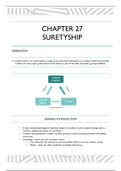
DEFINITION:
A contract where a 3rd party (called a surety/co-surety) binds themselves to a creditor (called the principal
creditor) for the proper performance of the whole or part of the debt of another (principal debtor).
princial
creditor
n
tio
Ob
liga
liga
Ob
tio
n
princial
surety
debtor
Payment/reimbursement
GENERAL INTRODUCTION
* A debt relationship/obligation (between debtor & creditor) can be created through delict, a
contract, negotiorum gestio or enrichment
* Creditor may demand for a debtor to have security in order to protect himself if the debtor
cannot pay
* Suretyship = said to be of an accessory nature
o This means for the security to exist the debtor HAS to owe the creditor money
o Means – when the debt is paid the suretyship will end too
, NATURE OF THE SURETY CONTRACT
Þ The debt between the debtor and creditor DOES NOT have to exist at the time of conclusion of
contract (can be before the debtor owes the creditor anything)
Þ Suretyship involves at least 3 parties
o This fact makes it different from other contracts of indemnity (e.g. guarantees, indemnity
or insurance)
§ Guarantee: one person says to another that the price of a certain good he is purchasing will not
All only have 2
increase for a certain period
parties involved
§ Indemnity: where one person tells another, he will compensate them against any damages
§ Insurance: insurer will compensate damages
Þ Delegation (where debtor delegates his liability to another person and 1st debtor has no more
liability) ¹ Suretyship
Þ Co-debtor ship (where 2 debtors are jointly & severally liable for a debt) ¹ Suretyship
Þ What happens when a person is a co-debtor & a surety at
the same time?
o The surety/co-debtor is jointly & severally liable with the principal debtor for the debt
once it becomes payable (creditor can claim from surety/co-debtor first if they want)
o This is different from when the person is only a surety - since a surety only becomes
liable once the debtor has been excused Excused?
Excuse means to relieve from a duty or obligation.
What does h
In surety it means a surety is only liable AFTER a
repayment
o This is also different from when the person is creditor has tried to get payment from the principal
consist of? debtor
only a co-debtor – since the surety/co-debtor
Can be the original
can claim repayment against the principal debtor
claim OR ceded
action § If the person was only a co-debtor, they CANNOT reclaim payment from the
principal debtor
o Liability of a person bound as a surety and co-debtor = not contingent unless principal debt
was also contingent
2


