
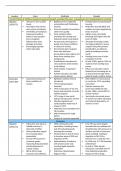
Leaders Aims Methods Results
Social Policies & Welfare (programs geared towards assisting the poor, unemployed and marginalised in society)
Ulbricht Visions for new socialist Building of new residential Prefabricated and substandard
(1950-71) towns communities with Plattenbau housing
Housing for the masses housing Plattenbau housing bleak and
near centres of industry Focus on quantity of provisions soulless and seen negatively by
Interlinking of workplace, rather than quality those around it
housing and welfare Party members often Higher crime rates (Halle
policy to have people’s prioritised for housing over Neustadt 20% higher than old
lives completely industrial workers and elderly town of Halle)
influenced by state No personal control given to Shortage of housing caused:
ideology and policy people over living conditions marriage problems in young
Encouraging equality or chance of moving couples living with parents;
within education Recruitment plans targeted prioritisation according to
those who had been political standing/economic
persecuted by Nazi regime and worth
those from working-class Housing issues one of main
backgrounds complaints to Party
Grandschules introduced to By mid-1950s, approx. 50% uni
raise academic achievements students from working-class
of all children homes
Small number of specialist Efficacy of education system
schools limited by its increasing use as
Further education and night an instrument through which
school courses offered political loyalty could be tested
Honecker Improving working and Significant welfare reforms 60% children 0-3 were placed
(1971-89) living conditions of introduced in creches by 1974, exceeding
women 1973 Housing program most West
launched Popular measures but
1976 construction of 1m new preserved traditional roles
homes and extension of social By late 1980s, around 90% of
welfare program women worked
1971 range of new social Social policy increased access
policies introduced for women of women to further education
Abortion legalised and and reduced dependency of
contraceptives made free of women on men
charge in 1972
Maternity leave extended from
18-26 weeks
Help introduced for single
fathers
Creches & nurseries expanded
Economy
Ulbricht Follow five-year plans to USSR continued to take First 5YP saw some targets
(1950-71) rebuild economy in reparations, including money exceeded but saw widespread
aftermath of WW2 and 25% industrial goods, dissatisfaction with pressure on
Meet production targets harming the economy workers and lack of consumer
by increasing labour Hindered due to lack of access goods available, leading to
productivity to lucrative areas of FRG and migration to FRG (0.5m
Second 5YP focused on migration to FRG between Jan 51 and April 53)
consumer goods, Nationalisation of industry, By 1958 only 1/3rd GR farmland
improving living standards with private sector only collectivised
and development of covering highly-specialist By end of 1960, private
nuclear energy production enterprise controlled only 9%
NES & ESS to make Voluntary collectivisation total industrial production
economy more efficient began in 1952 Impact of 7YP on living
, by reducing central Centralised control tightened standard undermined by
control and allowing by SED in 1958, alongside attempts to increase worker
some areas of profit to further nationalisation of productivity by 85%
drive industry forward industry Crop yields fell by 30%
NES: Promotion of 1959 7YP announced plans to between 1960-61
innovation and efficiency; integrate GDR economy more Full employment but
production of quality with USSR and increase targets dissatisfaction in jobs and
goods; focus on scientific Second attempt at fewer additional benefits than
and technological collectivisation in early 1960 FRG
developments; links More effective government NES & ESS lacked Soviet
between universities and planning of economy after support and were restricted by
industry construction of wall, but now political manoeuvrings in SED.
ESS: promoting key no excuse for poor economy Skilled workers often
industries and developing NES 63-68 – more decision- overqualified for jobs available,
computer technology and making allowed by directors at creating dissatisfaction and
chemical & plastics lower levels within high labour turnover
industries organisations; incentives Issues with NES: opposition
introduced for workers over fears of veering away
ESS 68-71 – higher production from communist ideology; little
quotas; industrial production to purchase with increasing
rose 43% 58-65 wages and underqualified
managers
68-71: economy grew by 5.7%
(more than West)
Didn’t overtake FRG economy
Significant increase in
availability of household items,
but often of poor quality
Honecker Bringing welfare and the Unity of Social and Economic Early success in creation of
(1971-89) economy together – raise Policy consumer socialism but caused
standards of living All private and semi-private underinvestment in industry
through consumer businesses nationalised in 72 By 1980s, faltering economy
socialism and better OPEC oil crisis of 73 weakened led to more reliance on FRG
welfare GDR’s purchasing power for loans
Increase in production exports Loss of private business
allowing for increase in 2b DM loans from FRG in 83 & restricted consumer socialism
social conditions 84, but placed into banks (to and led to it being reversed in
appear credible) rather than 76
used in industry where it was Caused consistent
needed underinvestment in industry
that would cause a decline in
80s
Stabilised economy, causing it
to grow at around 5% each
year in 70s
82: imports fell by 30% whilst
exports rose by 9%, preventing
economic recovery
Failed to tackle poor supply
and quality of consumer goods
Economy superior to many
Eastern bloc countries but still
unstable and weak
Political Control/Stasi
Ulbricht Defend GDR from acts of Implementation of Berlin wall Approx. 5000 successful
(1950-71) sabotage, within and from in 1961 prevented migration attempts, nearly 200 shot at
Social Policies & Welfare (programs geared towards assisting the poor, unemployed and marginalised in society)
Ulbricht Visions for new socialist Building of new residential Prefabricated and substandard
(1950-71) towns communities with Plattenbau housing
Housing for the masses housing Plattenbau housing bleak and
near centres of industry Focus on quantity of provisions soulless and seen negatively by
Interlinking of workplace, rather than quality those around it
housing and welfare Party members often Higher crime rates (Halle
policy to have people’s prioritised for housing over Neustadt 20% higher than old
lives completely industrial workers and elderly town of Halle)
influenced by state No personal control given to Shortage of housing caused:
ideology and policy people over living conditions marriage problems in young
Encouraging equality or chance of moving couples living with parents;
within education Recruitment plans targeted prioritisation according to
those who had been political standing/economic
persecuted by Nazi regime and worth
those from working-class Housing issues one of main
backgrounds complaints to Party
Grandschules introduced to By mid-1950s, approx. 50% uni
raise academic achievements students from working-class
of all children homes
Small number of specialist Efficacy of education system
schools limited by its increasing use as
Further education and night an instrument through which
school courses offered political loyalty could be tested
Honecker Improving working and Significant welfare reforms 60% children 0-3 were placed
(1971-89) living conditions of introduced in creches by 1974, exceeding
women 1973 Housing program most West
launched Popular measures but
1976 construction of 1m new preserved traditional roles
homes and extension of social By late 1980s, around 90% of
welfare program women worked
1971 range of new social Social policy increased access
policies introduced for women of women to further education
Abortion legalised and and reduced dependency of
contraceptives made free of women on men
charge in 1972
Maternity leave extended from
18-26 weeks
Help introduced for single
fathers
Creches & nurseries expanded
Economy
Ulbricht Follow five-year plans to USSR continued to take First 5YP saw some targets
(1950-71) rebuild economy in reparations, including money exceeded but saw widespread
aftermath of WW2 and 25% industrial goods, dissatisfaction with pressure on
Meet production targets harming the economy workers and lack of consumer
by increasing labour Hindered due to lack of access goods available, leading to
productivity to lucrative areas of FRG and migration to FRG (0.5m
Second 5YP focused on migration to FRG between Jan 51 and April 53)
consumer goods, Nationalisation of industry, By 1958 only 1/3rd GR farmland
improving living standards with private sector only collectivised
and development of covering highly-specialist By end of 1960, private
nuclear energy production enterprise controlled only 9%
NES & ESS to make Voluntary collectivisation total industrial production
economy more efficient began in 1952 Impact of 7YP on living
, by reducing central Centralised control tightened standard undermined by
control and allowing by SED in 1958, alongside attempts to increase worker
some areas of profit to further nationalisation of productivity by 85%
drive industry forward industry Crop yields fell by 30%
NES: Promotion of 1959 7YP announced plans to between 1960-61
innovation and efficiency; integrate GDR economy more Full employment but
production of quality with USSR and increase targets dissatisfaction in jobs and
goods; focus on scientific Second attempt at fewer additional benefits than
and technological collectivisation in early 1960 FRG
developments; links More effective government NES & ESS lacked Soviet
between universities and planning of economy after support and were restricted by
industry construction of wall, but now political manoeuvrings in SED.
ESS: promoting key no excuse for poor economy Skilled workers often
industries and developing NES 63-68 – more decision- overqualified for jobs available,
computer technology and making allowed by directors at creating dissatisfaction and
chemical & plastics lower levels within high labour turnover
industries organisations; incentives Issues with NES: opposition
introduced for workers over fears of veering away
ESS 68-71 – higher production from communist ideology; little
quotas; industrial production to purchase with increasing
rose 43% 58-65 wages and underqualified
managers
68-71: economy grew by 5.7%
(more than West)
Didn’t overtake FRG economy
Significant increase in
availability of household items,
but often of poor quality
Honecker Bringing welfare and the Unity of Social and Economic Early success in creation of
(1971-89) economy together – raise Policy consumer socialism but caused
standards of living All private and semi-private underinvestment in industry
through consumer businesses nationalised in 72 By 1980s, faltering economy
socialism and better OPEC oil crisis of 73 weakened led to more reliance on FRG
welfare GDR’s purchasing power for loans
Increase in production exports Loss of private business
allowing for increase in 2b DM loans from FRG in 83 & restricted consumer socialism
social conditions 84, but placed into banks (to and led to it being reversed in
appear credible) rather than 76
used in industry where it was Caused consistent
needed underinvestment in industry
that would cause a decline in
80s
Stabilised economy, causing it
to grow at around 5% each
year in 70s
82: imports fell by 30% whilst
exports rose by 9%, preventing
economic recovery
Failed to tackle poor supply
and quality of consumer goods
Economy superior to many
Eastern bloc countries but still
unstable and weak
Political Control/Stasi
Ulbricht Defend GDR from acts of Implementation of Berlin wall Approx. 5000 successful
(1950-71) sabotage, within and from in 1961 prevented migration attempts, nearly 200 shot at


