
Chapter 20
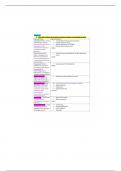
Signs and symptoms of ALL shocks including neurogenic and anaphylactic shock
Types of shocks Signs/Symptoms
Cardiogenic Shock – occurs Increased heart rate/vascular resistance
primarily as a result of Cardiac output decrease
severe dysfunction of the Systolic blood pressure (DOWN)
left, right, or both Diastolic blood pressure (UP)
ventricles that results in (book)
inadequate cardiac
pumping
Obstructive Shock (3 Characterized by manifestations of right sided heart
types) – develops when failure
the heart is prevented (book)
from pumping because of
a mechanical obstruction
to blood flow.
Hypovolemic Shock – Severe amount of the blood loss
results from inadequate (book)
circulating blood volume
precipitated by
hemorrhage, burns,
dehydration, or leakage of
fluid into interstitial spaces
Distributive Shock (3 Depends on type of distributive shock
types) – an abnormally
expanded vascular space
by excessive vasodilation.
Neurogenic Shock (often Low blood pressure from irregular circulation
transitory) – may result Bradyarrhythmia
from depression of the Hypotension
vasomotor center in the Flushed warm skin
medulla or from (journal)
interruption of
sympathetic nerve fibers
in the spinal cord.
Septic shock – results from High cardiac output
a severe systemic Warm extremities
inflammatory response to (book)
infection.
Anaphylactic shock – result clammy skin
of excessive mast cell breathing difficulties
degranulation in response fast heart-beat
to antigen (allergy) wheezing
Signs and symptoms of ALL shocks including neurogenic and anaphylactic shock
Types of shocks Signs/Symptoms
Cardiogenic Shock – occurs Increased heart rate/vascular resistance
primarily as a result of Cardiac output decrease
severe dysfunction of the Systolic blood pressure (DOWN)
left, right, or both Diastolic blood pressure (UP)
ventricles that results in (book)
inadequate cardiac
pumping
Obstructive Shock (3 Characterized by manifestations of right sided heart
types) – develops when failure
the heart is prevented (book)
from pumping because of
a mechanical obstruction
to blood flow.
Hypovolemic Shock – Severe amount of the blood loss
results from inadequate (book)
circulating blood volume
precipitated by
hemorrhage, burns,
dehydration, or leakage of
fluid into interstitial spaces
Distributive Shock (3 Depends on type of distributive shock
types) – an abnormally
expanded vascular space
by excessive vasodilation.
Neurogenic Shock (often Low blood pressure from irregular circulation
transitory) – may result Bradyarrhythmia
from depression of the Hypotension
vasomotor center in the Flushed warm skin
medulla or from (journal)
interruption of
sympathetic nerve fibers
in the spinal cord.
Septic shock – results from High cardiac output
a severe systemic Warm extremities
inflammatory response to (book)
infection.
Anaphylactic shock – result clammy skin
of excessive mast cell breathing difficulties
degranulation in response fast heart-beat
to antigen (allergy) wheezing


