
STUDY UNIT 4
STRATEGY IMPLEMENTATION, CONTROL AND EVALUATION
PART 1: STRATEGY IMPLEMENTATION
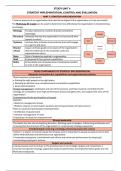
7 internal aspects of an organisation that need to be aligned if the organisation is to be successful.
The McKinsey S7 model can be used to determine how e ectively the organisation is implementing
its strategy.
Strategy The plan devised to maintain & build competitive
advantage Strategy
Structure Indicates the way the organisation is structured & who
reports to whom
Staff Structure
Systems Involves daily activities & procedures that sta engage
in to get the job done
Shared
Shared (super-ordinate goals) core values of the organisation values
values that are evidenced in the corporate culture &
organisational ethics Style Systems
Style Style of leadership applied in organisation
Sta Employees & their general capabilities
Skills
Skills Actual skills and competencies of employees needed
to work in the organisation
CORE COMPONENTS OF STRATEGY IMPLEMENTATION:
Adequate competencies, capabilities and organisational policies
Most important components:
Putting the right people in the right place
Develop & maintain core competencies & competitive capabilities.
Good administration
People management: employees are part of the process, and they must be committed to the
strategy, be competent, have high performance levels and agree with, and support the aims of the
organisation.
Empowerment & the participation of people:
Benefits:
Relief of management stress
Reduce chance of unionisation (workers becoming members of trade unions)
Risks to avoid during employee empowerment:
Ine ective empowerment
Unclear management of roles
Employees not ready for empowerment
Strong leadership
The leader has the role of clarifying direction, deciding upon strategies, influencing employees and
ensuring that the structure of the organisation is continuously strategy supportive
Establishing & nurturing a strategy-enhancing corporate culture
Culture = a system of shared values that shapes what is important to people as well as norms that
define what attitudes and behaviours are appropriate.
It motivates employees’ commitment and e orts and enhances performance by shaping &
coordinating employee’s actions.
Targets and rewards
Linking rewards and incentives to the achievement of set strategic targets and milestones; it
ensures that specific strategy-supportive tasks are performed, and implementation goals are met.
Motivates employees.
, Requirements when establishing a reward system to support strategy implementation process:
Rewards should be created in a manner that they are closely linked to chosen strategy.
Should encourage positive behavioural changes among employees to support strategy.
Managers should be rewarded for performance measures achieved over the long term.
Rewards should be given to people who show results (not people who simply do what they
are required to do)
Rewards should be equal.
Reward strategy supportive of the organisational strategy:
Monetary rewards (basic pay, benefits, actual incentives and cash recognition)
Non-monetary (growth & career development, communication and non-monetary recognition)
Allocation of resources
Types of resources needed in strategy implementation:
Human resources and knowledge factors
Financial resources
Physical resources
Establishing policies, guidelines & procedures that support strategy implementation process
Policies = Specific guidelines, methods, procedures, rules, forms and admin practices that direct
thinking, decisions and actions of managers and employees and serve as instruments that aid the
strategy implementation process
Authorisation policies = specify what activities an employee is permitted to perform in the
framework of strategy OR actions that are forbidden during strategy implementation.
Obligation policies = set of actions that employees must/must not perform based on a set of
objectives.
Action plans and short-term objectives
Functional and operational management needs to know what should be done in the short term in
order to achieve long-term goals and the selected strategy.
Adequate information, communication and operating systems
E ective communication enhances e icient and e ective operations, and this helps organisation to
improve its products and services; also helps employees to stay informed about and understand
the strategies, understand what their role is and ensure that they are updated with regards to
changes in the environment.
Information systems = set of interrelated elements of components that collect (input), manipulate
(process) and disseminate (output) data and info, also provides opportunity for feedback in order to
meet an objective.
Operating info systems, competitive info systems, strategic info systems
Continuous improvement
An ongoing course of action involving the development & implementation of best practices that
favour and support good strategy implementation processes.
Establishing a organisational structure that fits the strategy
A change in strategy means a change in organisational structure. It is important for the
organisational structure to align with the strategy at all times Organisational structure needs to
be flexible and able to respond. Techno Support
A good organisational structure will: structure
Strategic
sta
apex
Enable implementation of new ideas
E ectively deploy human resources middle line
Properly empower managers
Facilitate strategy implementation actions operating core
5 Building blocks of an organisation:
1. Operating core: where products and services are produced or delivered
2. Middle line: connection between strategic apex and operating core; linking authority from senior
managers to first line managers
STRATEGY IMPLEMENTATION, CONTROL AND EVALUATION
PART 1: STRATEGY IMPLEMENTATION
7 internal aspects of an organisation that need to be aligned if the organisation is to be successful.
The McKinsey S7 model can be used to determine how e ectively the organisation is implementing
its strategy.
Strategy The plan devised to maintain & build competitive
advantage Strategy
Structure Indicates the way the organisation is structured & who
reports to whom
Staff Structure
Systems Involves daily activities & procedures that sta engage
in to get the job done
Shared
Shared (super-ordinate goals) core values of the organisation values
values that are evidenced in the corporate culture &
organisational ethics Style Systems
Style Style of leadership applied in organisation
Sta Employees & their general capabilities
Skills
Skills Actual skills and competencies of employees needed
to work in the organisation
CORE COMPONENTS OF STRATEGY IMPLEMENTATION:
Adequate competencies, capabilities and organisational policies
Most important components:
Putting the right people in the right place
Develop & maintain core competencies & competitive capabilities.
Good administration
People management: employees are part of the process, and they must be committed to the
strategy, be competent, have high performance levels and agree with, and support the aims of the
organisation.
Empowerment & the participation of people:
Benefits:
Relief of management stress
Reduce chance of unionisation (workers becoming members of trade unions)
Risks to avoid during employee empowerment:
Ine ective empowerment
Unclear management of roles
Employees not ready for empowerment
Strong leadership
The leader has the role of clarifying direction, deciding upon strategies, influencing employees and
ensuring that the structure of the organisation is continuously strategy supportive
Establishing & nurturing a strategy-enhancing corporate culture
Culture = a system of shared values that shapes what is important to people as well as norms that
define what attitudes and behaviours are appropriate.
It motivates employees’ commitment and e orts and enhances performance by shaping &
coordinating employee’s actions.
Targets and rewards
Linking rewards and incentives to the achievement of set strategic targets and milestones; it
ensures that specific strategy-supportive tasks are performed, and implementation goals are met.
Motivates employees.
, Requirements when establishing a reward system to support strategy implementation process:
Rewards should be created in a manner that they are closely linked to chosen strategy.
Should encourage positive behavioural changes among employees to support strategy.
Managers should be rewarded for performance measures achieved over the long term.
Rewards should be given to people who show results (not people who simply do what they
are required to do)
Rewards should be equal.
Reward strategy supportive of the organisational strategy:
Monetary rewards (basic pay, benefits, actual incentives and cash recognition)
Non-monetary (growth & career development, communication and non-monetary recognition)
Allocation of resources
Types of resources needed in strategy implementation:
Human resources and knowledge factors
Financial resources
Physical resources
Establishing policies, guidelines & procedures that support strategy implementation process
Policies = Specific guidelines, methods, procedures, rules, forms and admin practices that direct
thinking, decisions and actions of managers and employees and serve as instruments that aid the
strategy implementation process
Authorisation policies = specify what activities an employee is permitted to perform in the
framework of strategy OR actions that are forbidden during strategy implementation.
Obligation policies = set of actions that employees must/must not perform based on a set of
objectives.
Action plans and short-term objectives
Functional and operational management needs to know what should be done in the short term in
order to achieve long-term goals and the selected strategy.
Adequate information, communication and operating systems
E ective communication enhances e icient and e ective operations, and this helps organisation to
improve its products and services; also helps employees to stay informed about and understand
the strategies, understand what their role is and ensure that they are updated with regards to
changes in the environment.
Information systems = set of interrelated elements of components that collect (input), manipulate
(process) and disseminate (output) data and info, also provides opportunity for feedback in order to
meet an objective.
Operating info systems, competitive info systems, strategic info systems
Continuous improvement
An ongoing course of action involving the development & implementation of best practices that
favour and support good strategy implementation processes.
Establishing a organisational structure that fits the strategy
A change in strategy means a change in organisational structure. It is important for the
organisational structure to align with the strategy at all times Organisational structure needs to
be flexible and able to respond. Techno Support
A good organisational structure will: structure
Strategic
sta
apex
Enable implementation of new ideas
E ectively deploy human resources middle line
Properly empower managers
Facilitate strategy implementation actions operating core
5 Building blocks of an organisation:
1. Operating core: where products and services are produced or delivered
2. Middle line: connection between strategic apex and operating core; linking authority from senior
managers to first line managers


