

Written by students who passed Immediately available after payment Read online or as PDF Wrong document? Swap it for free 4.6 TrustPilot
logo-home
Document preview thumbnail
Preview 2 out of 13 pages
Exam (elaborations)

NU473 Week 3 HESI Case Study Evolve Elsevier: Suicide, A Sentinel Event - 28 questions

Document preview thumbnail
Preview 2 out of 13 pages

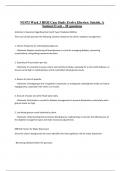
NU473 Week 3 HESI Case Study Evolve Elsevier: Suicide, A Sentinel Event - 28 questions Activities to Question Regarding Client with Type II Diabetes Mellitus The nurse should question the following activities related to the client’s diabetes management: 1. Client’s frequency for checking blood glucose. - Rationale: Regular monitoring of blood glucose is crucial for managing diabetes, preventing complications, and guiding treatment decisions. 2. Quantity of Ensure taken per day. - Rationale: It's essential to assess caloric and nutritional intake, especially for a client with diabetes, as Ensure can be high in carbohydrates, which could affect blood glucose levels. 3. Reason for lack of appetite. - Rationale: Investigating a lack of appetite is important, as inadequate carbohydrate intake can lead to hypoglycemia, especially if the client is on insulin. 4. Amount of water and other fluids taken daily. - Rationale: Fluid intake is crucial for diabetes management to prevent dehydration, particularly when glucose levels are high. 5. Last blood glucose result obtained by client. - Rationale: Understanding the last known blood glucose reading helps to monitor the effectiveness of the diabetes management plan and make necessary adjustments. ### Risk Factors for Major Depression Given the client’s background, the nurse identifies the most significant risk for major depression: - Becoming widowed within the past year. - Rationale: The loss of a spouse can significantly impact mental health, leading to increased risk for depression due to feelings of loneliness and loss. Older adults are particularly vulnerable during this transition. ### Physical Assessment Insights From the provided assessment data, here are some important observations and potential nursing concerns: - Respiratory Status: - Shallow respirations, nasal flaring, intercostal retractions, and productive cough indicate respiratory distress or exacerbation of a chronic respiratory condition, such as COPD. - Oxygen saturation of 88% on room air suggests hypoxemia; the nurse should intervene to administer oxygen and assess the need for bronchodilator therapy. - Cardiovascular Findings: - Elevated heart rate (110 beats/min) may indicate stress, fever, or compensation for hypoxemia. - Blood pressure of 150/90 mmHg may reflect increased work of breathing or anxiety. - Skin Integrity: - Stage II decubitus ulcer with a Braden score of 14 indicates a moderate risk for pressure ulcer development; nursing interventions should include regular repositioning and wound care. - General Condition: - Warm and dry skin, decreased skin turgor, and mild swelling of the feet raise concerns regarding hydration status and potential fluid overload, especially considering the patient's medication regimen (furosemide). - Other Indicators: - Barrel chest and mild clubbing of fingers suggest possible chronic lung disease and chronic hypoxia. - Cyanosis of the nail beds can indicate poor peripheral circulation and requires immediate attention. ### Vital Signs Summary - Temperature: 101.5° F (38.6° C) - indicates a possible infection. - Heart Rate: 110 beats/min - tachycardia; could be related to fever or respiratory distress. - Respiratory Rate: 20 breaths/min - elevated but may also reflect anxiety or hypoxia. - Blood Pressure: 150/90 mmHg - may indicate fluid overload or stress. - Blood Glucose: 200 - elevated, indicating poor diabetes control. - O2 Saturation: 88% - indicates significant hypoxemia. ### Nursing Priorities and Interventions - Initiate Oxygen Therapy: Given the low oxygen saturation. - Administer Bronchodilators: As prescribed (albuterol and ipratropium bromide) to help alleviate breathing difficulties. - Monitor Blood Glucose: Keep track of the blood glucose levels closely to prevent hypoglycemia/hyperglycemia. - Fluid Intake Assessment: Evaluate fluid intake and encourage hydration. - Skin Care Protocol: Implement measures to manage the decubitus ulcer and avoid further breakdown. - Communicate Findings: Report critical findings to the healthcare provider, especially concerning respiratory and cardiovascular status. The HCP prescribes 1000 mL dextrose 5% with normal saline 0.9% and 20 mEq/L potassium chloride (KCl) to infuse at 100 mL/hr. The nurse is correct to question which additive to this infusion prescription? o Normal saline (NS) and Potassium chloride (KCl). o Normal saline (NS). o Dextrose (D5). o Potassium chloride (KCl). o Dextrose (D5). · Solutions that contain dextrose are not recommended for client with diabetes because they can result in the rise of insulin, which will cause a decreased level of potassium in the blood. Dextrose may be prescribed for a client with diabetes to prevent low blood sugar during surgery. As a result of the many treatment and approaches to diabetes, it is important for the nurse to clarify the drug and intravenous fluid prescriptions with the HCP. The HCP prescribes 1000 mL normal saline 0.45% with 20 mEq/L potassium chloride (KCl) to infuse at 125 mL/hr. The nurse calculates that it will take how many hours for the infusion to be complete? (Enter numeric value only. If rounding is required, round to the whole number.) o 8 · Total volume infused/mL per hour = infusion time. 1000 mL/125 mL = 8 hours The client is febrile with temperature of 101.5°F (38.6°C). Based on this information, which intervention should the nurse implement first? o Contact the lab and request blood cultures be drawn. o Administer acetaminophen per hospital protocol. o Contact the HCP for a prescription for an antibiotic. o Retake temperature with a tympanic thermometer. o Contact the lab and request blood cultures be drawn. · Blood culture specimens are always drawn before giving acetaminophen or starting antibiotic therapy because the antibiotic usuallyinterferes with the organism's growth in the laboratory. The HCP prescribes clindamycin 900 mg in 100 mL over 30 minutes. The IV tubing drop factor is 15 gtt/mL. The nurse should regulate the IV to deliver how many drops per minute? (Enter numeric value only. If rounding is required, round to the nearest whole number.) o 50 · Use the formula: volume over time in minutes X the drop factor: 100 mL/hr / 30 minutes X 15 gtt/mL = 49.9 = 50 gtts/min The nurse knows that before drawing arterial blood gases, which interventions are the most important to be performed? Select all that apply. o Perform Allen’s Test. o Use sterile technique. o Utilize clean technique. o Check two client identifiers. o Draw blood gas after applying oxygen. o Perform Allen’s Test. · The Allen’s test is performed prior to drawing an arterial blood test. It involves the nurse compressing both radial and ulnar arteries at the same time. The client’s hand should become white as a result of the occlusion. The client’s hand color should return as soon as the nurse releases both arteries. o Use sterile technique. · Sterile technique must be maintained during venipuncture. o Check two client identifiers. · The two client identifier is part of the Joint Commission’s National Patient Safety Goals and requires the nurse to verify two identifiers prior to performing any procedure to ensure the right client and procedure. When monitoring the client’s respiratory status, which symptom provides the nurse with the earliest indication of respiratory difficulty? o Hypoxia. o Dusky nail beds and lips. o Decreased pulse rate. o Cyanosis. o Hypoxia. · Hypoxia is an early sign of respiratory distress. The nurse assesses respiratory depth, rate, and effort and listens for abnormal breath sounds that suggest breathing difficulty.

Content preview

NU473 Week 3 HESI Case Study Evolve Elsevier: Suicide, A
Sentinel Event - 28 questions
Activities to Question Regarding Client with Type II Diabetes Mellitus

The nurse should question the following activities related to the client’s diabetes management:


1. Client’s frequency for checking blood glucose.

- Rationale: Regular monitoring of blood glucose is crucial for managing diabetes, preventing
complications, and guiding treatment decisions.


2. Quantity of Ensure taken per day.

- Rationale: It's essential to assess caloric and nutritional intake, especially for a client with diabetes, as
Ensure can be high in carbohydrates, which could affect blood glucose levels.


3. Reason for lack of appetite.

- Rationale: Investigating a lack of appetite is important, as inadequate carbohydrate intake can lead to
hypoglycemia, especially if the client is on insulin.


4. Amount of water and other fluids taken daily.

- Rationale: Fluid intake is crucial for diabetes management to prevent dehydration, particularly when
glucose levels are high.


5. Last blood glucose result obtained by client.

- Rationale: Understanding the last known blood glucose reading helps to monitor the effectiveness of
the diabetes management plan and make necessary adjustments.


### Risk Factors for Major Depression

Given the client’s background, the nurse identifies the most significant risk for major depression:


- Becoming widowed within the past year.

, - Rationale: The loss of a spouse can significantly impact mental health, leading to increased risk for
depression due to feelings of loneliness and loss. Older adults are particularly vulnerable during this
transition.


### Physical Assessment Insights

From the provided assessment data, here are some important observations and potential nursing
concerns:


- Respiratory Status:

- Shallow respirations, nasal flaring, intercostal retractions, and productive cough indicate respiratory
distress or exacerbation of a chronic respiratory condition, such as COPD.

- Oxygen saturation of 88% on room air suggests hypoxemia; the nurse should intervene to administer
oxygen and assess the need for bronchodilator therapy.


- Cardiovascular Findings:

- Elevated heart rate (110 beats/min) may indicate stress, fever, or compensation for hypoxemia.

- Blood pressure of 150/90 mmHg may reflect increased work of breathing or anxiety.


- Skin Integrity:

- Stage II decubitus ulcer with a Braden score of 14 indicates a moderate risk for pressure ulcer
development; nursing interventions should include regular repositioning and wound care.


- General Condition:

- Warm and dry skin, decreased skin turgor, and mild swelling of the feet raise concerns regarding
hydration status and potential fluid overload, especially considering the patient's medication regimen
(furosemide).


- Other Indicators:

- Barrel chest and mild clubbing of fingers suggest possible chronic lung disease and chronic hypoxia.

- Cyanosis of the nail beds can indicate poor peripheral circulation and requires immediate attention.


### Vital Signs Summary

Document information

Study
Uploaded on
August 7, 2024
Number of pages
13
Written in
2024/2025
Type
Exam (elaborations)
Contains
Questions & answers
$11.72

Wrong document? Swap it for free Within 14 days of purchase and before downloading, you can choose a different document. You can simply spend the amount again.
Written by students who passed
Immediately available after payment
Read online or as PDF

Seller avatar
Reputation scores are based on the amount of documents a seller has sold for a fee and the reviews they have received for those documents. There are three levels: Bronze, Silver and Gold. The better the reputation, the more your can rely on the quality of the sellers work.
bestscores1
4.4
(5)
Sold
18
Followers
0
Items
1369
Last sold
1 month ago


Why students choose Stuvia

Created by fellow students, verified by reviews

Quality you can trust: written by students who passed their tests and reviewed by others who've used these notes.

Didn't get what you expected? Choose another document

No worries! You can instantly pick a different document that better fits what you're looking for.

Pay as you like, start learning right away

No subscription, no commitments. Pay the way you're used to via credit card and download your PDF document instantly.

Student with book image

“Bought, downloaded, and aced it. It really can be that simple.”

Alisha Student

Working on your references?

Create accurate citations in APA, MLA and Harvard with our free citation generator.

Working on your references?

Frequently asked questions
