Animal Reproduction Exam 2 Notes
ANSC 318
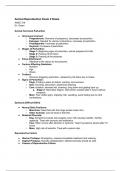
Dr. Green Animal Hormonal Parturition
●Hormones Involved:
○Progesterone: Hormone of pregnancy, decreases at parturition.
○Estrogen: Needed for uterine contractions, increases at parturition.
○Prostaglandin: Increases at parturition.
○Oxytocin: Increases at parturition.
●Stages of Parturition:
○Stage 1: Beginning signs of parturition; animal prepares for birth.
○Stage 2: Passing of the fetus.
○Stage 3: Passing of the placenta.
●Fetus Attachment:
○Attached to the uterus by the placenta.
●Factors Affecting Gestation:
○Nutrition
○Age
○Illness
●Cortisol:
○Hormone triggering parturition, released by the fetus due to stress.
●Signs of Parturition:
○Dogs: Finding a place to deliver, panting, nervousness.
○Sow: Grunting, discomfort, abdominal straining.
○Cow: Isolation, elevated tail, straining, lying down and getting back up.
■Stage 2: Hard labor begins; intervention needed after 2 hours without progress.
○Mare: Few visible signs, dripping milk, sweating, quick foaling due to hard contractions.
Dystocia (Difficult Birth)
●Normal Birth Positions:
○Mare/Cow: Head first with front legs tucked under chin.
○Other Animals: Can be head or feet first.
●Retained Placenta:
○Dog: Symptoms include sick puppies, toxic milk causing mastitis, metritis, agalactia. Treat with oxytocin and antibiotics.
○Cow: Often occurs after abortion or dystocia. Treat if symptoms persist after 72 hours.
○Mare: High risk of laminitis. Treat with oxytocin drip.
Reproductive Failure
●Uterine Prolapse: Emergency; requires immediate treatment and suturing.
●Vaginal Prolapse: Genetic predisposition; affected animals should be sold.
●Causes of Reproductive Failure:
ANSC 318
Dr. Green Animal Hormonal Parturition
●Hormones Involved:
○Progesterone: Hormone of pregnancy, decreases at parturition.
○Estrogen: Needed for uterine contractions, increases at parturition.
○Prostaglandin: Increases at parturition.
○Oxytocin: Increases at parturition.
●Stages of Parturition:
○Stage 1: Beginning signs of parturition; animal prepares for birth.
○Stage 2: Passing of the fetus.
○Stage 3: Passing of the placenta.
●Fetus Attachment:
○Attached to the uterus by the placenta.
●Factors Affecting Gestation:
○Nutrition
○Age
○Illness
●Cortisol:
○Hormone triggering parturition, released by the fetus due to stress.
●Signs of Parturition:
○Dogs: Finding a place to deliver, panting, nervousness.
○Sow: Grunting, discomfort, abdominal straining.
○Cow: Isolation, elevated tail, straining, lying down and getting back up.
■Stage 2: Hard labor begins; intervention needed after 2 hours without progress.
○Mare: Few visible signs, dripping milk, sweating, quick foaling due to hard contractions.
Dystocia (Difficult Birth)
●Normal Birth Positions:
○Mare/Cow: Head first with front legs tucked under chin.
○Other Animals: Can be head or feet first.
●Retained Placenta:
○Dog: Symptoms include sick puppies, toxic milk causing mastitis, metritis, agalactia. Treat with oxytocin and antibiotics.
○Cow: Often occurs after abortion or dystocia. Treat if symptoms persist after 72 hours.
○Mare: High risk of laminitis. Treat with oxytocin drip.
Reproductive Failure
●Uterine Prolapse: Emergency; requires immediate treatment and suturing.
●Vaginal Prolapse: Genetic predisposition; affected animals should be sold.
●Causes of Reproductive Failure: