Aggregate Demand (2.2)
Characteristics of AD
AD is the total planned expenditure on goods and services produced in an economy
• Consumption – spending by
households
• Investment – spending by
firms on capital
• Government Spending –
spending by the government
• Imports – spending by
residents on goods abroad
• Exports – spending by
foreigners on the economy’s
goods
Changes in Price cause movements, changes in anything else causes Shifts
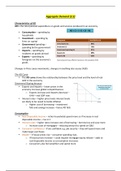
The AD Curve
• The AD curve shows the relationship between the price level and the level of real
GDP in the economy
Downward Sloping because
• Exports and imports – lower prices in the
economy increase global competitiveness
o Exports increase and Imports decrease –
X>M – real GDP rises
• Interest rates – higher price levels interest levels
are likely to be raised to tackle inflation
o Higher cost of borrowing – investment
falls and savings increase – hence AD falls
Consumption
• Real Disposable Income – richer households spend more so if increase in real
disposable income – rise in C
• Interest rates – higher rates increase cost of borrowing – borrow less and save more
o Increase costs of mortgages – reducing amount to spend on G&S
• Consumer Confidence – if are confident e.g. job security – they will spend more and
make larger purchases
• Wealth – if house prices rise – consumer spending rises
o If house prices increase – could request mortgage equity release – adds to
real disposable income so consumption increases
o Consumers also feel wealthier and spend more
, Investment
• Gross Investment – amount a firm invests in business assets that doesn’t account for
depreciations
• Net Investment – addition to capital stock of an economy
o = gross investment – depreciation
What Influences Investment
• Economic Growth
• Confidence Levels –
o If confident about future sales – they will invest and try improve their
productive capacity so they can increase supply in the future
o Inflation causes uncertainty
o If sales are good – future prospects look good so firms will invest
o If sales are slow – might still invest to improve quality
o Keynes – animal spirits when describing human behaviour which increases
confidence in an economy
• Influence of government and regulation
o If taxes fall – firms will be more confident and invest more
o If subsidies provided – investment increases
• Access to Credit
o If banks are unwilling to lend – will find it harder to gain access to credit
o Availability of funds is dependent on levels of saving in the economy
• Interest rates – cost of borrowing lower if lower – more investment
o Higher rates – greater opportunity cost of not saving this money
Government Spending
• The Trade Cycle
• During recessions – government might try increase spending to stimulate the
economy
o Spend on welfare repayments to help people who have lost jobs
• During economic growth – government will receive more tax revenue as consumers
are spending and earning more
o Decide to spend less as economy doesn’t need stimulating and fewer people
will be claiming benefits
• Fiscal Policy – Government uses fiscal policy to influence economy
o Might spend on public and merit goods
o Expansionary Policy during economic decline – increasing AD
o Contractionary Fiscal Policy – during economic growth
Net Trade (X-M)
• Real Income – during Economic growth have higher incomes so consume more
o Likely to import more and cause a larger deficit
o During economic decline – leads to improvements due to importing less
• Exchange Rates – if increases – currency gets stronger and appreciates
o If decreases – gets weaker and depreciates
o Higher Ex rate – value of currency higher so exports more expensive and
imports cheaper – AD falls