

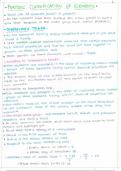
Summary a comprehensive guide to periodic classification of elements
1. The Class 10 periodic classification of elements is a fundamental concept in chemistry that organizes the elements based on their atomic number and chemical properties. This classification system arranges the elements into periods and groups, with each element placed in a specific location on the periodic table. The periodic table is a valuable tool for scientists and students alike, as it provides a visual representation of the elements and their relationships to one another. 2. In the Class 10 periodic classification of elements, the elements are arranged in order of increasing atomic number from left to right and top to bottom. This arrangement allows for easy identification of trends and patterns in the properties of the elements. For example, elements in the same group tend to have similar chemical properties, while elements in the same period have similar atomic structures. Understanding the periodic table is crucial for predicting the behavior of elements in chemical reactions and for studying the properties of different elements. 3. The Class 10 periodic classification of elements is a key concept in chemistry education, as it provides a foundation for understanding the behavior of elements and their compounds. By studying the periodic table, students can learn about the properties of elements such as metals, nonmetals, and metalloids, as well as the trends in atomic size, ionization energy, and electronegativity. Overall, the periodic table is a powerful tool that helps scientists and students alike make sense of the vast array of elements that make up the world around us.
Document information
- School year
- 4
- Uploaded on
- July 16, 2024
- Number of pages
- 21
- Written in
- 2023/2024
- Type
- Summary


