
Exam (elaborations) CNA - Certified Nursing Assistant
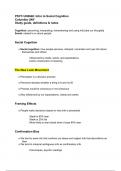
o Bottom-up processing: what you see is what you think Data-driven [color, shape, smell, sound] Guided by the immediately presented stimulus Stimulus Info first Cognition follows Guys think with their dick—look at attraction first o Top-down processing: what you think is what you see Concept-driven Guided by prior thoughts and knowledge Cognition first stimulus info follows Girls think first before judging attractiveness Schemas o Schemas: mental frameworks that we use to make sense of social situations and organize our world Help us go beyond info that is given [make inferences!] Guide processing of info o Schemas reside primarily in the prefrontal cortex of the brain (social part of the brain) o Think categories o Advantages Increase ability to understand remember events Provide structure in an ambiguous setting o Disadvantages Biased perceptions Confirmation bias—seek schema-confirming info Self-fulfilling prophecies Self-Fulfilling Prophecy o Self-fulfilling prophecy: schemas lead to expectations about other people and these expectations influence how we behave around them Example: We have a stereotype that Italians are friendly. Bianca is Italian so I may act toward Bianca in a friendly way. My friendly behavior may be reciprocated by Bianca and if others engage in positive social interactions with her, and she may become a friendlier person, thus confirming my initial expectations. Confirmation Bias v. Self- Fulfilling Prophecies o Confirmation biases… Tendency to interpret, seek and create info in ways that verify existing beliefs I seek out information that verifies my expectation Involves 1 person o Self-fulfilling prophecies… Schemas create expectations of a target person change our behavior toward the target person based on expectations target person acts in a way that confirms our expectations My expectation of your behavior leads to you confirming my expectation Involves 2 people affecting each other Salience o Salience: the extent to which we attend to particular features of the person or situation that we are responding to o We are more likely to judge people on the basis of characteristics of salience, which attract our attention when we see someone with them Things that are unusual, negative, colorful, bright and moving are more salient and thus more likely to be attended to Accessibility o Accessibility: we use whichever schema is at the forefront of our minds [aka the most accessible schema] o Can be chronically accessible: things that are important to us and that we spend a lot of time thinking about
Document information
- Uploaded on
- July 10, 2024
- Number of pages
- 7
- Written in
- 2023/2024
- Type
- Exam (elaborations)
- Contains
- Questions & answers


