

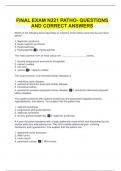
FINAL EXAM N221 PATHO- QUESTIONS AND CORRECT ANSWERS
Which of the following items describes an infection of the kidney parenchyma and renal pelvis? 1. Nephrotic syndrome 2. Acute nephritic syndrome 3. Hydronephrosis 4. Pyelonephritis 4. Pyelonephritis The most common form of renal calculi are __________________ stones. 1. struvite (magnesium ammonium phosphate) 2. calcium oxalate 3. uric acid 4. cystine 2. calcium oxalate The most common of all inherited kidney diseases is 1. medullary cystic disease. 2. autosomal dominant polycystic kidney disease. 3. horseshoe kidney. 4. autosomal recessive polycystic kidney disease. 2. autosomal dominant polycystic kidney disease. Your patient presents with massive proteinuria and associated hypoalbuminemia, hyperlipidemia, and edema. You suspect that the patient has 1. nephritic syndrome. 2. progressive glomerulonephritis. 3. nephrotic syndrome. 4. chronic glomerulonephritis. 3. nephrotic syndrome. A 4 year old patient presents with a large abdominal mass which was discovered by his mother while she was bathing him. The child exhibits abdominal pain, vomiting, hematuria, and hypertension. You suspect that the patient has 1. abdominal aortic aneurysm. 2. Wilm tumor. 3. renal calculi. 4. pancreatic cancer. 2. Wilm tumor
Document information
- Uploaded on
- July 9, 2024
- Number of pages
- 10
- Written in
- 2023/2024
- Type
- Exam (elaborations)
- Contains
- Questions & answers


