GEOG 350 149 Midterm Quiz Questions And Answers|2024
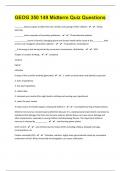
planning ________ is/are examples of secondary pollutants. - ️️Photochemical oxidants ___________ ozone is harmful, damaging plants and human health while ozone at the _________ level screens out mutagenic ultraviolet radiation. - ️️Tropospheric; stratosphere __% of energy is lost during electricity conversion, transmission, distribution. - ️️65% 4 types of creative thinking: - ️️analytical creative logical reflective 6 steps of the scientific method (generally) - ️️1. make an observation and identify a question 2. form a hypothesis 3. test your hypothesis 4. collect data 5. interpret your results (this might lead to refining and revising your hypothesis) 6. report for peer review A major source of volatile organic compounds (VOCs) is - ️️incomplete burning of hydrocarbons. Airborne mercury has received special attention because it is a widespread and persistent neurotoxin (a substance that damages the brain and nervous system). Minute doses can cause nerve damage and other impairments, especially in young children and developing fetuses. The majority of airborne mercury is released by __________. - ️️coal-burning power plants birth control - ️️any method used to reduce births including celibacy, delayed marriage, contraceptions, etc Carbon monoxide (CO) - ️️Colorless, odorless, highly toxic gas produced mainly by incomplete combustion of fuel. Binds irreversibly to hemoglobin, can cause suffocation.
Document information
- Uploaded on
- July 7, 2024
- Number of pages
- 15
- Written in
- 2023/2024
- Type
- Exam (elaborations)
- Contains
- Questions & answers