

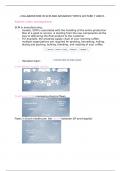
- COLLABORATION IN SCM AND ADVANCED TOPICS LECTURE 7 AND 8 -
Patient chain management
SCM in manufacturing:
- Usually, SCM is associated with the handling of the entire production
flow of a good or service starting from the raw components all the
way to delivering the final product to the customer.
- For example, the amazing supply chain of your morning coffee:
multiple organizations are required for growing, harvesting, hulling,
drying and packing, bulking, blending, and roasting of your coffee.
- Heineken beer:
International supply chains:
-
Traditional SCM: managing physical flows:
-
Flows in Dutch healthcare: the cut-off between GP and hospital:
-
, · Primary care: general practitioner, speech therapist,
physiotherapist all care outside of the hospital.
· Secondary care: all takes place within the hospital context
more expensive.
- How a patient moves (flows) from A to B in order to receive the
required care.
- In the Netherlands, the general practitioner is the ‘gatekeeper’ –
decides where/by whom you should be treated.
- So, without a referral from the general practitioner, no access to the
specialist or hospital.
-
-
- Challenge: although patients are in need of coherent care, we are
often not able to supply coherent/consistent care.
· Planning issues, communication issues, waiting times.
For each patient, coherence in care provision is a ‘must’ – what are major
roadblocks here?
- Doctors, medical specialists
- Nursing professionals
- Cost containment
- Communication/information tools
, - Demand in terms of fluctuations in terms of patients or healthcare
professionals
Demand-based care provision: building an integrated chain – integrated
care:
- Beside clinical also organizational challenges:
· Specialization in health care:
… Multidisciplinary collaboration
… Multiple health care providers
· Increasing emphasis on demand-based care e.g.:
… Client/patient involvement – more attention (e.g., want
treatment Y instead of X)
… Joint delivery
- Moreover, there is an ever-increasing pressure to cut costs while still
being able to deliver the same quality of care.
Often a broken chain yielding problems in the areas of:
- Communication:
· Lack of well-developed, flexible, and timely information systems
– systems do not communicate …
… Patients’ needs to repeat everything again when in a new
hospital for example.
· Improvements needed for those patients who require treatment
from more than one care provider.
- Patient safety:
· Number of errors reported per patient also increased with the
number of professionals assigned toa patient.
· Often at key interfaces: between primary and secondary care,
between curative and public health services.
- Waiting times:
· Negatively influence the patient’s quality of life.
· Long waiting times complicate smooth patient flows.
… E.g., waiting times between flows.
… Additional time before being treated.
- Integration:
· Professional inward-directedness: they often perform related but
different tasks, have different professional backgrounds, and
have never met.
· Traditional governance arrangements hamper implementation of
effective collaboration fir patients that require treatment from
more than one care provider.
Reduced integration and in the end reduced quality of life for the
patient or their safety.
Within- or across borders:
Patient chain management
SCM in manufacturing:
- Usually, SCM is associated with the handling of the entire production
flow of a good or service starting from the raw components all the
way to delivering the final product to the customer.
- For example, the amazing supply chain of your morning coffee:
multiple organizations are required for growing, harvesting, hulling,
drying and packing, bulking, blending, and roasting of your coffee.
- Heineken beer:
International supply chains:
-
Traditional SCM: managing physical flows:
-
Flows in Dutch healthcare: the cut-off between GP and hospital:
-
, · Primary care: general practitioner, speech therapist,
physiotherapist all care outside of the hospital.
· Secondary care: all takes place within the hospital context
more expensive.
- How a patient moves (flows) from A to B in order to receive the
required care.
- In the Netherlands, the general practitioner is the ‘gatekeeper’ –
decides where/by whom you should be treated.
- So, without a referral from the general practitioner, no access to the
specialist or hospital.
-
-
- Challenge: although patients are in need of coherent care, we are
often not able to supply coherent/consistent care.
· Planning issues, communication issues, waiting times.
For each patient, coherence in care provision is a ‘must’ – what are major
roadblocks here?
- Doctors, medical specialists
- Nursing professionals
- Cost containment
- Communication/information tools
, - Demand in terms of fluctuations in terms of patients or healthcare
professionals
Demand-based care provision: building an integrated chain – integrated
care:
- Beside clinical also organizational challenges:
· Specialization in health care:
… Multidisciplinary collaboration
… Multiple health care providers
· Increasing emphasis on demand-based care e.g.:
… Client/patient involvement – more attention (e.g., want
treatment Y instead of X)
… Joint delivery
- Moreover, there is an ever-increasing pressure to cut costs while still
being able to deliver the same quality of care.
Often a broken chain yielding problems in the areas of:
- Communication:
· Lack of well-developed, flexible, and timely information systems
– systems do not communicate …
… Patients’ needs to repeat everything again when in a new
hospital for example.
· Improvements needed for those patients who require treatment
from more than one care provider.
- Patient safety:
· Number of errors reported per patient also increased with the
number of professionals assigned toa patient.
· Often at key interfaces: between primary and secondary care,
between curative and public health services.
- Waiting times:
· Negatively influence the patient’s quality of life.
· Long waiting times complicate smooth patient flows.
… E.g., waiting times between flows.
… Additional time before being treated.
- Integration:
· Professional inward-directedness: they often perform related but
different tasks, have different professional backgrounds, and
have never met.
· Traditional governance arrangements hamper implementation of
effective collaboration fir patients that require treatment from
more than one care provider.
Reduced integration and in the end reduced quality of life for the
patient or their safety.
Within- or across borders:


