

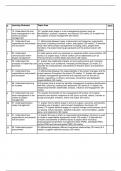
Q Learning Outcome Topic Area Mark
1 10. Understand risk and 10.1 explain each stage in a risk management process (such as
issue management in the identification, analysis, response, and closure) (30 marks),10.4 explain the
context of project key aspects of issue management (20 marks)
management
2 01. Understand how 1.1 differentiate between types of permanent and temporary organisation
organisations and projects structures (including functional, matrix, and project) (20 marks),1.5 describe
are structured other roles within project management (including users, project team
members, the project steering group/board and the product owner) (30
marks)
3 04. Understand 4.3 state factors which can positively or negatively affect communication (30
communication within marks),4.5 explain ways in which conflict can be addressed (such as
project management Thomas Kilmann Conflict Mode Instrument) (20 marks)
4 05. Understand the 5.1 explain how leadership impacts on team performance and motivation
principles of leadership and (using models such as Maslow, Herzberg and McGregor) (20 mark),5.3
teamwork describe the characteristics and benefits of effective teams and teamwork
(30 marks)
6 01. Understand how 1.4 differentiate between the responsibilities of the project manager and the
organisations and projects project sponsor throughout the project (20 marks),1.7 explain why aspects
are structured of project management governance are required (such as the use of:
policies, regulations, functions, processes, procedures and delegated
responsibilities) (30 marks)
7 06. Understand planning 6.02 explain what is meant by benefits management (including identification,
for success definition, planning, tracking and realisation) (30 marks),6.11 explain the
relationship between stakeholder analysis, influence and engagement (20
marks)
8 10. Understand risk and 10.3 explain the benefits of risk management (30 marks),10.2 explain
issue management in the proactive and reactive responses to risk (such as avoid, reduce, transfer or
context of project accept and exploit, enhance, share and reject) (20 marks)
management
12 07. Understand project 7.1 explain how to define scope in terms of outputs, outcomes and benefits
scope management (including use of product, cost and work breakdown structures) (20
marks),7.4 explain different stages of a typical change control process (such
as request, initial evaluation, detailed evaluation, recommendation, update
plans, and implement) (30 marks)
14 01. Understand how 1.2 explain the way in which an organisational breakdown structure is used
organisations and projects to create a responsibility assignment matrix (20 marks),1.6 describe the
are structured functions and benefits of different types of project office (including
project/programme/portfolio management office (PMO), embedded PMO,
central PMO and hub-and-spoke PMO) (30 marks)
16 09. Understand project 9.3 differentiate between different contractual relationships (20 marks),9.4
procurement explain a supplier selection process (30 marks)
1 10. Understand risk and 10.1 explain each stage in a risk management process (such as
issue management in the identification, analysis, response, and closure) (30 marks),10.4 explain the
context of project key aspects of issue management (20 marks)
management
2 01. Understand how 1.1 differentiate between types of permanent and temporary organisation
organisations and projects structures (including functional, matrix, and project) (20 marks),1.5 describe
are structured other roles within project management (including users, project team
members, the project steering group/board and the product owner) (30
marks)
3 04. Understand 4.3 state factors which can positively or negatively affect communication (30
communication within marks),4.5 explain ways in which conflict can be addressed (such as
project management Thomas Kilmann Conflict Mode Instrument) (20 marks)
4 05. Understand the 5.1 explain how leadership impacts on team performance and motivation
principles of leadership and (using models such as Maslow, Herzberg and McGregor) (20 mark),5.3
teamwork describe the characteristics and benefits of effective teams and teamwork
(30 marks)
6 01. Understand how 1.4 differentiate between the responsibilities of the project manager and the
organisations and projects project sponsor throughout the project (20 marks),1.7 explain why aspects
are structured of project management governance are required (such as the use of:
policies, regulations, functions, processes, procedures and delegated
responsibilities) (30 marks)
7 06. Understand planning 6.02 explain what is meant by benefits management (including identification,
for success definition, planning, tracking and realisation) (30 marks),6.11 explain the
relationship between stakeholder analysis, influence and engagement (20
marks)
8 10. Understand risk and 10.3 explain the benefits of risk management (30 marks),10.2 explain
issue management in the proactive and reactive responses to risk (such as avoid, reduce, transfer or
context of project accept and exploit, enhance, share and reject) (20 marks)
management
12 07. Understand project 7.1 explain how to define scope in terms of outputs, outcomes and benefits
scope management (including use of product, cost and work breakdown structures) (20
marks),7.4 explain different stages of a typical change control process (such
as request, initial evaluation, detailed evaluation, recommendation, update
plans, and implement) (30 marks)
14 01. Understand how 1.2 explain the way in which an organisational breakdown structure is used
organisations and projects to create a responsibility assignment matrix (20 marks),1.6 describe the
are structured functions and benefits of different types of project office (including
project/programme/portfolio management office (PMO), embedded PMO,
central PMO and hub-and-spoke PMO) (30 marks)
16 09. Understand project 9.3 differentiate between different contractual relationships (20 marks),9.4
procurement explain a supplier selection process (30 marks)


