
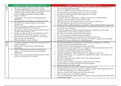
Examples of Strength During and After the War Examples of Weakness During and After the War
W • Men from the Empire volunteered to fight e.g. India – 1.4m • There were protests against conscription in Canada and Australia rejected it in referendums. It
W • The Empire supplied Britain with vital raw materials wasn’t even suggested in South Africa
1 • Australia and New Zealand fought bravely in Gallipoli and the • There was a republican movement in South Africa led by J. Hertzog
Canadians fought well at the battle for Vimy Ridge • The dominions had no emotional attachment to the idea of the empire
• In 1917, the Indian government contributed £100m to • Evacuation of Gallipoli proved that white people weren’t invincible
Britain’s war effort • West Indian mutiny in 1918
• 1.2m Egyptians were recruited to defend Egypt and the • It promoted a desire for independence as dominions gained a sense of national identity
Middle East • A mutiny in 1914 when Indians refused to fight the Turks
• New Zealand and Canada adopted conscription in 1916/18 • Indian nationalists saw their countries efforts as a step towards self-government
• The RAF proved a cheap and effective way to police • The empire expected some kind of reward for their sacrifice
rebellious areas • Secretary of State for India promised more’ responsible’ self-government for India in August 1917
• The post war treaties gave Britain many strategically and • Its economic was weakened and its industrial power was eclipsed by the US. It was forces to sell
economically beneficial territories e.g. Iraq many of its oversea investments
• The royal navy remained strong especially after the Treaty of • Aircraft and submarine developments meant that British naval supremacy could no longer
Versailles reduced Germany’s navy guarantee Britain security at home and dominance abroad
• Germany was shattered, Russia was weakened by civil war, • The empire was at different stages of political development
the USA retreated into isolation and France was an ally • The war made Britain reconsider India and the Dominions
• Britain kept lose economic and military ties with Iraq and • Egypt became independent in 1922, Ireland in 1912/1931 and Iraq in 1932
Egypt even after their independence • Unrest in Egypt in 1919, Ireland in 1916- and Iraq in 1920 which was suppressed with difficulty
• Britain dominated the League of Nations • Palestine was in a tense state because of conflicting promises
W • 2.5m Indians volunteered to fight despite war being declared • Some Indian Nationalists were prepared to work with Germany and Japan e.g. in the Indian
W without consultation National Army and the Burma Independence Army
2 • Britain relied on assistance from its Dominions and • The Indian Congress told provincial governments to resign office
dependencies • Japan had many successes against Britain e.g. Singapore in 1942 which ended the myth of ‘white
• Atlee’s government had no intention of abandoning the invincibility’ giving independence movements confidence
empire – it was only in India that he was committed to • ‘Quit India’ movement compromised the war effort in India
independence • Famine in India killed 3m– British administration was unprepared to deal with it
• Britain’s forces, which had played a major part in the Allied • Egyptians and Palestinians saw an opportunity to exploit British weakness as the Germans were
victory, were stationed all over the globe only driven back in 1942
• Churchill’s interpretation of the Atlantic Charter 1941 enraged nationalists
• Éire did not support Britain
• The prime minister of Iraq tried to negotiate with Germany (he was exiled)
• Forcible suppression in India and Egypt led to further resentment
• Dominions turned to the US for support
• The involvement of the colonies led to demands for greater autonomy
• The British economy was severely weakened – it could not compare with the USSR and the USA
on which it relied meaning it was no longer independent
• Labour was elected in 1945 showing the desire for social-reform
• The 2 new major powers were both anti-imperialist
• Most of the United Nations apposed imperial rule and the ideological struggle against Hitler made
it much harder to justify
W • Men from the Empire volunteered to fight e.g. India – 1.4m • There were protests against conscription in Canada and Australia rejected it in referendums. It
W • The Empire supplied Britain with vital raw materials wasn’t even suggested in South Africa
1 • Australia and New Zealand fought bravely in Gallipoli and the • There was a republican movement in South Africa led by J. Hertzog
Canadians fought well at the battle for Vimy Ridge • The dominions had no emotional attachment to the idea of the empire
• In 1917, the Indian government contributed £100m to • Evacuation of Gallipoli proved that white people weren’t invincible
Britain’s war effort • West Indian mutiny in 1918
• 1.2m Egyptians were recruited to defend Egypt and the • It promoted a desire for independence as dominions gained a sense of national identity
Middle East • A mutiny in 1914 when Indians refused to fight the Turks
• New Zealand and Canada adopted conscription in 1916/18 • Indian nationalists saw their countries efforts as a step towards self-government
• The RAF proved a cheap and effective way to police • The empire expected some kind of reward for their sacrifice
rebellious areas • Secretary of State for India promised more’ responsible’ self-government for India in August 1917
• The post war treaties gave Britain many strategically and • Its economic was weakened and its industrial power was eclipsed by the US. It was forces to sell
economically beneficial territories e.g. Iraq many of its oversea investments
• The royal navy remained strong especially after the Treaty of • Aircraft and submarine developments meant that British naval supremacy could no longer
Versailles reduced Germany’s navy guarantee Britain security at home and dominance abroad
• Germany was shattered, Russia was weakened by civil war, • The empire was at different stages of political development
the USA retreated into isolation and France was an ally • The war made Britain reconsider India and the Dominions
• Britain kept lose economic and military ties with Iraq and • Egypt became independent in 1922, Ireland in 1912/1931 and Iraq in 1932
Egypt even after their independence • Unrest in Egypt in 1919, Ireland in 1916- and Iraq in 1920 which was suppressed with difficulty
• Britain dominated the League of Nations • Palestine was in a tense state because of conflicting promises
W • 2.5m Indians volunteered to fight despite war being declared • Some Indian Nationalists were prepared to work with Germany and Japan e.g. in the Indian
W without consultation National Army and the Burma Independence Army
2 • Britain relied on assistance from its Dominions and • The Indian Congress told provincial governments to resign office
dependencies • Japan had many successes against Britain e.g. Singapore in 1942 which ended the myth of ‘white
• Atlee’s government had no intention of abandoning the invincibility’ giving independence movements confidence
empire – it was only in India that he was committed to • ‘Quit India’ movement compromised the war effort in India
independence • Famine in India killed 3m– British administration was unprepared to deal with it
• Britain’s forces, which had played a major part in the Allied • Egyptians and Palestinians saw an opportunity to exploit British weakness as the Germans were
victory, were stationed all over the globe only driven back in 1942
• Churchill’s interpretation of the Atlantic Charter 1941 enraged nationalists
• Éire did not support Britain
• The prime minister of Iraq tried to negotiate with Germany (he was exiled)
• Forcible suppression in India and Egypt led to further resentment
• Dominions turned to the US for support
• The involvement of the colonies led to demands for greater autonomy
• The British economy was severely weakened – it could not compare with the USSR and the USA
on which it relied meaning it was no longer independent
• Labour was elected in 1945 showing the desire for social-reform
• The 2 new major powers were both anti-imperialist
• Most of the United Nations apposed imperial rule and the ideological struggle against Hitler made
it much harder to justify


