

PC 832 arrest exam | 230 Questions with 100% Correct Answers | Updated and Verified
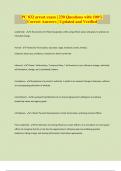
PC 832 arrest exam | 230 Questions with 100% Correct Answers | Updated and Verified Leadership - is the practice of influencing people, while using ethical values and goals, to produce an intended change. Formal - "Authority" from above, top-down, legal, maintain control, limited, imposed, status quo, avoidance, everyone to whom conferred. Informal - "Power" all directions, *reciprocal flow, * all directions, trust, influence change, unlimited, self-discipline, change, yes ( calculated), leaders. Compliance - Acceptance of a person's authority. It yields to an outward change in behavior, without an accompanying alteration of attitude. Commitment - An outward manifestation of an internal agreement/ willingness to embrace leadership values and agency goals. Life Balance - = Work/ Personal Development, Family Community, and being a Peace Officer. Peer Leadership - Peer behavior are strong influence on peer officers. It is incumbent on every peace officer to recognize that he or she has the opportunity to influence peers by modeling positive behaviors, taking charge, and sharing information if and when appropriate. Modeling - Maintaining ethical standers, professional appearance, (first impressions) pursuing self development. Intervening - As a leader, a peace officer must have the courage to address unacceptable or unethical behavior and is obligated to intervene if such action is exhibited by another officer. Community policing - When peace officers and community members share a common sense of values, communicate openly and regularly. Trust is the critical link in the community/policing partnership. Follower - Courage to: assume responsibility, serve with loyalty, challenge, participate in transformation, and know when LEAVE! Public Trust - is the expectation that the authority and power entrusted to a peace officer will not abuse. The public must be confident that peace officers will perform their duties in respect of that trust. Factors Impacting Public Trust - 1. Previous experience with law enforcement. 2. develop or enhance police/community partnerships. 3. General public apathy and prevailing attitudes. 4. Impact of the family structure. 5. Social and/or economic conditions. 6. Situations that promote high levels of fear or a sense of collective victimization. 7. Media treatment of law enforcement events.
Document information
- Uploaded on
- May 29, 2024
- Number of pages
- 32
- Written in
- 2023/2024
- Type
- Exam (elaborations)
- Contains
- Questions & answers


