Exam 3 Ems 131|60 Correctly Solved Questions|Score A+
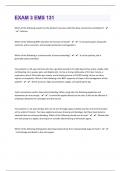
Which of the following vessels has the thickest muscular walls that allow constriction and dilation? - ️️Arteries Which of the following BEST describes the function of blood? - ️️It transports gases along with nutrients, aids in excretion, and provides protection and regulation. Which of the following is a characteristic of venous bleeding? - ️️It can be profuse, but is generally easily controlled. Your patient is a 33-year-old man who has a gunshot wound to his right leg and has active, steady, dark red bleeding. He is awake, pale, and diaphoretic. He has a strong radial pulse of 112 per minute, a respiratory rate of 24 breaths per minute, and a blood pressure of 122/82 mmHg. He has no other injuries or complaints. Which of the following is the BEST sequence of steps in the management of this patient? - ️️Direct pressure, high-concentration oxygen, and splinting the leg Cold is sometimes used to help control bleeding. When using cold, the following guidelines and statements are true except: - ️️it should be applied directly to the skin; it will not be effective if anything is between the cold agent and the wound. Your patient is a 12-year-old boy who ran his arm through a glass window and has an 8-inch laceration on his anterior forearm. You have applied a pressure dressing and bandage, but these have become saturated due to continued bleeding. Which of the following should you do now? - ️️Elevate that arm and prepare to apply a tourniquet or consider administering a hemostatic agent. Which of the following distinguishes decompensated shock from compensated stage of shock? - ️️Cell damage and death in the vital organs
Document information
- Uploaded on
- May 25, 2024
- Number of pages
- 8
- Written in
- 2023/2024
- Type
- Exam (elaborations)
- Contains
- Questions & answers