Grossmont Astronomy 110 Study Guide Exam 3
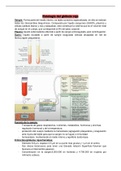
Early Ideas of how Sun shines - Impacts from meteors heated the sun. Sun's shine - Nuclear Fusion Sun's Inner Layers - Core, Radiation Zone, and Convection Zone Sun's Outer Layers - Photosphere, Chromosphere, and Corona. Photosphere - Visible surface of the Sun, and it emits Visible Light. Chromosphere - Second layer, Red color is only apparent during eclipses. Emits UV Light. Corona - Aura of plasma that surrounds the Sun. Emits X-ray Light. Only layer seen during a total solar eclipse. Hydrostatic/Gravitational Equilibrium - The balance between gravity and pressure in a star. Granules - The tops of convection cells. Generated from Sunspots. Sunspots - Darkspots on the surface where temperature is cooler. Created from the Sun's magnetic field. Sunspot Cycle - 11 years. Zeeman Effect - Splitting of absorption lines into 2 or more parts Magnetic Field/ Solar Cycle - 22 years. Solar Interior Observation - Computer Models, Helioseismology, and Neutrinos. Spicules - Jets of gas. Plages - Active bright regions in the Sun's chromosphere. Solar Flare - Violent eruptive events on the Sun. Coronal Mass Ejection - Huge loop, canopy, balloon-shaped volumes of high-energy gas ejected from the corona. Prominences - Gigantic loops or arches. Filaments - Dark streaks in the corona. Neutrino - A Natural subatomic particle with a mass close to zero. Neutrino Problem - The discrepancy between the measurements of the number of neutrinos flowing through Earth and the theoretical models of the solar interior. Resolved by new understanding of Neutrinos
Geschreven voor
- Instelling
- Astronomy 110
- Vak
- Astronomy 110
Documentinformatie
- Geüpload op
- 21 mei 2024
- Aantal pagina's
- 9
- Geschreven in
- 2023/2024
- Type
- Tentamen (uitwerkingen)
- Bevat
- Vragen en antwoorden
Onderwerpen
- grossmont astronomy 110
-
grossmont astronomy 110 study guide exam 3

Ook beschikbaar in voordeelbundel