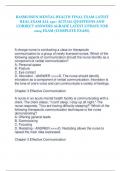
RASMUSSEN MENTAL HEALTH FINAL EXAM LATEST
REAL EXAM ALL 150+ ACTUAL QUESTIONS AND
CORRECT ANSWERS AGRADE LATEST UPDATE FOR
2024 EXAM (COMPLETE EXAM).
A charge nurse is conducting a class on therapeutic
communication to a group of newly licensed nurses. Which of the
following aspects of communication should the nurse identify as a
component of verbal communication?
A. Personal space
B. Posture
C. Eye contact
D. Intonation - ANSWER >>>>D. The nurse should identify
intonation as a component of verbal communication. Intonation is
the tone of one's voice and can communicate a variety of feelings.
Chapter 3 Effective Communication
A nurse in an acute mental health facility is communicating with a
client. The client states, "I can't sleep. I stay up all night." The
nurse responds, "You are having difficulty sleeping?" Which of the
following therapeutic communication techniques is the nurse
demonstrating?
A. Offering general leads
B. Summarizing
C. Focusing
D. Restating - ANSWER >>>>D. Restating allows the nurse to
repeat the main idea expressed.
Chapter 3 Effective Communication
,A nurse is communicating with a client who was just admitted for
treatment of a substance use disorder. Which of the following
communication techniques should the nurse identify as a barrier
to therapeutic communication?
A. Offering advice
B. Reflecting
C. Listening attentively
D. Giving information - ANSWER >>>>A. Offering advice to a
client is a barrier to therapeutic communication that the nurse
should avoid using. Advice tends to interfere with the client's
ability to make personal decisions and choices.
Chapter 3 Effective Communication
A nurse caring for a client who has anorexia nervosa. Which of
the following examples demonstrates the nurse's use of
interpersonal communication?
A. The nurse discusses the client's weight loss during a
health care team meeting.
B. The nurse examines her own personal feelings about clients
who have anorexia nervosa.
C. The nurse asks the client about her body image perception.
D. The nurse presents an educational session about anorexia
nervosa to a large group of adolescents. - ANSWER >>>>C. The
nurse's one-on-one communication with the client is an example
of interpersonal communication.
Chapter 3 Effective Communication
A nurse is caring for the parents of a child who has demonstrated
recent changes in behavior and mood. When the mother of the
child asks the nurse for reassurance about her son's condition,
which of the following responses should the nurse make?
A. "I think your son is getting better. What have you noticed?"
B. "I'm sure everything will be okay. It just takes time to heal."
,C. "I'm not sure what's wrong. Have you asked the doctor about
your concerns?"
D. "I understand you're concerned. Let's discuss what concerns
you specifically." - ANSWER >>>>D. This therapeutic response
reflects upon, and accepts, the parents' feelings, and it allows
them to clarify what they are feeling.
Chapter 3 Effective Communication
A nurse is caring for a client who smokes and has lung cancer.
The client reports, "I'm coughing because I have that cold that
everyone has been getting." The nurse should identify that the
client is using which of the following defense mechanisms?
A. Reaction formation
B. Denial
C. Displacement
D. Sublimation - ANSWER >>>>B. This is an example of denial,
which is pretending the truth is not reality to manage the anxiety
of acknowledging what is real.
Chapter 4 Stress and Defense Mechanisms
A nurse is providing preoperative teaching for a client who was
just informed that she requires emergency surgery. The client,
has a respiratory rate 30/min, and says, "This is difficult to
comprehend. I feel shaky and nervous." The nurse should identify
that the client is experiencing which of the following levels of
anxiety?
A. Mild
B. Moderate
C. Severe
D. Panic - ANSWER >>>>B. Moderate anxiety decreases
problem-solving and may hamper the client's ability to understand
information. Vital signs may increase somewhat, and the client is
visibly anxious.
, Chapter 4 Stress and Defense Mechanisms
A nurse is caring for a client who is experiencing moderate
anxiety. Which of the following actions should the nurse take
when trying to give necessary information to the client? (Select all
that apply.)
A. Reassure the client that everything will be okay.
B. Discuss prior use of coping mechanisms with the client.
C. Ignore the client's anxiety so that she will
not be embarrassed.
D. Demonstrate a calm manner while using simple and clear
directions.
E. Gather information from the client using closed-ended
questions. - ANSWER >>>>B. Discussing the prior use of coping
mechanisms assists the client in identifying ways of effectively
coping with the current stressor.
D. Providing a calm presence assists the client in feeling secure
and promotes relaxation. Clients experiencing moderate levels of
anxiety often benefit from the direction of others.
Chapter 4 Stress and Defense Mechanisms
A nurse working in an acute mental health facility is caring for a
35-year-old female client who has manifestations of depression.
The client lives at home with her partner and two young children.
She currently smokes and has a history of chronic asthma. Which
of the following factors put the client at risk for depression?
(Select all that apply.)
A. Age
B. Gender
C. History of chronic asthma
D. Smoking
REAL EXAM ALL 150+ ACTUAL QUESTIONS AND
CORRECT ANSWERS AGRADE LATEST UPDATE FOR
2024 EXAM (COMPLETE EXAM).
A charge nurse is conducting a class on therapeutic
communication to a group of newly licensed nurses. Which of the
following aspects of communication should the nurse identify as a
component of verbal communication?
A. Personal space
B. Posture
C. Eye contact
D. Intonation - ANSWER >>>>D. The nurse should identify
intonation as a component of verbal communication. Intonation is
the tone of one's voice and can communicate a variety of feelings.
Chapter 3 Effective Communication
A nurse in an acute mental health facility is communicating with a
client. The client states, "I can't sleep. I stay up all night." The
nurse responds, "You are having difficulty sleeping?" Which of the
following therapeutic communication techniques is the nurse
demonstrating?
A. Offering general leads
B. Summarizing
C. Focusing
D. Restating - ANSWER >>>>D. Restating allows the nurse to
repeat the main idea expressed.
Chapter 3 Effective Communication
,A nurse is communicating with a client who was just admitted for
treatment of a substance use disorder. Which of the following
communication techniques should the nurse identify as a barrier
to therapeutic communication?
A. Offering advice
B. Reflecting
C. Listening attentively
D. Giving information - ANSWER >>>>A. Offering advice to a
client is a barrier to therapeutic communication that the nurse
should avoid using. Advice tends to interfere with the client's
ability to make personal decisions and choices.
Chapter 3 Effective Communication
A nurse caring for a client who has anorexia nervosa. Which of
the following examples demonstrates the nurse's use of
interpersonal communication?
A. The nurse discusses the client's weight loss during a
health care team meeting.
B. The nurse examines her own personal feelings about clients
who have anorexia nervosa.
C. The nurse asks the client about her body image perception.
D. The nurse presents an educational session about anorexia
nervosa to a large group of adolescents. - ANSWER >>>>C. The
nurse's one-on-one communication with the client is an example
of interpersonal communication.
Chapter 3 Effective Communication
A nurse is caring for the parents of a child who has demonstrated
recent changes in behavior and mood. When the mother of the
child asks the nurse for reassurance about her son's condition,
which of the following responses should the nurse make?
A. "I think your son is getting better. What have you noticed?"
B. "I'm sure everything will be okay. It just takes time to heal."
,C. "I'm not sure what's wrong. Have you asked the doctor about
your concerns?"
D. "I understand you're concerned. Let's discuss what concerns
you specifically." - ANSWER >>>>D. This therapeutic response
reflects upon, and accepts, the parents' feelings, and it allows
them to clarify what they are feeling.
Chapter 3 Effective Communication
A nurse is caring for a client who smokes and has lung cancer.
The client reports, "I'm coughing because I have that cold that
everyone has been getting." The nurse should identify that the
client is using which of the following defense mechanisms?
A. Reaction formation
B. Denial
C. Displacement
D. Sublimation - ANSWER >>>>B. This is an example of denial,
which is pretending the truth is not reality to manage the anxiety
of acknowledging what is real.
Chapter 4 Stress and Defense Mechanisms
A nurse is providing preoperative teaching for a client who was
just informed that she requires emergency surgery. The client,
has a respiratory rate 30/min, and says, "This is difficult to
comprehend. I feel shaky and nervous." The nurse should identify
that the client is experiencing which of the following levels of
anxiety?
A. Mild
B. Moderate
C. Severe
D. Panic - ANSWER >>>>B. Moderate anxiety decreases
problem-solving and may hamper the client's ability to understand
information. Vital signs may increase somewhat, and the client is
visibly anxious.
, Chapter 4 Stress and Defense Mechanisms
A nurse is caring for a client who is experiencing moderate
anxiety. Which of the following actions should the nurse take
when trying to give necessary information to the client? (Select all
that apply.)
A. Reassure the client that everything will be okay.
B. Discuss prior use of coping mechanisms with the client.
C. Ignore the client's anxiety so that she will
not be embarrassed.
D. Demonstrate a calm manner while using simple and clear
directions.
E. Gather information from the client using closed-ended
questions. - ANSWER >>>>B. Discussing the prior use of coping
mechanisms assists the client in identifying ways of effectively
coping with the current stressor.
D. Providing a calm presence assists the client in feeling secure
and promotes relaxation. Clients experiencing moderate levels of
anxiety often benefit from the direction of others.
Chapter 4 Stress and Defense Mechanisms
A nurse working in an acute mental health facility is caring for a
35-year-old female client who has manifestations of depression.
The client lives at home with her partner and two young children.
She currently smokes and has a history of chronic asthma. Which
of the following factors put the client at risk for depression?
(Select all that apply.)
A. Age
B. Gender
C. History of chronic asthma
D. Smoking