RNSG 1443 Musculoskeletal Question and answers rated A+
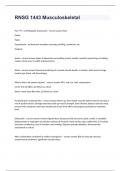
RNSG 1443 Musculoskeletal Question and answers rated A+ RNSG 1443 Musculoskeletal Five "P's" of Orthopedic Assessment - correct answer Pain Pulses Pallor Paraesthesia - an abnormal sensation: burning, prickling, numbness, etc. Paralysis Sprain - correct answer Injury to ligaments surrounding a joint; usually caused by wrenching or twisting motion. Most occur in ankle and knee joints. Strain - correct answer Excessive stretching of a muscle, fascial sheath, or tendon. Most occur in large muscle grps (back, calf, hamstrings). What is the tx for sprains/strains? - correct answer RICE- rest, ice, cold, compression Ice for first 24-48hrs, 20-30min at a time Warm, moist heat after that, 20-30min at a time Pt teaching for strains/sprains - correct answer Warm up, then stretch muscles before exercise to reduce risk of sprains/strains; strength exercises build up muscle strength, bone density; balance exercises help prevent falls; endurance exercises should start at low level effort and progress gradually to moderate level. Dislocation - correct answer Involves ligamentous structures that surround a joint; results in complete displacement or separation of articular surfaces of the joint. Most obvious sign is deformity. S/S include local pain, tenderness, loss of function, and swelling. Requires prompt attention. Neurovascular assessment is critical. Why is dislocation considered a medical emergency? - correct answer Risk of avascular necrosis, compartment syndrome, significant vascular injury What is the first goal
Geschreven voor
- Instelling
- RNSG
- Vak
- RNSG
Documentinformatie
- Geüpload op
- 11 mei 2024
- Aantal pagina's
- 7
- Geschreven in
- 2023/2024
- Type
- Tentamen (uitwerkingen)
- Bevat
- Vragen en antwoorden
Onderwerpen
- rnsg 1443 musculoskeletal
-
rnsg 1443 musculoskeletal question and answers ra

Ook beschikbaar in voordeelbundel