

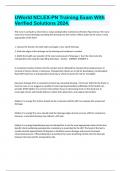
UWorld NCLEX-PN Training Exam With Verified Solutions 2024.
The nurse is caring for a client who is 2 days postoperative craniotomy with bone flap removal. The nurse notes clear wound drainage saturating the dressing over the incision. Which action by the nurse is most appropriate at this time? 1. Cleanse the incision site with saline and apply a new, sterile dressing 2. Mark the edges of the drainage on the dressing and continue to monitor 3. Notify the health care provider of the color and amount of drainage 4. Turn the client onto the nonoperative side using the log-rolling technique - Answer CORRECT ANSWER: 3 A craniotomy involves incision into the cranium and is indicated for elevated intracranial pressure or removal of tumors, blood, or abscesses. Postoperative clients are at risk for developing a cerebrospinal fluid (CSF) leak from an intraoperative dural injury, which increases the risk for meningitis. Excessive drainage from a craniotomy incision (eg, saturated dressing, 50 mL per shift into the drain) or from the nose or ear suggests a possible CF leak requiring immediate notification of the health care provider (HCP) (Option 3 is correct). Interventions focus on decreasing strain on the dural tear to encourage closure and include bedrest, lumbar drain placement, and surgical intervention. (Option 1 is wrong) The incision should not be re-dressed until the HCP can evaluate the wound and drainage. (Option 2 is wrong) The nurse should mark the drainage edges at least once per shift for comparison. However, a saturated dressing may indicate a CSF leak. (Option 4 is wrong) Repositioning may be indicated but is not the most appropriate action at this time. Specific client positioning postoperative craniotomy is prescribed by the HCP. The head of the bed is usually elevated approximately 30 degrees to facilitate venous drainage and prevent increased intracranial pressure. If flat positioning is prescribed, the nurse should log-roll the client to alternate between the back and the nonoperative side.
Document information
- Uploaded on
- May 10, 2024
- Number of pages
- 113
- Written in
- 2023/2024
- Type
- Exam (elaborations)
- Contains
- Questions & answers


