IPMA-HR (Everything you need to KNOW CORRECT 100%
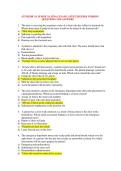
Training - ANSWER Process whereby people acquire capabilities to perform jobs Knowledge Management - ANSWER The way an organization identifies and leverages knowledge to be competitive 20% - ANSWER Average percentage that a learner retains one month after training Types of Training - ANSWER -Legally Required -Basic and Remedial Skills -Job and Technical Training -Soft Skills Orientation - ANSWER Planned introduction of new employees to their jobs, coworkers, and the organization Effective Orientation - ANSWER -establishes favorable employee impression of the organization -provides organization and job information -enhances interpersonal acceptance by coworkers and builds new network of resources -accelerates socialization and integration of new employee -ensures that employee performance and productivity begin more quickly Elements of Effective Onboarding - ANSWER -establish clear goals -know what new hires want -start before "day one" on the job -provide multiple short sessions -create connections and networks -make it enjoyable Orientation Measurement of Success - ANSWER -tenure turnover rate -new hire failure factor -employee upgrade rate -development program participation rate Instructional Systems Design (ISD) - ANSWER A step-by-step process to ensure that the right learning materials are provided to the right people at the right time. ADDIE Model - 5 Phases of Training - ANSWER Assessment, Design, Development, Implementation, Evaluation Key to Training Assessment - ANSWER Identifying gaps in performance Effective Training Planning - ANSWER -is there really a need for the training? -who needs to be trained? -who will do the training? -what form will the training take? -how will knowledge be transferred to the job? -how will the training be evaluated? 4 Ways to Effectively Train Employees - ANSWER 1-Blend in-person training and online training 2-Provide hands-on training 3-Incorporate mobile training apps 4-Allow employees to learn at their own pace How to Diagnose Training - ANSWER Analyze organizational outcomes and look at future organizational needs 4 Ways to Measure Training Effectiveness - ANSWER 1-Learner reaction 2-Measuring gain in knowledge or skill 3-Measuring increased performance back in the workplace 4-Impact on the organization itself Sources of Information for Needs Assessment - ANSWER -organizational analysis -job/task analysis -individual analysis Organizational Analysis - ANSWER Grievances, accidents, waste/scrap, training observations, customer complaints, exit interviews, equipment use, attitude surveys Job/Task Analysis - ANSWER Employee KSAs, benchmarks, effectiveness, job specs, efficiency data, employee surveys Individual Analysis - ANSWER Performance appraisals, tests, records, assessment centers, questionnaires, surveys, job knowledge tools Focuses for Training Objectives - ANSWER -knowledge -skill -attitude Training Design Elements - ANSWER -learner characteristics -training transfer -instructional strategies Learner Characteristics - ANSWER Ability to learn, motivation to learn, self-efficacy, perceived utility/value, learning styles Training Transfer - ANSWER Overview of training content, strategic link, supervisor support, opportunity, accountability Instructional Strategies - ANSWER Practice/feedback, over-learning, behavioral modeling, error-based examples, reinforcement/immediate confirmation Self-Efficacy - ANSWER People's belief that they can successfully learn the training program content Andragogy - ANSWER Adult learning; ways in which adults learn differently than do younger people. 5 Principles for Designing Training for Adults - ANSWER -need to know why they are learning something -need to be self-directed -bring more work-related experiences into the learning process -enter into a learning experience with a problem-centered approach to learning -are motivated to learn by both extrinsic and intrinsic factors Active Practice - ANSWER Trainees perform job-related tasks and duties during training Behavioral Modeling - ANSWER Copying someone else's behavior Reinforcement - ANSWER Based on the idea that people tend to repeat responses that give them some type of positive reward and to avoid actions associated with negative consequences Immediate Confirmation - ANSWER Based on the idea that people learn best if they receive reinforcement and feedback as soon as possible after training Training Delivery Options - ANSWER -internal to the organization -external to the organization Internal Training Options - ANSWER Traditional classes, on-the-job training, self-guided training at company portal, mentoring/coaching, job shadowing, developing teachers internally, cross training, training projects, group-based classroom External Training Options - ANSWER Third-party delivered training, web conferences, training at outside location, podcasts, educational leave, blended training, teleconferencing Advantages to External Training - ANSWER Less expensive, less time to develop internal training, staff may not have the level of expertise needed, employees can learn from other companies Informal Training - ANSWER Training that occurs through interactions and feedback among employees Common Forms of Instructional Techniques - ANSWER -on-the-job training -apprenticeships -simulations -case studies -games and activities -role play -behavior modeling -computer-based training On-The-Job Training - ANSWER The most common training because it is flexible and relevant Cross-Training - ANSWER Training people to do more than one job Apprentice Training - ANSWER Provides employee with on-the-job experience under the guidance of a skilled and certified worker Case Studies - ANSWER Focus upon stories about individuals, organizations, processes, projects or events and the consequence of decisions or actions that were taken Role Play - ANSWER Enables the practice of new skills in a safe environment, open communication among participants, mandate active involvement, build individual and group confidence, develop camaraderie among participants and enable the correcting of errors while still in the classroom Internship - ANSWER Combines job training with classroom instruction from high schools, technical school, colleges and universities E-Learning - ANSWER Use of web-based technology to conduct training online MOOCs - ANSWER Massive open enrollment online courses Simulations - ANSWER Reproduce parts of the real world so they can be experienced, manipulated, and learning can occur Games - ANSWER Exercises that entertain and engage M-Learning - ANSWER Use of mobile technology to conduct training Computer-Based Training (CBT) - ANSWER Self-paced training that can be provided from a PC through the use of a CD-ROM Strategic Decis
Geschreven voor
- Instelling
- IPMA-HR
- Vak
- IPMA-HR
Documentinformatie
- Geüpload op
- 26 april 2024
- Aantal pagina's
- 94
- Geschreven in
- 2023/2024
- Type
- Tentamen (uitwerkingen)
- Bevat
- Vragen en antwoorden
Onderwerpen
- ipma hr 2024
-
ipma hr everything you need to know correct 100
-
training answer process whereby people acquire c
-
knowledge management answer the way an organizat

Ook beschikbaar in voordeelbundel