

Maternity/OB HESI Practice Part #1
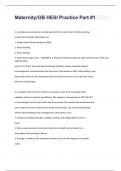
Maternity/OB HESI Practice Part #1 2. A newborn who is 20 hours old has a respiratory rate of 66, is grunting when exhaling, and has occasional nasal flaring. The newborn's temperature is 98°F (36.6°C); he is breathing room air and is pink with acrocyanosis. The mother had membranes that were ruptured 26 hours before birth. Based on these data, the nurse should include which of the following in the management of the infant's care? 1. Continue recording vital signs, voiding, stooling, and eating patterns every 4 hours. 2. Place a pulse oximeter and contact the primary health care provider for a prescription to draw blood cultures. 3. Arrange a transfer to the neonatal intensive care unit with diagnosis of possible sepsis. 4. Draw a complete blood count (CBC) with differential and feed the infant. 2. 2. The concern with this infant is sepsis based on prolonged rupture of membranes before birth. Blood cultures would provide an accurate diagnosis of sepsis, but will take 48 hours from the time drawn. Frequent monitoring of infant vital signs, looking for changes, and maintaining contact with the parents is also part of care management while awaiting culture results. Continuing with vital signs, voiding, stooling, and eating every 4 hours is the standard of care for a normal newborn, but a respiratory rate greater than 60, grunting, and occasional flaring are not normal. Although not normal, the need for the intensive care unit is not warranted as newborns with sepsis can be treated with antibiotics at the maternal bedside. The CBC does not establish the diagnosis of sepsis but the changes in the WBC levels can identify an infant at risk. Many experts suggest that waiting until an infant is 6 to 12 hours old to draw a CBC will give the most accurate results.
Document information
- Uploaded on
- April 17, 2024
- Number of pages
- 38
- Written in
- 2023/2024
- Type
- Exam (elaborations)
- Contains
- Questions & answers


