
NUR2790 Professional Nursing III Exam Questions And Answers
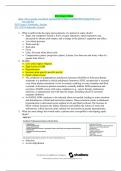
NUR2790 Professional Nursing III Exam Questions And Answers 1. What would be like the signs and symptoms of a patient in septic shock? Signs and symptoms include a lower oxygen saturation, rapid respiratory rate, decreased-to-absent urine output, and a change in the patient’s cognition and affect. Low blood pressure Warm and dry flush skin Fever Labs; Elevated white blood cells Compensatory phase /progressive phase; Lactate; less than one and worry when it's greater than what 4. 2. SIADH – Low urine output- Oliguria High levels of ADH Hyponatremia Increase urine gravity specific gravity Fluid volume excess The syndrome of inappropriate antidiuretic hormone (SIADH) or Schwartz-Bartter syndrome is a problem in which antidiuretic hormone (ADH, vasopressin) is secreted even when plasma osmolarity is low or normal, resulting in water retention and fluid overload. A decrease in plasma osmolarity normally inhibits ADH production and secretion. SIADH occurs with many conditions (e.g., cancer therapy, pulmonary infection, or impairment) and with specific drugs, including selective serotonin reuptake inhibitors In SIADH, ADH continues to be released when not needed, leading to water retention and disturbances of fluid and electrolyte balance. Water retention results in dilutional hyponatremia (a decreased serum sodium level) and fluid overload. The increase in blood volume increases the kidney filtration and inhibits the release of renin and aldosterone, which increase urine sodium loss and results in greater hyponatremia. 3. What are some things that would make a patient more susceptible to developing septic shock? Infection severe dehydration
Document information
- Uploaded on
- April 17, 2024
- Number of pages
- 10
- Written in
- 2023/2024
- Type
- Exam (elaborations)
- Contains
- Questions & answers


