Maryville Patho NURS 611 Exam 2 Questions With 100% Correct Answers
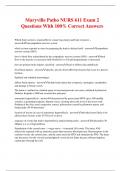
Maryville Patho NURS 611 Exam 2 Questions With 100% Correct Answers Which body system is responsible for conserving energy and body resources - answerParasympathetic nervous system which system responds to stress by preparing the body to defend itself - answerSympathetic nervous system (SNS) how is blood flow redistributed by the sympathetic nervous system (SNS) - answerblood flow to the muscles is increased while blood flow to GI and integumentary is decreased how are primary brain injuries classified - answerfocal or diffuse (aka multifocal) focal brain injuries - answerspecific, grossly observable brain lesions that occur in a precise location Epidural and subdural hemorrhages diffuse brain injuries - answerinclude brain injury due to hypoxia, meningitis, encephalitis, and damage to blood vessels The brain is confined in a limited space so increased pressure can cause collateral dysfunction: Diabetes Insipidus (ADH not secreted thus polyuria) autonomic hyperreflexia - answercharacterized by paroxysmal HTN (up to 300 mmHg systolic), a pounding headache, blurred vision, sweating above the level of the lesion with flushing of the skin, nasal congestion, nausea, piloerection caused by pilomotor spasm, and bradycardia (30-40 beats/min) location of lesions in cases of autonomic hyperreflexia - answerindividual most likely to be affected have lesions at the T5-T6 level or above sequence of events that lead to hyperreflexia induced bradycardia - answerbradycardia (30- 40bpm) is a sx of hyperreflexia Stimulation of the carotid sinus --vagus nerve --sinoatrial (SA) node. The intact ANS reflexively responds with an arteriolar spasm that increases blood pressure. Baroreceptors in the cerebral vessels, the carotid sinus, and the aorta sense the HTN and stimulate the PNS. The heart rate decreases, but the visceral and peripheral vessels do not dilate because efferent impulses cannot pass through the cord
Document information
- Uploaded on
- April 15, 2024
- Number of pages
- 4
- Written in
- 2023/2024
- Type
- Exam (elaborations)
- Contains
- Questions & answers