PSY3349 Sleep and Sleep Disorders
TASK 2 – INSOMNIA
INSOMNIA DISORDER
Source: Manber, Simpson & Blair in APA Handbook of Clinical Psychology (2016)
Insomnia is characterized by persistent difficulty initiating or maintaining sleep, accompanied by
distress and perceived negative daytime consequences, such as diminished productivity, problems
with memory and concentration, fatigue, low mood and irritability.
Poor sleep is a common symptom of a major depressive episode and is one of the least responsive
symptoms to antidepressant therapy, suggesting that when poor sleep is experienced in depression, it
needs independent clinical attention. Also, the presence of poor sleep and sleep abnormalities has been
associated with more severe depressive symptoms, including increased suicidality and poorer
response to depression treatment.
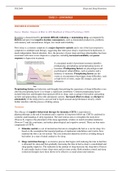
A conceptual model of persistent insomnia identifies
predisposing, precipitating and perpetuating factors of
insomnia. Predisposing factors are physiological and
psychological vulnerabilities, such as genetics and a
tendency to ruminate. Precipitating factors are life
events or circumstances that trigger sleep difficulties, such
as high levels of stress, major life changes, pain and
substances.
Perpetuating factors are behaviors and thoughts that prolong the experience of sleep difficulties even
after the precipitating factor is no longer a significant contributor. Common perpetuating factors
include behaviors and thoughts that represent effort to sleep, such as going to bed earlier and getting
up later and approaching sleep with anticipatory anxiety. Increased efforts to sleep can disrupt the
automaticity of the sleep process and can lead to hyper-arousal and performance anxiety, which
further interfere with the process of falling asleep.
Treatment
The efficacy of cognitive-behavioral therapy for insomnia (CBTI) is equivalent to
pharmacotherapy at the end of treatment and is superior in long-term follow-up. CBTI is anchored in
scientific understanding of sleep regulation. The intervention aims to strengthen the sleep drive
(Process S), improve the placement of the sleep opportunity window to match circadian tendencies
(Process C) and life constraints, and reduce physiological and cognitive arousal. There are four main
components of CBTI;
◊ Stimulus control is a set of instructions that aim to strengthen the bed as a cue for sleep. It is
based on the assumption that repeated pairings of unpleasant wakefulness and worries have
rendered the bed a cue for arousal. The core instruction therefore involves avoiding being in
bed unless in a state of mind conducive for sleep.
◊ Sleep restriction therapy is an iterative process that begins with reducing the time in bed that
is allocated for sleep and then gradually increasing the time in bed as sleep is consolidated and
sleep quality improves. The reduction in the amount of sleep increases the sleep drive (Process
S) and usually leads to faster sleep onset and less time awake. Both stimulus control and sleep
restriction therapies have been shown to be effective as stand-alone interventions.
, PSY3349 Sleep and Sleep Disorders
◊ Relaxation practice has demonstrated some efficacy, but is much less effective as a stand-
alone intervention for insomnia. However, it is often included as a component of CBTI.
Cognitive therapy techniques are used in CBTI to address beliefs about sleep that can interfere
with sleep, such as believing that there will be catastrophic consequences of poor sleep, as
well as thoughts that interfere with adherence to the behavioral components of CBTI.
◊ Two other components of CBTI are psycho-education and sleep hygiene. Education about
sleep regulation and insomnia is provided as part of a rationale for the behavioral components
and as a means to help alleviate sleep-related anxiety. Good sleep hygiene includes substances
(do not consume caffeine after lunch and avoid alcohol and heavy meals close to bedtime),
rigorous exercise (avoid within 4 hr before bedtime), and environment (which should be cool,
quiet, dark, and safe). Although important, sleep hygiene alone has limited efficacy.
Pharmacological interventions include medications for the treatment of insomnia as well as sedating
antidepressants, antipsychotics and antihistaminergic medication. Important considerations for the use
of medication is its half-life and the potential for tolerance and psychological dependence.
Importantly, CBTI is preferred over long-term pharmacological therapy by patients.
DIAGNOSIS AND TREATMENT OF INSOMNIA
Definition and diagnosis
Source: Riemann et al. (2017)
The diagnosis of non-organic insomnia, according to the
ICD-10, is based on the subjective experience of individuals.
No quantitative criteria for sleep-onset latency, sleep duration,
or the frequency, or duration, of nocturnal awakenings is
required. The term ‘non-organic’ refers to the fact that it does
not have a specific recognizable somatic disorder at its core.
The DSM-V has removed the distinction between primary
and secondary insomnia, which was aimed at differentiating
independent insomnia from secondary insomnia, i.e. insomnia
being related by to another somatic/mental disorder. The
distinction is removed, because evidence lacked that treating
the primary disorder relieves insomnia, and therefore being
the main reason for change.
The definition of the International Classification of Sleep
Disorders (ICSD) follows that of the DSM-V (see table).
In order to receive the diagnosis, there must be a disturbance
of nocturnal sleep (criterion A) and related daytime
impairment (criterion B). The sleep disorder has to occur at
least 3 nights a week for a period of 3 months to be
diagnosed. If diagnostic criteria are fulfilled co-morbid with a
mental or somatic disorder, both disorders are diagnosed.
TASK 2 – INSOMNIA
INSOMNIA DISORDER
Source: Manber, Simpson & Blair in APA Handbook of Clinical Psychology (2016)
Insomnia is characterized by persistent difficulty initiating or maintaining sleep, accompanied by
distress and perceived negative daytime consequences, such as diminished productivity, problems
with memory and concentration, fatigue, low mood and irritability.
Poor sleep is a common symptom of a major depressive episode and is one of the least responsive
symptoms to antidepressant therapy, suggesting that when poor sleep is experienced in depression, it
needs independent clinical attention. Also, the presence of poor sleep and sleep abnormalities has been
associated with more severe depressive symptoms, including increased suicidality and poorer
response to depression treatment.
A conceptual model of persistent insomnia identifies
predisposing, precipitating and perpetuating factors of
insomnia. Predisposing factors are physiological and
psychological vulnerabilities, such as genetics and a
tendency to ruminate. Precipitating factors are life
events or circumstances that trigger sleep difficulties, such
as high levels of stress, major life changes, pain and
substances.
Perpetuating factors are behaviors and thoughts that prolong the experience of sleep difficulties even
after the precipitating factor is no longer a significant contributor. Common perpetuating factors
include behaviors and thoughts that represent effort to sleep, such as going to bed earlier and getting
up later and approaching sleep with anticipatory anxiety. Increased efforts to sleep can disrupt the
automaticity of the sleep process and can lead to hyper-arousal and performance anxiety, which
further interfere with the process of falling asleep.
Treatment
The efficacy of cognitive-behavioral therapy for insomnia (CBTI) is equivalent to
pharmacotherapy at the end of treatment and is superior in long-term follow-up. CBTI is anchored in
scientific understanding of sleep regulation. The intervention aims to strengthen the sleep drive
(Process S), improve the placement of the sleep opportunity window to match circadian tendencies
(Process C) and life constraints, and reduce physiological and cognitive arousal. There are four main
components of CBTI;
◊ Stimulus control is a set of instructions that aim to strengthen the bed as a cue for sleep. It is
based on the assumption that repeated pairings of unpleasant wakefulness and worries have
rendered the bed a cue for arousal. The core instruction therefore involves avoiding being in
bed unless in a state of mind conducive for sleep.
◊ Sleep restriction therapy is an iterative process that begins with reducing the time in bed that
is allocated for sleep and then gradually increasing the time in bed as sleep is consolidated and
sleep quality improves. The reduction in the amount of sleep increases the sleep drive (Process
S) and usually leads to faster sleep onset and less time awake. Both stimulus control and sleep
restriction therapies have been shown to be effective as stand-alone interventions.
, PSY3349 Sleep and Sleep Disorders
◊ Relaxation practice has demonstrated some efficacy, but is much less effective as a stand-
alone intervention for insomnia. However, it is often included as a component of CBTI.
Cognitive therapy techniques are used in CBTI to address beliefs about sleep that can interfere
with sleep, such as believing that there will be catastrophic consequences of poor sleep, as
well as thoughts that interfere with adherence to the behavioral components of CBTI.
◊ Two other components of CBTI are psycho-education and sleep hygiene. Education about
sleep regulation and insomnia is provided as part of a rationale for the behavioral components
and as a means to help alleviate sleep-related anxiety. Good sleep hygiene includes substances
(do not consume caffeine after lunch and avoid alcohol and heavy meals close to bedtime),
rigorous exercise (avoid within 4 hr before bedtime), and environment (which should be cool,
quiet, dark, and safe). Although important, sleep hygiene alone has limited efficacy.
Pharmacological interventions include medications for the treatment of insomnia as well as sedating
antidepressants, antipsychotics and antihistaminergic medication. Important considerations for the use
of medication is its half-life and the potential for tolerance and psychological dependence.
Importantly, CBTI is preferred over long-term pharmacological therapy by patients.
DIAGNOSIS AND TREATMENT OF INSOMNIA
Definition and diagnosis
Source: Riemann et al. (2017)
The diagnosis of non-organic insomnia, according to the
ICD-10, is based on the subjective experience of individuals.
No quantitative criteria for sleep-onset latency, sleep duration,
or the frequency, or duration, of nocturnal awakenings is
required. The term ‘non-organic’ refers to the fact that it does
not have a specific recognizable somatic disorder at its core.
The DSM-V has removed the distinction between primary
and secondary insomnia, which was aimed at differentiating
independent insomnia from secondary insomnia, i.e. insomnia
being related by to another somatic/mental disorder. The
distinction is removed, because evidence lacked that treating
the primary disorder relieves insomnia, and therefore being
the main reason for change.
The definition of the International Classification of Sleep
Disorders (ICSD) follows that of the DSM-V (see table).
In order to receive the diagnosis, there must be a disturbance
of nocturnal sleep (criterion A) and related daytime
impairment (criterion B). The sleep disorder has to occur at
least 3 nights a week for a period of 3 months to be
diagnosed. If diagnostic criteria are fulfilled co-morbid with a
mental or somatic disorder, both disorders are diagnosed.