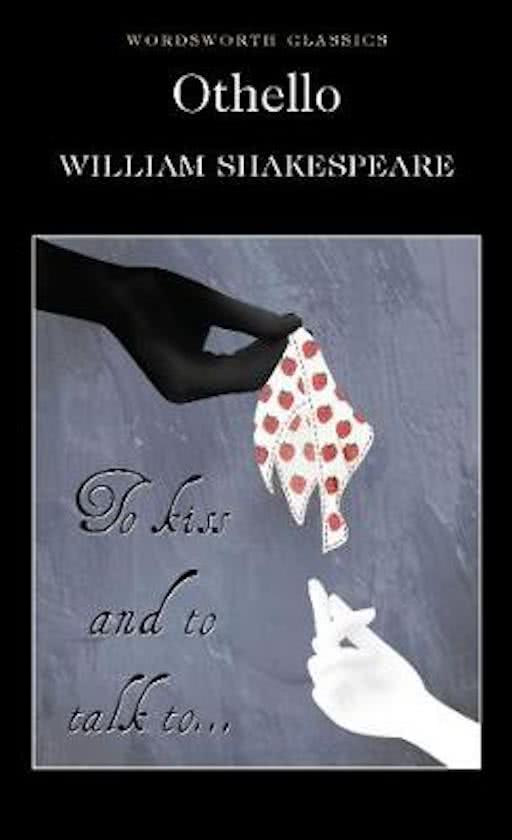
Exploring Themes in ‘Othello’
15.02.2021
English Literature
, Contents Page
HONESTY & DECEPTION 2
KEY QUOTES 3
ANALYSIS 3
Context & Critics 3
ORDER & CHAOS 4
KEY QUOTES 5
ANALYSIS 5
Context & Critics 5
REPUTATION & HONOUR 6
KEY QUOTES 7
ANALYSIS 7
Context & Critics 7
RELATIONSHIPS BETWEEN MEN & WOMEN 8
KEY QUOTES 10
ANALYSIS 10
Context & Critics 10
RACE 10
KEY QUOTES 11
ANALYSIS 11
Context & Critics 11
1
, HONESTY & DECEPTION
Beginning:
- Mainly explored through Othello and Iago by positioning them as direct opposites. Iago opens the
play by manipulating the truth of Othello and Desdemona’s love by painting Othello as a savage
thief. This deception is easily received due to prejudice and racial stereotypes.
- Othello’s introduction (Act 1.2) shows he’s a wholly honest character - upholds the truth and his
reputation.
- “It is most true; true, I have married her” - self-assured declaration portrays him as trustworthy, he
doesn’t hide the truth which juxtaposes Iago.
- Iago’s lies are immediately trusted and taken as truth by surrounding characters, e.g. Brabantio,
whereas Othello’s admirable truth-telling isn’t treated with the same respect. For example, Brabantio
constantly imposes the idea of Othello using witchcraft.
Middle:
- Othello criminalises his wife as a result of Iago’s successful deceit.
- Cassio refers to Iago as “honest” (Act 3.1), heavily ironic since an audience knows that he is the
exact opposite. Desdemona then calls him “an honest fellow” (Act 3.3) - shows how skilful he really
is at manipulating others.
- Act 3.3, Othello speaks in a soliloquy about how he completely trusts Iago: “This fellow’s of
exceeding honesty”
- Desdemona isn’t a perfectly truthful character: she declares that the “handkerchief” “is not lost”
which is a blatant lie. Considering how easily she lied here, it could be understandable why Othello
struggles to believe her defence later on.
End:
- Othello deceives himself into believing that he “must” kill Desdemona to protect others but this could
just be masking his true, vengeful motives.
- Deception is not always out of spite, e.g. Desdemona protects Othello and says “nobody” killed her
(Act 5.2)
- Emilia reveals the truths of her husband’s “lie” and repeatedly references the acts of “villainy”
- The superlative “sweetest innocent” highlights the contrast between the truth of Desdemona’s purity
and the lies about her supposed adultery.
Desdemona:
In the first scene, Desdemona is portrayed as a deceitful character by men since she has eloped with
Othello. Although this is arguably an act of deceit, it is also an act of love. The rare occurrence where
Desdemona lies in the play is always out of affection, e.g. in Act 3.4 she denies losing the handkerchief to
2
15.02.2021
English Literature
, Contents Page
HONESTY & DECEPTION 2
KEY QUOTES 3
ANALYSIS 3
Context & Critics 3
ORDER & CHAOS 4
KEY QUOTES 5
ANALYSIS 5
Context & Critics 5
REPUTATION & HONOUR 6
KEY QUOTES 7
ANALYSIS 7
Context & Critics 7
RELATIONSHIPS BETWEEN MEN & WOMEN 8
KEY QUOTES 10
ANALYSIS 10
Context & Critics 10
RACE 10
KEY QUOTES 11
ANALYSIS 11
Context & Critics 11
1
, HONESTY & DECEPTION
Beginning:
- Mainly explored through Othello and Iago by positioning them as direct opposites. Iago opens the
play by manipulating the truth of Othello and Desdemona’s love by painting Othello as a savage
thief. This deception is easily received due to prejudice and racial stereotypes.
- Othello’s introduction (Act 1.2) shows he’s a wholly honest character - upholds the truth and his
reputation.
- “It is most true; true, I have married her” - self-assured declaration portrays him as trustworthy, he
doesn’t hide the truth which juxtaposes Iago.
- Iago’s lies are immediately trusted and taken as truth by surrounding characters, e.g. Brabantio,
whereas Othello’s admirable truth-telling isn’t treated with the same respect. For example, Brabantio
constantly imposes the idea of Othello using witchcraft.
Middle:
- Othello criminalises his wife as a result of Iago’s successful deceit.
- Cassio refers to Iago as “honest” (Act 3.1), heavily ironic since an audience knows that he is the
exact opposite. Desdemona then calls him “an honest fellow” (Act 3.3) - shows how skilful he really
is at manipulating others.
- Act 3.3, Othello speaks in a soliloquy about how he completely trusts Iago: “This fellow’s of
exceeding honesty”
- Desdemona isn’t a perfectly truthful character: she declares that the “handkerchief” “is not lost”
which is a blatant lie. Considering how easily she lied here, it could be understandable why Othello
struggles to believe her defence later on.
End:
- Othello deceives himself into believing that he “must” kill Desdemona to protect others but this could
just be masking his true, vengeful motives.
- Deception is not always out of spite, e.g. Desdemona protects Othello and says “nobody” killed her
(Act 5.2)
- Emilia reveals the truths of her husband’s “lie” and repeatedly references the acts of “villainy”
- The superlative “sweetest innocent” highlights the contrast between the truth of Desdemona’s purity
and the lies about her supposed adultery.
Desdemona:
In the first scene, Desdemona is portrayed as a deceitful character by men since she has eloped with
Othello. Although this is arguably an act of deceit, it is also an act of love. The rare occurrence where
Desdemona lies in the play is always out of affection, e.g. in Act 3.4 she denies losing the handkerchief to
2