Patho Hesi Review Questions with 100% accurate answers. Rated A+
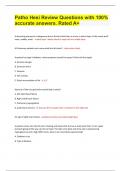
Patho Hesi Review Questions with 100% accurate answers. Rated A+ A dissecting aneurysm is dangerous due to the fact that there is a tear in which layer of the vessel wall? Inner, middle, outer. - medial layer- allows blood to seep into the middle layer A Pulmonary embolus can cause what kind of shock? - obstructive shock A patient has type II diabetes, what symptoms should he expect? Select all that apply A. Extreme Hunger B. Excessive thirst C. Polyuria D. Salt craving E. Quick accumulation of fat - A, B, C Stenosis of the tricuspid valve would lead to what? A. left sided heart failure B. Right sided heart failure C. Pulmonary regurgitation D. pulmonary stenosis - B- because the tricuspid valve is located on the right side #1 sign of right heart failure - peripheral edema and rapid weight gain A patient comes into the ER and is shaking and states that she has a sharp pain that's in her upper stomach going all the way up into her back. Her labs come back and show she is experiencing hyperglycemia and a high WBC count, what is she most likely experiencing? A. Diabetes crisis B. Type II diabetesC. Cholilithiasis D. Acute pancreatitis - D. Acute pancreatitis: sharp pain that radiates to the back Pancreatitis can lead to - Type 1 diabetes Which part of the ekg corresponds with atrial depolarization? - P wave It is impossible for ventricular depolarization to occur during which part of the EKG? - S-T segment: ventricles have fully depolarized, absolute refractory period Heart failure due to the heart muscle being underdeveloped and not strong enough to overcome the afterload would be chronotropic problem, dromotropic problem, or inotropic problem? - Inotropic problem= Strength of contraction chronotropic - beats per min dromotropic - rate of electrical conduction through heart A patient comes in with red lesions on his arms which have a red flare around the border, what is this most likely? A. Urticaria B. Impetigo C. Dermatitis D. Boils - A. hives= Red flare around the border (#1 symptom) A pulse pressure that is 78 would most likely indicate? A. hypotension B. hypertension C. shock D. TBI - D. traumatic brain injury= increased ICP= Cushing's Triad120-80= what? - pulse pressure Any pulse pressure over 60 is considered - widened The diastolic pressure is measured during what on an ekg? - From the T wave (ventricles have stopped beating/contracting) to the beginning of the R wave (ventricles begin to fully contract) Heart spends more time in diastolic Does the sympathetic nervous system increase or decrease the peripheral vascular resistance? - increase- because BP increases because of vasoconstriction A patient is receiving a blood transfusion when he starts stating that he's getting itchy. What is your first intervention? A. Stop the transfusion B. Administer Benadryl IM and monitor for worsening of symptoms C. Check blood pressure D. Ask the patient if he's short of breath - A. stop the transfusion An absent P wave could indicate that which part of the heart is not functioning properly? - Atria or SA node Frank starlings law states that when a heart muscle works hard over a period of time, is it the muscle or contractility that increases? - Muscle increases, Contractility decreases What is the number one risk factor for dilated ventricular hypertrophy? - Hypertension who is most likely to have hypertension? - Men, African AmericansA patient comes in with severe burns after being trapped in a building for 2 hours. The patients electrolytes and hemoglobin levels are increased and the patients blood pressure is 80/45 upon arrival heart rate 130 and the patient is not responsive. What is this most likely classified as? A. Burn injury B. hyperkalemia C. hypovolemic Shock D. hypokalemia - C. When you have a burn injury, you lose a lot of fluids. This is why the BP is so low. main symptoms of shock - BP is low, severely dehydrated, heart rate increased
Document information
- Uploaded on
- April 6, 2024
- Number of pages
- 25
- Written in
- 2023/2024
- Type
- Exam (elaborations)
- Contains
- Questions & answers