NUR 114 perfusion test 2024 questions with complete solution
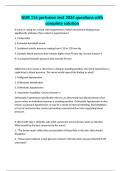
NUR 114 perfusion test 2024 questions with complete solution A nurse is caring for a client with hypertension. Which assessment finding most significantly indicates that a client is hypertensive? 1. Tachycardia 2. Extended Korotkoff sound 3. Sustained systolic pressure ranging from 110 to 120 mm Hg 4. Diastolic blood pressure that remains higher than 90 mm Hg -Correct Answer-4 R: A sustained diastolic pressure that exceeds 90 mm While the nurse moves a client from a lying to standing position, the client experiences a rapid drop in blood pressure. The nurse would report this finding as what? 1. Malignant hypotension 2. Orthostatic dehydration 3. Orthostatic hypotension 4. Vasomotor instability -Correct Answer-3 Orthostatic hypotension specifically refers to an abnormally low blood pressure that occurs when an individual assumes a standing position. Orthostatic hypotension is also known as postural hypotension. It may be a result of internal bleeding, fluid depletion, or loss of neurovascular control preventing vasoconstriction from regulating blood pressure. A client with type 1 diabetes asks what causes the several brown spots on the skin. What would be the best response by the nurse? 1. "The brown spots reflect the accumulation of blood fats in the skin; they should disappear." 2. "Those spots indicate a high glucose content in the skin that may get infected if left untreated." "3. They are the result of diseased small vessels in the shins and may spread if not treated soon." 4. "Those brown spots result from small blood vessel damage; the blood contains iron, which leaves a brown spot." -Correct Answer-4 "Those brown spots result from small blood vessel damage; the blood contains iron, which leaves a brown spot" is an accurate explanation for the client's concern; brown spots are caused by the deposit of hemosiderin in the tissue. Brown spots reflecting the accumulation of blood fats in the skin and disappearing is the definition of a xanthoma A client is admitted with a diagnosis of a ruptured spleen. The client's blood pressure is 100/60 mm Hg. What should the nurse assess in the client as an early sign of decreased arterial pressure? 1 Weak radial pulses 2 Warm, flushed skin 3 Lethargy with confusion 4 Increa
Document information
- Uploaded on
- April 2, 2024
- Number of pages
- 11
- Written in
- 2023/2024
- Type
- Exam (elaborations)
- Contains
- Questions & answers