
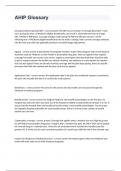
AHIP Glossary Comprehensive Exam Question And Answers.
Annual Enrollment period (AEP) - correct answer The AEP occurs October 15 through December 7 each year. During this time, all Medicare eligible beneficiaries can enroll in, disenrollment from or change MA,, MA-PD or PDP plans. coverage changes made during the AEP are effective January 1 of the following year. If Medicare eligible beneficiaries do not make a change, their current coverage continues into the next year with any applicable premium or benefit design adjustments. Appeal - correct answer A Special kind of complaint members make if they disagree with certain kinds of decisions made by Medicare or their health of prescription drug plan. they can appeal if they request coverage for health care service care service, supply or prescription that they think they should be able to get or request payment for health care already received, and medicare or a plan denies the request, that can also appeal if they are already receiving coverage and the plan stops paying. there are specific processes that both the member and the plan must use for appeals. Application Date - correct answer The Application date is the date the enrollment request is received by the plan. this Includes the date it is received by a sales person. Beneficiary - correct answer The name for the person who has health care insurance through the Medicare of medical programe Benefit period - correct answer For Original Medicare, the benefit period begins on the first day of a hospital stay and ends when you have out of the hospital or skilled nursing facility for 60 days in a row. If you go into the hospital after one benefit period has ended a new benefit period begins. You must pay the inpatient hospital deductible for each benefit period. There is no limit to the number of benefit periods you can have. Catastrophic coverage - correct answer Coverage that applies when a member has very high drug costs. for all Medicare prescription drug plans. it begins after a member has paid. $4,550 in 2014 out-of-pocket for covered drugs in a calendar year. Once this out-of-pocket level is reached the member pays the greater of 5 % of the cost for each coverd prescription of a small copy untill the end of the calendar year. Centers for Medicare & Medicaid Services - correct answer The federal agency that runs Medicare and works with each state to run their medicare programe. Coinsurance - correct answer The percentage of the Medicare-approved amount you pay for a medical service. With some plans you do not pay coinsurance until you have paid a deductible, Copayment (copay) - correct answer A fixed amount you pay for each medical service, such as a doctor's visit. For example a copayment might be $20 for a doctor's visit and $7 for a prescription drug you receive. Cost sharing - correct answer The way medicine and your health plans share you health care costs with you. Types of cost sharing you may pay include deductibles, coinsurance and copayments. Coverage gap - correct answer This stage of prescription drug coverage is often referred to as the donut hole. Once a member's total yearly covered prescription drug costs %2,850 in 2014, the member reaches the coverage gap and pays 72% of the plans costs for generic drug and no more than 47.5% of the plans costs for brand-name drugs until total out of pocket drug costs reached %4,550 (in 2014) Creditable Prescription Drug Coverage - correct answer Creditable prescription drug coverage is drug coverage that pays, on average at least as much as Medicare standard prescription drug benefit beneficiaries who have prescription drug coverage as part of health plan. such as veteran administration drug benefits. through an employer group or union plan. Member currently has prescription he or she may keep that coverage and wait to enroll in a part d plan.If they decide to enroll in a part D plan later. they will not have to pay a late enrollment penalty. examples of coverage that likely include creditable prescription drug covarge are assistance Program. Because the standard part d benefits change each year. it is important for beneficiaries to verify whether their current coverage is or remains. Prescription drug discount cards. free clinics, drug samples or drug discount websites do not constitute creditable prescription drug coverage Deductible - correct answer A set amount of money you must pay before your plan pays. Usually you have a separate deductible for Medicare part A. Part B and part C, part D. Deductibles may also come with Medicare advantage and medigap plans. Dual Eligible Special Need Plans - correct answer D-SNPs enroll beneficiaries who are entitled to both Medicare ( Title XVIII) and medical assistance form state plan under title XIX medicaid and offer the opportunity of enhanced benefits by combining those available through medicare and medicare Eligible care - correct answer Medical care and services that qualify to b covered by your health paln.
Document information
- Uploaded on
- March 21, 2024
- Number of pages
- 6
- Written in
- 2023/2024
- Type
- Exam (elaborations)
- Contains
- Questions & answers


