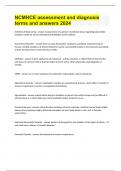
NCMHCE assessment and diagnosis terms and answers 2024
Activities of Daily Living measurement of a person's functional status regarding typical daily activities. useful for clients with physical disabilities and the elderly. Acute Stress Disorder three or more dissociative symptoms, persistent reexperiencing of trauma, marked avoidance of stimuli related to trauma, and marked anxiety or increased arousal lasting at least two days and no more than four weeks. Addiction A term applied to any substance , activity, behavior or object that has become the sole focus of a person's life or that has begun to harm self or others physically, psychologically, or socially. ADHD six or more symptoms of inattention, hyperactivity, and or impulsivity. Adjustment Disorder maladaptive reaction to a psychosocial stressor. onset within 3 months of stressor. impairment in social or occupational functioning. Agoraphobia anxiety about being in situations or places from which escape may be difficult or embarrassing or in which help may not be available if panic symptoms occur. Anorexia Nervosa eating disorder involving refusal to maintain a minimal normal body weight, intense fear of gaining weight, disturbed perception of one's body shape or size, and, in females, amenorrhea. Antisocial Personality Disorder pattern of disregard for and violation of the rights of others. >17 and must have a history of conduct disorder. Amnestic Disorder development of memory impairment Asperger's Disorder pervasive development disorder involving severe impairment in social interactions and a restricted repertoire of behaviors with no substantial delays in cognitive, language, or self-help skills. Autistic Disorder pervasive development disorder characterized by qualitative impairment in social interaction and communication, and restricted, repetitive and stereotyped behaviors. Avoidant Personality Disorder pervasive pattern of social inhibition, feelings of inadequacy, and hypersensitivity to negative evaluation. Bayley Scale of Infant and Toddler Development current developmental status of infants and toddlers ages 1 to 42 months. Beck Depression Inventory II measurement of the depth of depression and the severity of complaints, symptoms, and concerns. ages 13+ Beck Hopelessness Scale measures suicidality ages 17+. Bender-Gestalt II measure of visual-motor integration that is also used as a screening tool for neuropsychological impairment. Bereavement normal reaction to the death of a loved one. can include symptoms of a major depressive episode but does not include feelings of guilt, worthlessness, significant psychomotor retardation, prolonged significant impairment in functioning or hallucinations. Bipolar I presence of at least one manic or mixed episode, with or without a history of a major depressive disorder. Bipolar II presence of at least one hypomanic episode with no history of a manic or mixed episode. Borderline Personality Disorder pervasive pattern of instability in interpersonal relationships, self-image, and affect and marked impulsivity. Bulimia Nervosa eating disorder involving recurrent episodes of binge eating accompanied by compensatory behavior to prevent weight gain, self-evaluation that is unduly influenced by body shape and weight. individual is typically of normal body weight. Burns Depression Checklist 25 question rating scale for depression. each question is framed in terms of how much the individual has experienced each symptom during the past week including today. CAGE a brief screening questionnaire designed to screen for alcoholism. California Psychological Inventory Personality assessment with emphasis on positive, normal aspects of personality rather than psychopathology. Career Development Inventory a test of vocational maturity developed by Super. Child Behavior Checklist Assessment of a child's behavior via parent report and is useful for treatment planning, monitoring, and outcome assessment. Compulsions repetitious and deliberate behaviors or mental acts that the individual feels driven to perform either in response to an obsession or according to rules that must be applied rigidly. Conduct Disorder persistent pattern of behaviors that violate the rights of others and or age appropriate social rules. individual must be under 18. Conners' Rating Scales revised scales used to evaluate problem behavior in youth ages 3 through 17. Conversion Disorder symptoms involve impairment in voluntary motor or sensory functioning and suggest a serious neurological or other medical condition eg paralysis, seizures, for which no medical cause is found. Cycle of Violence three stage model that describes most abusive partner relationships that includes tension building, acute battering incident, and loving contrition. Cyclothymic Disorder fluctuating hypomanic symptoms and numerous depressive symptoms for at least two years in adults and one year in children or adolescents. Delirium disturbance in consciousness accompanied by either a change in cognition eg loss of memory, disorientation, and or perceptual abnormalities. caused by either a medical condition or substance use. Delusional Disorder psychosis involving one or more nonbizarre delusions that last at least one month.
École, étude et sujet
- Établissement
- NCMHCE
- Cours
- NCMHCE
Infos sur le Document
- Publié le
- 19 mars 2024
- Nombre de pages
- 11
- Écrit en
- 2023/2024
- Type
- Examen
- Contenu
- Questions et réponses
Sujets
-
ncmhce assessment and diagnosis

Document également disponible en groupe