
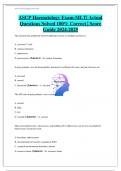
ASCP Haematology Exam-MLT| Actual Questions Solved 100% Correct | Score Guide
ASCP Haematology Exam-MLT| Actual Questions Solved 100% Correct | Score Guide The characteristic peripheral blood morphologic feature in multiple myeloma is: A. cytotoxic T cells B. rouleax formation C. spherocytes D. macrocytosis (Answer: - B. rouleax formation In polycythemia vera, the homeoglobin, hematocrit, red blood cell count, and red cell mass are: A. elevated B. normal C. decreased (Answer: - A. elevated The M:E ratio in polycythemia vera is usually: A. normal B. high C. low D. variable (Answer: - A. normal Many microspherocytes, schostocytes, and budding off of spherocytes can be seen on peripheral blood smears of patients with: A. hereditary spherocytosis B. disseminated intrvascular coagulation (DIC) C. acquired automimmune hemolytic anemia D. extensive burns (Answer: - D. extensive burns Which of the following is most closely associated with erythroleukemia? A. ringed sideroblasts, nuclear budding, and Howell-Jolly bodies B. disseminated intravascular coagulation C. micromegakaryocytes D. lysozymuria (Answer: - A. ringed siderblasts, nulcear budding, and Howell-Jolly bodies The most characteristic peripheral blood smear finding in multiple myeloma is: A. plasmacytic satelitosis in the bone marrow B. many plasma cells in the peripheral blood C. many Mott cells in the peripheral blood D. rouleax formation of the red cells (Answer: - D. rouleax formation of the red cells A common source of interference in the cyanmethehemoglobin method is: A. hemolysis B. very high WBC count C. cold agglutinins D. clumped platelets (Answer: - B. very high WBC count
Document information
- Uploaded on
- March 5, 2024
- Number of pages
- 16
- Written in
- 2023/2024
- Type
- Exam (elaborations)
- Contains
- Questions & answers


