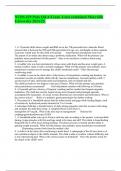
NURS 629 Peds Q&A Exam 4 test combined Maryville
University 2024/25.
1. A 12yearold child whose weight and BMI are in the 75th percentile has a diastolic blood
pressure that is between the 95th and 99th percentiles for age, sex, and height on three separate
occasions. Initial tests for this child will include renal function and plasma renin tests
The parent of an infant asks about using a probiotic medication. What will the primary care
pediatric nurse practitioner tell this parent? there is no conclusive evidence about using
probiotics to treat colic.
2. A toddler who was born prematurely refuses most solid foods and has poor weight gain. A
barium swallow study reveals a normal esophagus. What will the primary care pediatric nurse
practitioner consider next to manage this child's nutritional needs? Video fluoroscopy
swallowing study
3. A toddler is seen in the clinic after a 2day history of intermittent vomiting and diarrhea. An
assessment reveals an irritable child with dry mucous membranes, 3second capillary refill, 2
second recoil of skin, mild tachycardia and tachypnea, and cool hands and feet.
The child has had two wet diapers in the past 24 hours. What will the primary care pediatric
nurse practitioner recommend? Oral rehydration solution with followup in 24 hours
4. A 9yearold girl has a history of frequent vomiting and her mother has frequent migraine
headaches. The child has recently begun having more frequent and prolonged episodes
accompanied by headaches. An exam reveals abnormal eye movements and mild ataxia. What is
the correct action? Refer to a pediatric gastroenterologist for further workup.
5. The parent of a 3monthold reports that the infant arches and gags while feeding Begin a trial
of extensively hydrolyzed protein formula for 2 to 4 weeks.
A schoolage child has a 3month history of dull, aching epigastric pain that worsens with eating
and awakens the child from sleep. A complete blood count shows a
hemoglobin of 8 mg/dL. What is the next step in management? Referral for
esophagogastroduodenoscopy (EGD)
7. A 2monthold infant cries up to 4 hours each day and, according to the parents, is inconsolable
during crying episodes with fists and legs noted to be tense and stiff. The infant is breastfeeding
frequently but is often fussy during feedings. The physical exam is normal and the infant is
gaining weight normally. What will the primary care pediatric nurse practitioner recommend?
Eliminating certain foods from the mother's diet
8. A child is in the clinic after swallowing a metal bead. A radiograph of the GI tract shows a 6
mm cylindrical object in the child's stomach. The child is able to swallow without difficulty and
is not experiencing pain. What is the correct course of treatment? Have the parents watch for
the object in the child's stool
,9. A 10yearold child has had abdominal pain for 2 days, which began in the periumbilical area
and then localized to the right lower quadrant. The child vomited once today and then
experienced relief from pain followed by an increased fever. What is the likely diagnosis?
Appendicitis with perforation
An 18monthold child has a 1day history of intermittent, cramping abdominal pain with
nonbilious vomiting. The child is observed to scream and draw up his legs during pain episodes
and becomes lethargic in between. The primary care pediatric nurse practitioner notes a small
amount of bloody, mucous stool in the diaper. What is the most likely diagnosis?
Intussusception
13. A schoolage child has recurrent diarrhea with foulsmelling stools, excessive flatus,
abdominal distension, and failuretothrive. A 2week lactosefree trial failed to reduce symptoms.
What is the next step in diagnosing this condition? Serologic testing for celiac disease
12. An adolescent is diagnosed with functional abdominal pain (FAP). The child's
symptoms worsen during stressful events, especially with school anxiety. What will be an
important
part of treatment for this child? Teaching about the braingut interaction causing symptoms
11. A schoolage child has had abdominal pain for 3 months that occurs once or twice weekly and
is associated with a headache and occasional difficulty sleeping, often causing the child to
stay home from school. The child does not have vomiting or diarrhea and is gaining weight
normally.
The physical exam is normal. According to Bishop, what is included in the initial diagnostic
workup for
this child? CBC, ESR, amylase, lipase, UA, and abdominal ultrasound
A 30monthold girl who has been toilet trained for 6 months has daytime enuresis and dysuria and
a lowgrade fever. A dipstick urinalysis is negative for leukocyte esterase and nitrites. What is the
next step? Send the urine to the lab for culture.
2. The clean catch urine specimen of a child with dysuria, frequency, and fever has
a colony count between 50,000 and 100,000 of E. coli. What is the treatment for this child?
Treat with antibiotics for urinary tract infection
3. A dipstick urinalysis is positive for leukocyte esterase and nitrites in a schoolage
child with dysuria and foulsmelling urine but no fever who has not had previous urinary tract
infections. A culture is pending. What will the pediatric nurse practitioner do to treat this child?
Prescribe trimethoprimsulfamethoxazole (TMP) twice daily for 3 to 5 days
4. A preschoolage child with no previous history has mild flank pain and fever but no abdominal
pain or vomiting. A urinalysis is positive for leukocyte esterase and nitrites. A culture is pending.
Which is the correct course of treatment for this child? Order amoxicillin clavulanate
5. A 3yearold child has just completed a 7day course of amoxicillin for a secondfebrile urinary
tract infection and currently has a negative urine culture. What is the next course of action?
Obtain a renal and bladder ultrasound.
A 9monthold infant with a history of three urinary tract infections is diagnosed with grade II
vesicoureteral reflux. Which medication will be prescribed?TMPSMX; TMP 2 mg/kg as a single
daily dose
12. A child who has nephrotic syndrome is on a steroids and a saltrestricted diet for a relapse of
symptoms. A dipstick urinalysis shows 1+ protein, down from 3+ at the beginning of the
episode. In consultation with the child's nephrologist, what is the correct course of treatment
, considering this finding? Continue with steroids and salt restrictions until the urine is
negative for
protein
13. A child who had GABHS 2 weeks prior is in the clinic with periorbital edema,
dyspnea, and elevated blood pressure. A urinalysis reveals teacolored urine with hematuria and
mild proteinuria. What will the primary care pediatric nurse practitioner do to manage this
condition? Refer the child to a pediatric nephrologist for hospitalization.
16. A 6monthold infant has a retractile testis that was noted at the 2month well baby exam. What
will the primary care pediatric nurse practitioner do to manage this condition? Refer the
infant to a pediatric urologist or surgeon for possible orchiopexy
14. An adolescent has rightsided flank pain without fever. A dipstick urinalysis reveals
gross hematuria without signs of infection or bacteriuria, and the primary care pediatric nurse
practitioner diagnoses possible nephrolithiasis. What is the initial treatment for this condition?
Increasing fluid intake up to 2 L daily
15. During a well child examination of a 2yearold child, the primary care pediatric nurse
practitioner palpates a unilateral, smooth, firm abdominal mass which does not cross the midline.
What is the next course of action that? Refer the child to an oncologist immediately.
17. A 9monthold infant is brought to the clinic with scrotal swelling and fussiness.
The primary care pediatric nurse practitioner notes a tender mass in the affected scrotum that is
difficult to reduce. What is the correct action? Refer immediately to a pediatric surgeon
18. The mother of a 12monthold uncircumcised male infant reports that the child seems to have
pain associated with voiding. A physical examination reveals a tight, pinpoint opening of the
foreskin, which thickened and inflamed. What will the primary care pediatric nurse practitioner
do? Refer the child to a pediatric urologist.
19. An adolescent male comes to the clinic reporting unilateral scrotal pain, nausea,
and vomiting that began that morning. The primary care pediatric nurse practitioner
palpates a painful, swollen testis and elicits increased pain with slight elevation of the
testis (a negative Phren's sign). What will the nurse practitioner do? Refer the adolescent
immediately to a pediatric urologist or surgeon
11. A child is diagnosed with nephrotic syndrome, and the pediatric nurse practitioner provides
primary care in consultation with a pediatric nephrologist. The child was treated with steroids
and responded well to this treatment. What will the nurse practitioner tell the child's parents
about this disease? "Steroids will be used when relapses occur."
7. The parent of a toddler diagnosed with grade V vesicoureteral reflux asks the
primary care pediatric nurse practitioner how the disease will be treated. What will the nurse
practitioner tell this parent? That surgery to correct the condition is possible
9. A child has gross hematuria, abdominal pain, and arthralgia as well as a rash. What diagnosis
is most likely? HenochSchönlein purpura
10. An adolescent has 2+ proteinuria in a random dipstick urinalysis. A subsequent first morning
voided specimen is negative. What will the primary care pediatric nurse practitioner do to
manage this condition? Monitor for proteinuria at each annual well child examination.
8. A healthy 14yearold female has a dipstick urinalysis that is positive for 56 RBCs per hpf but
otherwise normal. What is the first question the primary care pediatric nurse practitioner will ask
this patient? "When was your last menstrual period (LMP)?"
27. The primary care pediatric nurse practitioner notes velvety, brown thickening of skin in the
axillae, groin, and neck folds of an adolescent Hispanic female who is
University 2024/25.
1. A 12yearold child whose weight and BMI are in the 75th percentile has a diastolic blood
pressure that is between the 95th and 99th percentiles for age, sex, and height on three separate
occasions. Initial tests for this child will include renal function and plasma renin tests
The parent of an infant asks about using a probiotic medication. What will the primary care
pediatric nurse practitioner tell this parent? there is no conclusive evidence about using
probiotics to treat colic.
2. A toddler who was born prematurely refuses most solid foods and has poor weight gain. A
barium swallow study reveals a normal esophagus. What will the primary care pediatric nurse
practitioner consider next to manage this child's nutritional needs? Video fluoroscopy
swallowing study
3. A toddler is seen in the clinic after a 2day history of intermittent vomiting and diarrhea. An
assessment reveals an irritable child with dry mucous membranes, 3second capillary refill, 2
second recoil of skin, mild tachycardia and tachypnea, and cool hands and feet.
The child has had two wet diapers in the past 24 hours. What will the primary care pediatric
nurse practitioner recommend? Oral rehydration solution with followup in 24 hours
4. A 9yearold girl has a history of frequent vomiting and her mother has frequent migraine
headaches. The child has recently begun having more frequent and prolonged episodes
accompanied by headaches. An exam reveals abnormal eye movements and mild ataxia. What is
the correct action? Refer to a pediatric gastroenterologist for further workup.
5. The parent of a 3monthold reports that the infant arches and gags while feeding Begin a trial
of extensively hydrolyzed protein formula for 2 to 4 weeks.
A schoolage child has a 3month history of dull, aching epigastric pain that worsens with eating
and awakens the child from sleep. A complete blood count shows a
hemoglobin of 8 mg/dL. What is the next step in management? Referral for
esophagogastroduodenoscopy (EGD)
7. A 2monthold infant cries up to 4 hours each day and, according to the parents, is inconsolable
during crying episodes with fists and legs noted to be tense and stiff. The infant is breastfeeding
frequently but is often fussy during feedings. The physical exam is normal and the infant is
gaining weight normally. What will the primary care pediatric nurse practitioner recommend?
Eliminating certain foods from the mother's diet
8. A child is in the clinic after swallowing a metal bead. A radiograph of the GI tract shows a 6
mm cylindrical object in the child's stomach. The child is able to swallow without difficulty and
is not experiencing pain. What is the correct course of treatment? Have the parents watch for
the object in the child's stool
,9. A 10yearold child has had abdominal pain for 2 days, which began in the periumbilical area
and then localized to the right lower quadrant. The child vomited once today and then
experienced relief from pain followed by an increased fever. What is the likely diagnosis?
Appendicitis with perforation
An 18monthold child has a 1day history of intermittent, cramping abdominal pain with
nonbilious vomiting. The child is observed to scream and draw up his legs during pain episodes
and becomes lethargic in between. The primary care pediatric nurse practitioner notes a small
amount of bloody, mucous stool in the diaper. What is the most likely diagnosis?
Intussusception
13. A schoolage child has recurrent diarrhea with foulsmelling stools, excessive flatus,
abdominal distension, and failuretothrive. A 2week lactosefree trial failed to reduce symptoms.
What is the next step in diagnosing this condition? Serologic testing for celiac disease
12. An adolescent is diagnosed with functional abdominal pain (FAP). The child's
symptoms worsen during stressful events, especially with school anxiety. What will be an
important
part of treatment for this child? Teaching about the braingut interaction causing symptoms
11. A schoolage child has had abdominal pain for 3 months that occurs once or twice weekly and
is associated with a headache and occasional difficulty sleeping, often causing the child to
stay home from school. The child does not have vomiting or diarrhea and is gaining weight
normally.
The physical exam is normal. According to Bishop, what is included in the initial diagnostic
workup for
this child? CBC, ESR, amylase, lipase, UA, and abdominal ultrasound
A 30monthold girl who has been toilet trained for 6 months has daytime enuresis and dysuria and
a lowgrade fever. A dipstick urinalysis is negative for leukocyte esterase and nitrites. What is the
next step? Send the urine to the lab for culture.
2. The clean catch urine specimen of a child with dysuria, frequency, and fever has
a colony count between 50,000 and 100,000 of E. coli. What is the treatment for this child?
Treat with antibiotics for urinary tract infection
3. A dipstick urinalysis is positive for leukocyte esterase and nitrites in a schoolage
child with dysuria and foulsmelling urine but no fever who has not had previous urinary tract
infections. A culture is pending. What will the pediatric nurse practitioner do to treat this child?
Prescribe trimethoprimsulfamethoxazole (TMP) twice daily for 3 to 5 days
4. A preschoolage child with no previous history has mild flank pain and fever but no abdominal
pain or vomiting. A urinalysis is positive for leukocyte esterase and nitrites. A culture is pending.
Which is the correct course of treatment for this child? Order amoxicillin clavulanate
5. A 3yearold child has just completed a 7day course of amoxicillin for a secondfebrile urinary
tract infection and currently has a negative urine culture. What is the next course of action?
Obtain a renal and bladder ultrasound.
A 9monthold infant with a history of three urinary tract infections is diagnosed with grade II
vesicoureteral reflux. Which medication will be prescribed?TMPSMX; TMP 2 mg/kg as a single
daily dose
12. A child who has nephrotic syndrome is on a steroids and a saltrestricted diet for a relapse of
symptoms. A dipstick urinalysis shows 1+ protein, down from 3+ at the beginning of the
episode. In consultation with the child's nephrologist, what is the correct course of treatment
, considering this finding? Continue with steroids and salt restrictions until the urine is
negative for
protein
13. A child who had GABHS 2 weeks prior is in the clinic with periorbital edema,
dyspnea, and elevated blood pressure. A urinalysis reveals teacolored urine with hematuria and
mild proteinuria. What will the primary care pediatric nurse practitioner do to manage this
condition? Refer the child to a pediatric nephrologist for hospitalization.
16. A 6monthold infant has a retractile testis that was noted at the 2month well baby exam. What
will the primary care pediatric nurse practitioner do to manage this condition? Refer the
infant to a pediatric urologist or surgeon for possible orchiopexy
14. An adolescent has rightsided flank pain without fever. A dipstick urinalysis reveals
gross hematuria without signs of infection or bacteriuria, and the primary care pediatric nurse
practitioner diagnoses possible nephrolithiasis. What is the initial treatment for this condition?
Increasing fluid intake up to 2 L daily
15. During a well child examination of a 2yearold child, the primary care pediatric nurse
practitioner palpates a unilateral, smooth, firm abdominal mass which does not cross the midline.
What is the next course of action that? Refer the child to an oncologist immediately.
17. A 9monthold infant is brought to the clinic with scrotal swelling and fussiness.
The primary care pediatric nurse practitioner notes a tender mass in the affected scrotum that is
difficult to reduce. What is the correct action? Refer immediately to a pediatric surgeon
18. The mother of a 12monthold uncircumcised male infant reports that the child seems to have
pain associated with voiding. A physical examination reveals a tight, pinpoint opening of the
foreskin, which thickened and inflamed. What will the primary care pediatric nurse practitioner
do? Refer the child to a pediatric urologist.
19. An adolescent male comes to the clinic reporting unilateral scrotal pain, nausea,
and vomiting that began that morning. The primary care pediatric nurse practitioner
palpates a painful, swollen testis and elicits increased pain with slight elevation of the
testis (a negative Phren's sign). What will the nurse practitioner do? Refer the adolescent
immediately to a pediatric urologist or surgeon
11. A child is diagnosed with nephrotic syndrome, and the pediatric nurse practitioner provides
primary care in consultation with a pediatric nephrologist. The child was treated with steroids
and responded well to this treatment. What will the nurse practitioner tell the child's parents
about this disease? "Steroids will be used when relapses occur."
7. The parent of a toddler diagnosed with grade V vesicoureteral reflux asks the
primary care pediatric nurse practitioner how the disease will be treated. What will the nurse
practitioner tell this parent? That surgery to correct the condition is possible
9. A child has gross hematuria, abdominal pain, and arthralgia as well as a rash. What diagnosis
is most likely? HenochSchönlein purpura
10. An adolescent has 2+ proteinuria in a random dipstick urinalysis. A subsequent first morning
voided specimen is negative. What will the primary care pediatric nurse practitioner do to
manage this condition? Monitor for proteinuria at each annual well child examination.
8. A healthy 14yearold female has a dipstick urinalysis that is positive for 56 RBCs per hpf but
otherwise normal. What is the first question the primary care pediatric nurse practitioner will ask
this patient? "When was your last menstrual period (LMP)?"
27. The primary care pediatric nurse practitioner notes velvety, brown thickening of skin in the
axillae, groin, and neck folds of an adolescent Hispanic female who is