

ASSIGNMENT 11C
Q1,
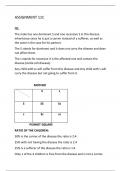
The male has one dominant S and one recessive S in this disease
inheritance since he is just a carrier instead of a sufferer, as well as
the same is the case for his partner.
The S stands for dominant and it does not carry the disease and does
not affect them.
The s stands for recessive it is the affected one and contain the
disease (sickle cell disease).
Any child with ss will suffer from this disease and Any child with s will
carry the disease but not going to suffer from it.
MOTHER
S s
S SS Ss
s Ss ss
PUNNET SQUARE
RATIO OF THE CHILDREN:
50% is the carrier of the disease the ratio is 2:4
25% with not having the disease the ratio is 1:4
25% is a sufferer of the disease the ratio is 1:4
Only 1 of the 4 children is free from the disease and is not a carrier.
, Q2,
PH Ph pH ph
PH PPHH PPHh PpHH PpHh
Ph PPHh PPhh PpHh Pphh
pH PpHH PpHh ppHH ppHh
ph PpHh Pphh ppHh pphh
PUNNET SQUARE
All of them are heterozygous. Two out of the 16 results are either
dominant or recessive. The first result is double purple dominant P
and hairy double dominant H, and the last result is double recessive
p and double recessive h. Rest results are mixture of dominant and
recessive.
Ratio of punnet square:
Ratio of PPHH is 1:16
Ratio of pphh is 1:16
Ratio of ppHh is 2:16
Ratio of PPHh is 2:16
Ratio of PPhh is 1:16
Ratio of ppHH is 1:16
Ratio of PpHh is 2:16
Ratio of Pphh is 1:16
Ratio of PpHH is 2:16
Q1,
The male has one dominant S and one recessive S in this disease
inheritance since he is just a carrier instead of a sufferer, as well as
the same is the case for his partner.
The S stands for dominant and it does not carry the disease and does
not affect them.
The s stands for recessive it is the affected one and contain the
disease (sickle cell disease).
Any child with ss will suffer from this disease and Any child with s will
carry the disease but not going to suffer from it.
MOTHER
S s
S SS Ss
s Ss ss
PUNNET SQUARE
RATIO OF THE CHILDREN:
50% is the carrier of the disease the ratio is 2:4
25% with not having the disease the ratio is 1:4
25% is a sufferer of the disease the ratio is 1:4
Only 1 of the 4 children is free from the disease and is not a carrier.
, Q2,
PH Ph pH ph
PH PPHH PPHh PpHH PpHh
Ph PPHh PPhh PpHh Pphh
pH PpHH PpHh ppHH ppHh
ph PpHh Pphh ppHh pphh
PUNNET SQUARE
All of them are heterozygous. Two out of the 16 results are either
dominant or recessive. The first result is double purple dominant P
and hairy double dominant H, and the last result is double recessive
p and double recessive h. Rest results are mixture of dominant and
recessive.
Ratio of punnet square:
Ratio of PPHH is 1:16
Ratio of pphh is 1:16
Ratio of ppHh is 2:16
Ratio of PPHh is 2:16
Ratio of PPhh is 1:16
Ratio of ppHH is 1:16
Ratio of PpHh is 2:16
Ratio of Pphh is 1:16
Ratio of PpHH is 2:16


